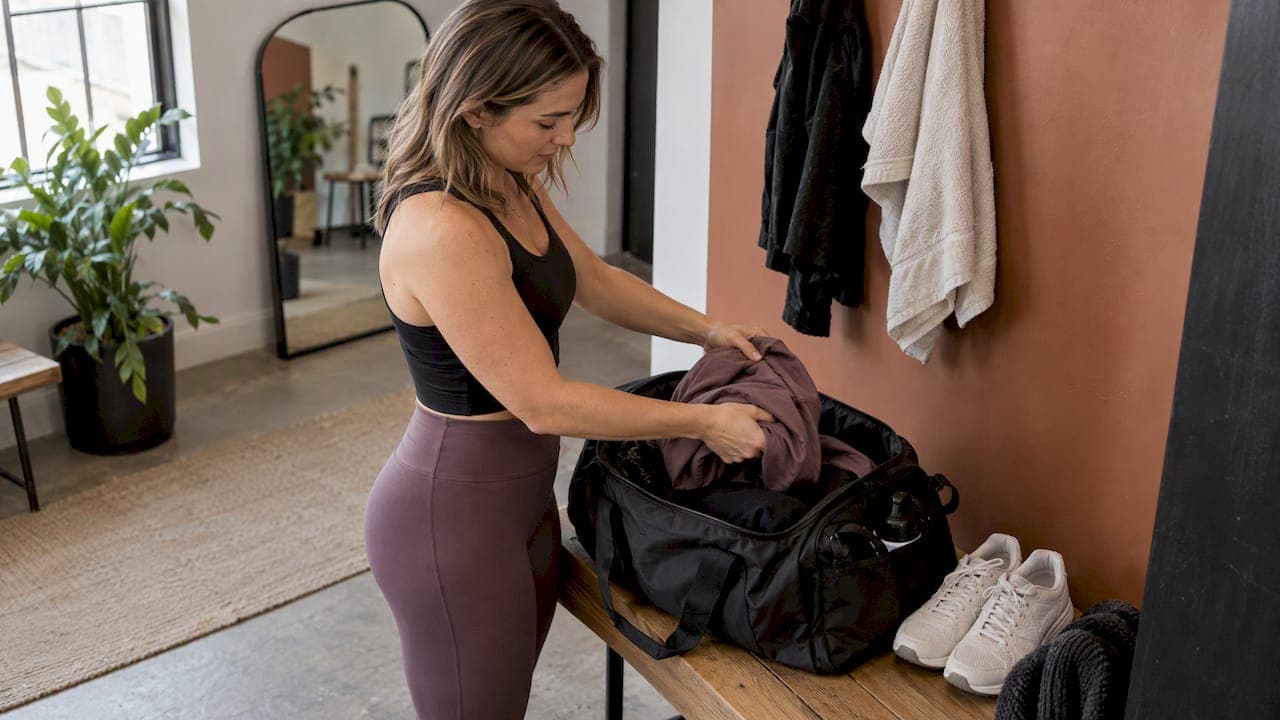
The best outfits for a fitness photoshoot are fitted, plain or softly toned, comfortable to move in and in good condition, with two to four options so we can vary the look. Bring pieces you already train in and feel strong wearing, and leave the guesswork about posing to us. This guide covers fabrics, colours, fit, what to pack for men and women, and how to prepare in the days before an Auckland shoot.
TL;DR
- Choose fitted, stretchy performance pieces that show your shape and still move with you. Baggy gear hides the work you have put in.
- Stick to solid colours or subtle tones. Avoid large logos and busy prints that pull the eye off you.
- Pack two to four outfits, including a dark one and a light one, plus one casual or smart option if the images will be used for your brand.
- Wear loose clothing on the way so seams and straps do not leave marks on your skin.
- Check every piece for pilling, fading and see-through fabric under bright light before you pack.
Table of Contents
- Why your outfit matters more than you think
- Start with fit: fitted beats baggy
- Fabric: what photographs well
- Colour: keep it simple and intentional
- How many outfits to bring
- Outfit ideas by type of shoot
- Footwear, accessories and small details
- The day before and the morning of
- Plus size and body-confidence questions
- Our perspective: comfort first, then the details
- Fitness shoots with Life in Style
- A quick packing checklist
- FAQ
- Sources
Why your outfit matters more than you think
In a fitness shoot, clothing is part of the subject. It frames your shoulders, waist and legs, it reacts to light, and it decides whether a movement looks crisp or crumpled. The same person in a stretched, faded tee and in a fitted, matte top will look like two different athletes.
The good news is that you do not need a new wardrobe. You need a few well-chosen pieces, and a photographer who tells you what works before the day. That is how we run every session: careful planning, clear guidance and no expectation that you know how to pose.
Start with fit: fitted beats baggy
For most fitness images, clothing that follows your body outlines your muscle and posture. Oversized tees and loose shorts add visual bulk and cast shadows that hide definition. Fitted does not mean tight to the point of discomfort, though. You should be able to squat, lunge, push and reach without tugging at anything.
Good options for women
- Sports bras or fitted crop tops with supportive straps
- High-waisted leggings or bike shorts that stay put when you move
- Fitted tanks and long-sleeve training tops
- A light zip-up or cropped jacket for layered shots
Good options for men
- Compression tops, fitted tees and gym vests or stringers
- Training shorts that sit above the knee, plus a pair of tapered joggers
- A fitted long-sleeve top or hoodie for warm-up and walking shots
If you are comfortable going bare-chested, or in a sports bra and shorts, say so in advance and we will plan lighting and poses around it. If you would rather be more covered, that is just as valid. A relaxed shoot where you feel like yourself always produces better images than one where you are self-conscious.
Fabric: what photographs well
Stretch performance fabrics are the safest choice. They keep their shape through squats, push-ups and sprints, and they tend to wrinkle less than cotton blends. Brands that make technical sportswear describe this too: one New Zealand manufacturer notes that its performance fabrics such as Coolmesh and Carvico Vita Lycra are chosen for support and durability in dynamic apparel. You do not need that exact label, but you should look for the same qualities in whatever you wear.
A few practical checks before you pack:
- Opacity. Do a squat in front of a bright window or under a torch. If the fabric turns sheer, leave it at home, since studio and outdoor light will show it.
- Sweat marks. Light grey and pale pastels show sweat quickly. Black, navy, charcoal and deep greens are more forgiving.
- Surface wear. Pilling, bobbles and faded patches look far worse in a high-resolution photo than in the mirror.
- Sheen. Very shiny fabrics can bounce light and look uneven. Matte or semi-matte usually looks cleaner.
Colour: keep it simple and intentional
Colour choices work best when they are deliberate. Three approaches we recommend:
- Tonal. Different shades of one colour, such as charcoal, slate and black, give a clean, premium look and keep attention on your physique.
- Neutral with one accent. Black or white with a single colour, like a deep red or forest green, adds energy without looking busy.
- Bold and branded. If you are a trainer or studio owner, wear your brand colour so the images match your website and socials.
Plain black and plain white sets are the backbone of a gym shoot, because they suit almost any backdrop. Pack at least one dark outfit and one light one so we can match your clothing to the location. A black outfit that looks sharp against a pale studio wall can disappear in a dim gym.
Avoid large logos, slogans across the chest and loud all-over prints unless they are your own brand. A small logo is fine. A huge graphic competes with your face.
How many outfits to bring
Two to four is a sensible range for most sessions. More than that and you spend the shoot changing instead of training. We cover this idea in more detail in our post on why you should bring two outfits to every photoshoot, and it holds for fitness too: a second look gives you a different mood, colour and story from the same session.
A simple set to build from:
| Outfit | Purpose | Example |
|---|---|---|
| Main training look | Action and strength shots | Fitted top, leggings or shorts in black or charcoal |
| Light or colour look | Contrast, brighter backdrops | White or soft neutral set, or one accent colour |
| Warm-up layer | Walking, stretching, candid frames | Zip jacket or hoodie over your main look |
| Casual or smart look | Website, profile and branding images | Fitted tee and jeans, or a clean shirt |
If you are planning to use the photos for your business, the last row matters. Trainers and coaches often need both a gym image and a more approachable lifestyle image for a website header. Our guide to personal branding photo ideas is a good place to think about which images you need. If you want a coordinated wardrobe without overpacking, a capsule wardrobe guide shows how a few mix-and-match pieces can cover several looks.
Outfit ideas by type of shoot
Strength and gym training
Fitted tank or vest, shorts or joggers, clean training shoes. Chalk, a towel and a water bottle are useful props. Keep clothes matte and dark for moody, high-contrast lighting. For ideas on shot types, see our gym photoshoot poses guide.

Outdoor and running
Layers work well in Auckland, where a sunny morning can turn breezy by the coast. Bring a lightweight jacket you can drop for the main shots, and shoes without heavy mud. Bright accent colours look great against green bush and grey sea. Our post on outdoor fitness photos covers location planning in more detail.

Yoga, pilates and wellness
Seamless, soft-toned sets in sage, sand, stone or black look calm and clean. Choose pieces that stay in place through stretches and inversions, since constant adjusting breaks the flow. For practitioners building a brand, our wellness photoshoot ideas show how to link clothing to your message.

Personal trainers and coaches
Wear what your clients see you in, then add one elevated option. A fitted branded top, a clean pair of training pants and a smart casual outfit will give you a full library. Progress and before-and-after content has its own rules, and a fitness progress photos workflow shows how consistent poses and clothing make comparisons clearer.
Competition athletes
If you are preparing for or finishing a show, bring your posing trunks or bikini and any stage wear. Tell us your date so we can plan around tan, condition and timing.
Footwear, accessories and small details
- Shoes. Clean, simple trainers. Wipe the soles before an indoor shoot. Bring a second pair if you are changing between outdoor and studio looks.
- Socks. Plain white or black, whichever matches your outfit. Ankle socks suit shorts, and crew socks suit joggers.
- Accessories. A watch, simple earrings or a cap are fine, but avoid anything that jingles, glares or covers your face unless it is part of your look.
- Hair and grooming. Tie your hair back in a way that survives movement, and bring a brush and hair ties. Trim and tidy beards and brows a few days before, not on the morning.
- Skin. Use unscented moisturiser and bring a small towel for sweat and a lip balm.
The day before and the morning of
Small habits make a visible difference:
- Wear loose clothing on the way. Tight waistbands, socks, sports bras and caps can leave pressure marks that last for an hour or more.
- Iron or steam what you can. Cotton tees and jackets crease in a bag. Technical fabrics usually need less attention.
- Drink water as usual and eat a normal meal. Skipping food or crash-dieting is rarely worth it. Feeling energised is what you want on camera.
- Keep your training light. A hard session the day before can leave you flat or swollen. A gentle warm-up on the day brings energy and colour.
- Pack the night before. Lay everything out, check it for wear, and add a spare top and a towel.
Our fitness photoshoot preparation post goes from wardrobe through to warm-up, and our fitness photoshoot ideas article gives you a ten-shot brief to bring along.
Plus size and body-confidence questions
You do not need to change your body for the camera. What you need is clothing that supports you, fits well and makes you feel capable. Many clients choose high-waisted leggings with a longer fitted top, or a structured sports bra under an open jacket. Darker tones and smooth fabrics look sleek, but if you love colour, wear it. Our guide to flattering poses for plus size photos shows what to practise, and we guide you through every pose on the day.
Our perspective: comfort first, then the details
After many sessions with people who say they hate being photographed, we have noticed the same pattern. The outfit that looks best on camera is almost always the one the client feels best in. People who bring a brand-new set they have never trained in tend to fidget with it. People who bring a favourite, well-fitting set tend to move naturally.
So our advice is to choose three or four pieces you trust, check them for wear, and let us handle the rest. We plan the shoot with you beforehand, talk through colours and locations, and suggest which outfit to start with. We usually begin with the one you are most comfortable in, because that is when people relax, and the best action and candid frames come after that.
If you are unsure about any piece, send us a photo before the day and we will tell you honestly how it will look under the light we plan to use.
— Rowan Freeman
Fitness shoots with Life in Style
We run fitness photography sessions in Auckland, with three packages: The Mini Shoot at 460 NZD, The Standard Shoot at 570 NZD and The Premium Shoot at 800 NZD. Each is designed so you do not need to know how to pose, and we help you choose outfits as part of the planning. You can see the packages and enquire on our fitness photography services page, or browse our portfolio to see the look and feel of our work first.
A quick packing checklist
- Two to four outfits, including one dark and one light
- Spare top and sports bra or underwear in a neutral colour
- Clean trainers and plain socks
- Light jacket or hoodie
- Towel, water bottle, hair ties, brush
- Loose clothes to wear to and from the shoot
- Your own brand or competition wear, if relevant
FAQ
What should I wear to a fitness photoshoot?
Wear fitted, stretchy activewear in solid colours, such as a compression top or sports bra with leggings or training shorts. Bring two to four outfits so we can vary the look, and include one dark and one light option. Pick pieces you already train in and feel confident wearing.
What colours look best in gym photos?
Black, charcoal, navy and white are the safest, and a single accent colour like deep red or forest green adds energy. Tonal outfits, where everything is a shade of one colour, look clean and polished. Avoid big logos and busy patterns that distract from you.
Should I wear tight or loose clothes?
Fitted is better, because it shows your shape and movement, while baggy clothing hides definition and adds bulk. It should still feel comfortable enough to squat, lunge and stretch. If you prefer more coverage, a fitted base layer with an open jacket works well.
How do I avoid marks from my clothes before the shoot?
Wear loose, soft clothing to the shoot and change into your fitted outfit when you arrive. Tight socks, waistbands, bra straps and caps can leave marks on your skin that take a while to fade. Give yourself a few minutes before we begin so any marks settle.