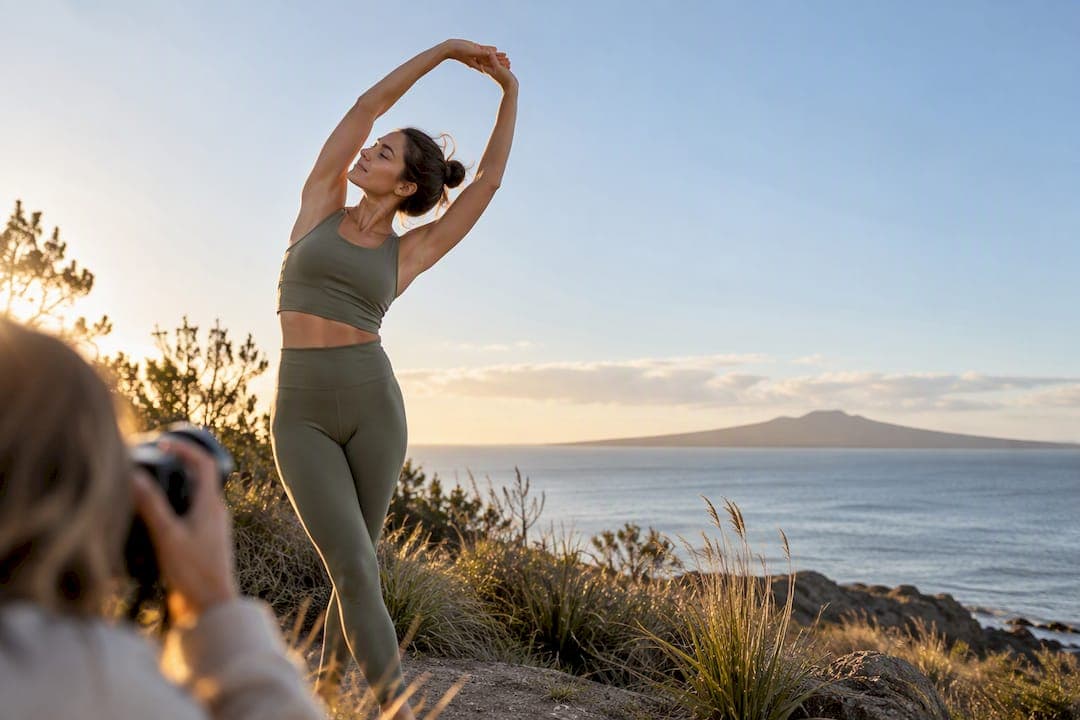
For wellness brands, relaxed, relatable lifestyle shots work best: morning rituals, gentle movement, nutrition prep and spa-style self-care moments, captured in natural light rather than a stiff studio setup. Start by drafting a 10-shot brief you can complete in a half-day session, then bring it to a photographer who understands wellness imagery, so the shoot stays purposeful from the first frame to the last.
TL;DR:
- Wellness imagery should focus on specific, authentic moments like gentle movement, morning rituals, or community classes, rather than generic "healthy lifestyle" clichés.
- Planning a 10-shot content brief before the shoot ensures versatile assets such as hero images, close-ups, and candid shots that align with your brand’s message and uses.
- Use a muted, consistent color palette and simple props to create cohesive images that support your brand's mood, with natural lighting preferred for authenticity.
- Outdoor shoots suit movement and nature themes but depend on weather, while studio settings are ideal for product shots; balance location choice with your content goals.
- Select images based on brand relevance rather than technical perfection, and keep edits light to maintain a genuine, on-brand aesthetic that stands out from polished stock images.
Table of Contents
- 1. Ten wellness shoot concepts worth building a brief around
- 2. How to plan and brief a wellness photoshoot that fits your brand
- 3. Wardrobe, poses, props and lighting that do the work for you
- 4. Choosing a setting: studio, home or outdoors
- 5. Turning one shoot into weeks of content
- 6. Privacy, consent and the rules around wellness advertising
- 7. Getting your clients or team ready before the camera arrives
- 8. Working well with a photographer who knows wellness imagery
- 9. Choosing and editing images that stay true to your brand
- 10. Seasonal and location ideas to keep content fresh
- 11. Colour palettes that set the mood
- Why brand-led wellness photography beats polished stock imagery
- How Life in Style Photography can help you get there
- Sources
- FAQ
1. Ten wellness shoot concepts worth building a brief around
The strongest wellness photography tells a small, specific story rather than a generic "healthy lifestyle" cliché. Each idea below pairs a core shot with the props and framing that make it usable across your marketing.
- Gentle yoga flow: capture a mid-movement pose (not a static hold) with soft window light behind the subject; works well as a reel thumbnail or hero image.
- Pilates posture portrait: shoot from a slightly low angle on a reformer or mat to show alignment and control; ideal for service pages explaining technique.
- Morning ritual: hands wrapped around a mug, journal open, natural light through a curtain; a quiet, intimate shot suited to Instagram carousels.
- Smoothie or nutrition prep: overhead flatlay of fresh ingredients mid-chop, or a candid sip shot; great for recipe posts and product-in-use marketing.
- Breathwork or meditation: seated, eyes closed, hands resting on knees, shot straight on with negative space around the subject for text overlays.
- Spa-style self-care: a warm towel, a candle, a hand applying oil; use a shallow depth of field so the detail, not the room, carries the shot.
- Nature immersion: walking or stretching outdoors, framed wide to include the landscape; works as a website hero or seasonal campaign image.
- Community class: a small group mid-session, candid rather than posed, to show culture and connection rather than perfection.
- Practitioner-client interaction: a genuine exchange, adjustment or conversation, framed to show trust rather than a transaction.
- Product-in-use flatlay: your actual product (oil, mat, supplement) styled with one or two texture props, shot square for feed consistency.
Each concept should map to a specific use, whether that is a hero banner, a testimonial-style post or a reel cover, so nothing gets shot without a home.
2. How to plan and brief a wellness photoshoot that fits your brand
Before you book anyone, work out what the shoot needs to say about your business, not just what it needs to show. The Business sets out nine questions, covering how your brand sees itself, how others see it and where the two meet, and it is a useful filter for deciding which of the concepts above actually belong in your shoot. Run your theme list through it and cut anything that does not reinforce your point of difference.
Once your content pillars are clear, lock in formats before the shoot day. A simple 10-shot brief keeps decision fatigue off the set and gives you assets you can actually use:
- Hero image (wide, brand-defining shot for your homepage)
- Wide lifestyle shot (context and setting)
- Close-up detail (hands, texture, product)
- Process or action shot (movement mid-flow)
- Product-in-use shot
- Candid, unposed moment
- Team or practitioner portrait
- Behind-the-scenes shot
- Flatlay (product or ingredients)
- Testimonial-style lifestyle shot (space for a quote overlay)
Allow sufficient time per setup for quality shots, pack a minimal kit (props, spare wardrobe, a reflector) and have an indoor backup for any outdoor concept in case the weather turns.
Pro Tip: Shoot your testimonial-style lifestyle image last, once everyone is relaxed and the light has settled into a rhythm.
3. Wardrobe, poses, props and lighting that do the work for you
Wardrobe should stay in a tight, muted palette (three or four colours, mixed textures) so images sit together on a feed without clashing. Pack a spare top or wrap for each subject and change between setups rather than mid-set, so you are not losing light while someone re-dresses.
- Give subjects a small physical task (pour, stretch, breathe out slowly) instead of asking them to "just relax", since a task gives the hands and face something honest to do.
- Choose two or three props per scene at most: a mat, a mug, a single plant is plenty, and anything more starts to compete with the subject.
- Use a single north-facing window as your default light source, with a plain sheet of white polystyrene as a bounce card for shadow fill.
Golden hour, the hour after sunrise or before sunset, gives outdoor shoots a warm, low-angle light that suits nature and movement concepts without any extra gear. Every set benefits from at least one reflector or bounce surface, since it softens harsh shadows on the face without the flatness of on-camera flash.
4. Choosing a setting: studio, home or outdoors
A studio gives you full control over light and background, which suits product flatlays and brand portraits, but it can feel sterile for anything meant to look lived-in. Shooting in a home or clinic setting adds texture and context, useful for morning ritual or spa self-care concepts, though it takes more setup time to tidy and light the space. Outdoor locations suit movement and nature themes best, with natural light doing most of the work, but they depend entirely on weather.

For composition, keep hero shots wide with room for text, lifestyle shots at eye level to feel companionable, and close-ups tight and slightly off-centre so they feel observed rather than staged. Wherever possible, photograph a genuine range of ages, body types and cultural backgrounds among your practitioners and clients, and check that any cultural practices shown (karakia, taonga, specific rituals) are represented with the respect and accuracy the community itself would expect.
5. Turning one shoot into weeks of content
Plan your deliverables by crop before you shoot, such as wide hero images for your website and various crop ratios for posts and stories, all pulled from the same well-composed frame.
- Name files by theme and date on export (for example, morning-ritual-2026-03) so you can find and schedule them without reopening every folder.
- Edit for consistency first: matching white balance and exposure across a batch matters more than heavy retouching.
- Batch your shoot list so one half-day session covers three to six weeks of posting, mixing hero, lifestyle and detail shots across that period.
6. Privacy, consent and the rules around wellness advertising
A person's face in a photo is personal information, and the Office of the Privacy Commissioner's guidance on photographing children and young people recommends asking why an image is needed, who will see it and how long it will be kept, with informed consent from parents or caregivers where minors are involved. Keep a simple photography policy and a retention schedule so any client can ask for an image to be removed.
Advertising is its own minefield. The Therapeutic and Health Advertising Code restricts advertising that implies a therapeutic outcome, which covers before-and-after style imagery and testimonial photos that suggest a treatment result. Legal commentary on the updated code notes that pictorial and testimonial claims face tighter scrutiny, so it pays to review any image implying a health result before it goes to print or online.
Ask why the image is needed, who it will be shared with, and how long it will be kept.
7. Getting your clients or team ready before the camera arrives
Preparation matters as much as the shoot itself. Ask subjects to moisturise the night before rather than the morning of, since freshly applied products can leave a shine under studio or flash light. Simple, well-rested skin photographs better than a heavy routine done in a rush.
Encourage loose, comfortable clothing that will not leave marks (avoid tight waistbands or socks in the hour before shooting) and bring a change of layers if the session covers more than one theme. For anyone nervous in front of a camera, a short breathing exercise before the first setup, four counts in, four counts out, settles the shoulders and the face far more than instructions to "look natural".

Brief your subjects on the day's shot list beforehand so nobody is guessing what comes next, and build in short breaks between setups. A rushed subject reads as tense in every frame, while a five-minute pause between wardrobe changes usually produces the most relaxed images of the day.
8. Working well with a photographer who knows wellness imagery
Look for a photographer who asks about your content pillars before your poses, since that question tells you whether they are thinking about your marketing or just your appearance. A wellness-literate photographer will also ask about consent, modesty preferences and any cultural considerations up front, rather than leaving it to be sorted on the day.
Share your brief, your palette and your content pillars in advance rather than on arrival, and ask to see examples of their work with camera-shy or first-time subjects specifically. The personal branding photos guide has example shot lists worth reviewing before your first conversation with a photographer. A good working relationship on set usually shows in the final images: relaxed shoulders, genuine expressions and a shot list that actually got completed.
9. Choosing and editing images that stay true to your brand
Select images against your content pillars first, not against which shot you personally like best. A photo that is technically flawless but off-message will underperform one that is slightly imperfect but exactly on-brand.
Edit for consistency across the set: matching skin tones, consistent white balance and a shared colour grade will do more for your brand's cohesion than any single striking edit. Keep retouching light and avoid anything that could read as an implied health outcome, particularly for before-and-after style comparisons, given the restrictions covered earlier. Save your strongest, most emotionally direct image for the hero slot, and hold back one or two quieter, detail-focused shots for filler content between bigger posts.
10. Seasonal and location ideas to keep content fresh
Autumn and winter suit indoor rituals: warm lighting, layered wardrobe, tea or spa-style self-care shots that lean into the cosier mood of the season. Spring and summer favour outdoor movement, morning light and nature immersion themes, when early starts give you the softest light of the day.
Location matters as much as season. A studio brand session photographs consistently year-round, while an outdoor or beachside shoot depends on weather and works best scheduled with a backup indoor plan already in place. Community or group classes photograph well seasonally too: a spring outdoor session reads differently to a winter studio class, and rotating between them keeps a year's content from feeling repetitive.
11. Colour palettes that set the mood
Soft neutrals, warm beige, cream and a hint of terracotta, suit self-care and spa themes and read as calm rather than clinical. A cooler palette of sage green and soft grey suits meditation and breathwork content, giving images a settled, restorative feel. Brighter, warmer tones work for movement and community shots, where energy is the point rather than stillness.

Keep your chosen palette consistent across a shoot by controlling wardrobe and props rather than fixing it in editing afterward, since colour that is right in camera always looks more natural than colour corrected after the fact.
Why brand-led wellness photography beats polished stock imagery
Most wellness brands over-invest in looking aspirational and under-invest in looking real. A shoot full of perfect poses and flawless lighting can end up feeling like every other wellness brand's feed, which defeats the purpose of photographing your own business in the first place.
The brands that stand out are the ones willing to show an unposed moment: a genuine laugh mid-class, a slightly messy kitchen bench during a smoothie prep shot, a practitioner mid-sentence rather than mid-smile. That is a harder brief to write and a harder shoot to direct, because it asks a photographer to catch something rather than construct it. It is also worth thinking about your positioning the way a personal branding strategy would: define what makes you different before you ever pick up a camera, because no amount of good lighting fixes a shot list with no point of view.
— Rowan Freeman
How Life in Style Photography can help you get there
If writing the brief is the easy part and executing it calmly is the harder part, that is where a wellness-literate photographer earns their place. A professional wellness-literate photographer will guide people through poses and pacing rather than expecting them to arrive knowing how to perform for a lens.
- The Starter Brand Session suits a solo practitioner who needs a focused set of on-brand images without a full production.
- The Signature Brand Session gives small studios and clinics room to cover several of the themes above in one booking.
Browse the Personal Branding Services page to see what each session includes, or get in touch to talk through your own 10-shot brief before you book.
Sources
- Business
- Children and young people: photography and filming guidance – Office of the Privacy Commissioner
- Therapeutic and Health Advertising Code – Advertising Standards Authority (ASA)
- New therapeutic and health advertising code — HGM Legal
FAQ
What are some good wellness topic ideas?
Morning rituals, gentle movement, nutrition prep, breathwork and spa-style self-care all photograph well and translate directly into social posts. Pick two or three themes per shoot rather than trying to cover everything in one session, so each image stays focused.
What are some unique ideas for a photoshoot?
A candid practitioner-client interaction or a behind-the-scenes moment tends to stand out more than a posed portrait, since it shows something a viewer would not normally see. Product-in-use flatlays styled with real, textured props also read as more distinctive than a plain studio product shot.
What are some creative ideas for a lifestyle photoshoot?
Community class shots, nature immersion and morning ritual scenes all work well for lifestyle photography because they show a moment rather than a pose. Choosing a genuine task, pouring a drink, stretching mid-flow, journalling by a window, gives the shot a reason to exist beyond looking pleasant.
What are some good ideas for Instagram posts about health and wellness?
Flatlays of ingredients or products crop cleanly to a square or 4:5 format and perform well as feed posts, while movement or breathwork shots suit a vertical crop for reels and stories. Testimonial-style lifestyle shots with space for text overlay are worth planning specifically for quote-based posts.
Do I need consent to photograph clients for marketing?
Yes, a face in a photo counts as personal information, and the Office of the Privacy Commissioner's guidance recommends getting informed consent and keeping a simple photography policy, with extra care taken for children and young people.