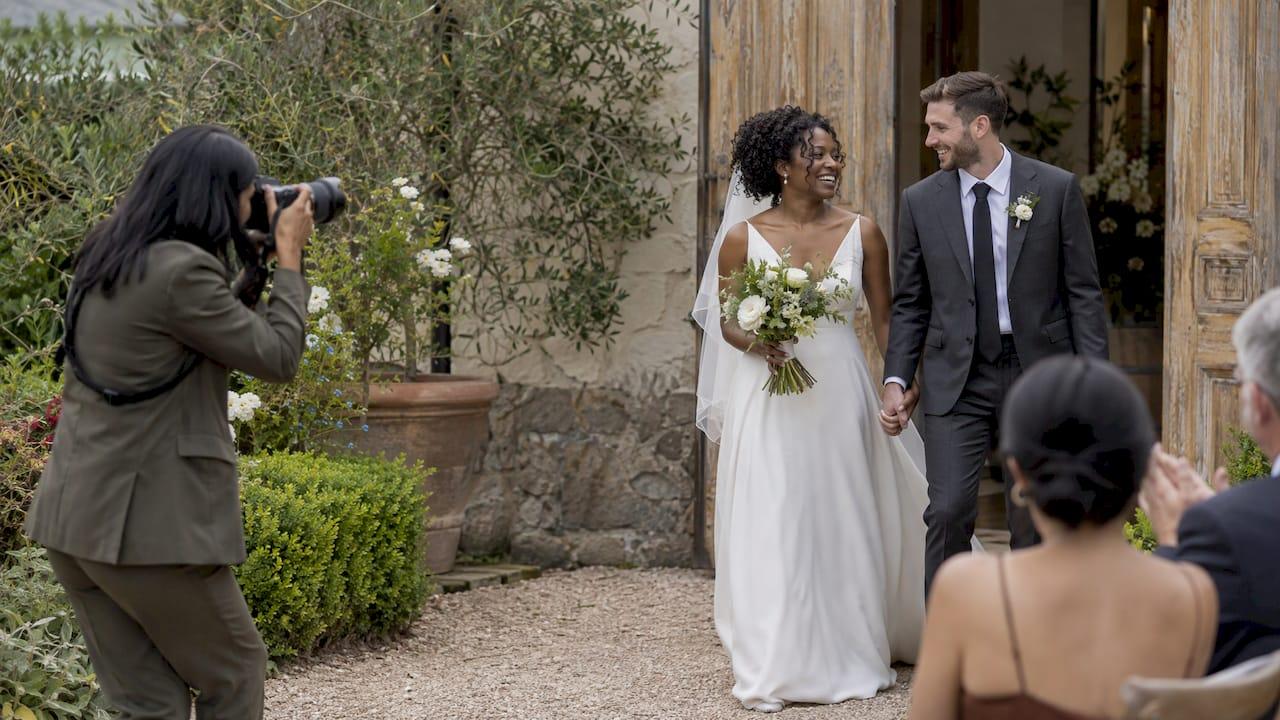
Most couples are best served by coverage that runs from the final preparations to the first dance, which for a typical wedding means a full day rather than a few hours. If your ceremony is small and your day is short, a shorter block can work well, as long as it is placed over the moments you care about most. The right number comes from your timeline, not from a standard package, and this guide shows you how to work it out. If you are planning an Auckland wedding, our wedding photography collections are built around that same idea: cover the day you are actually having.
TL;DR
- Count the hours from your own timeline: start when the first moment you want photographed begins and finish when the last one ends.
- Ceremony-only coverage suits very small weddings, half-day coverage suits a ceremony plus portraits and the start of the reception, and full-day coverage suits a day that runs from getting ready to the dancing.
- Build a buffer into your plan, because weddings rarely run to the minute and the most natural photos often happen in the gaps.
- Ask any photographer, before you book, what happens if the day runs over and how extra time is charged.
- Our wedding collections start at $1,195 and are priced by the amount of the day covered.
Table of Contents
- Why hours are the first thing to settle
- The three common lengths of coverage
- How to work out your own number
- Match the hours to the kind of wedding you are having
- Do more hours mean more photos?
- What happens if the wedding runs over
- Book the hours that match your day
- Our view on wedding photography hours
- FAQ
- Sources
Why hours are the first thing to settle
When you compare wedding photographers, the number of hours is the line that changes the price most, and it also changes what ends up in your gallery. A photographer can only photograph what happens while they are there. If they arrive after the bride's hair is done, you have no getting-ready photos. If they leave before the speeches finish, you have no record of them.
So the useful question is not "how many hours do most people book?" but "which parts of my day do I want to look back on?" Write that list down before you speak to anyone. It will make every quote easier to compare.
The three common lengths of coverage
Photographers across New Zealand package their time in different ways, but the options usually fall into three groups.
Ceremony-focused coverage
This covers the ceremony, the moments around it, and a short block of portraits. It suits elopements, registry weddings, small backyard ceremonies and couples who plan a casual meal afterwards and do not need the evening photographed. It is the most affordable route and works best when your day is compact and the venues are close together.
Our Ceremony Collection is priced at $1,195 for exactly this kind of wedding.
Half-day coverage
Half-day coverage usually takes in the lead-up to the ceremony, the ceremony itself, family photos, couple portraits and the beginning of the reception. It is a good fit when you want the key moments and a proper portrait session without paying for the whole evening. Many couples who choose it hold a daytime ceremony followed by a lunch or an early reception.
Our half day collection is $1,895.
Full-day coverage
Full-day coverage follows the day from preparation through to the reception highlights: the speeches, the cake, the first dance and the relaxed moments between them. If you have a getting-ready morning, two or more locations, a large guest list or a late finish, this is the length that lets the day unfold without anyone watching the clock.
Our full day collection is $2,995. For a closer look at how packages are priced around the country, see our guide to wedding photography prices in NZ.
| Coverage | Best for | Typical moments covered | Our collection |
|---|---|---|---|
| Ceremony-focused | Elopements, small or registry weddings | Ceremony, short portrait session | Ceremony Collection, $1,195 |
| Half day | Daytime ceremony with a lunch or early reception | Ceremony, family photos, couple portraits, start of reception | The half day collection, $1,895 |
| Full day | Weddings with preparation, multiple venues and an evening reception | Preparation through to speeches and dancing | The full day collection, $2,995 |
How to work out your own number
The most reliable way to choose hours is to draw up a rough timeline and count. You do not need to be precise, just realistic.
- List the moments you want photographed. Getting ready, the first look, the ceremony, family groups, couple portraits, the reception entrance, speeches, cutting the cake, the first dance.
- Put a time beside each. Use your venue's schedule and your celebrant's guidance on ceremony length.
- Add travel. If the ceremony and reception are in different suburbs, add the drive and the time to arrive and settle.
- Add a buffer. Allow extra time around portraits and family photos in particular. A hurried portrait session rarely looks relaxed.
- Count from the first item to the last. That is your coverage length.
If you would like a worked example to adapt, our complete wedding photo timeline lays out a day in sequence, and this hour-by-hour wedding photo timeline is another way to see how the pieces fit together.
Where couples most often miscount
- Family photos. A long list of groupings takes longer than most people expect. Choose the combinations that matter and nominate one relative who knows everyone to gather them.
- Couple portraits. Fifteen minutes can produce good images, but a longer, unhurried block gives you the relaxed, natural ones. If you are not used to being photographed, extra time helps you settle.
- Travel and parking. Between venues, time disappears. Build it in.
- Evening moments. If you want the first dance or a send-off, your coverage has to reach that time.
- Light. Morning, afternoon and evening ceremonies each give a photographer different light to work with, so a late ceremony may push your portraits to the end of the day. Our guide to blue hour wedding photos in New Zealand explains how to plan for that soft light after sunset.
Match the hours to the kind of wedding you are having
A small ceremony or elopement
When the guest list is short and the venue is a single location, you can cover the essentials in a compact window. Plan the portraits to follow the ceremony immediately while you both look and feel fresh.
A backyard or home wedding
Everything happens in one place, which saves travel time, but portraits still need a set block. Our photographer tips for backyard wedding photos in NZ suggest reserving a short, dedicated window for them so the party does not swallow the time.
A traditional day with a reception
If you have preparation in the morning, a ceremony in the afternoon, formal photos and an evening reception, full-day coverage is the straightforward choice. It lets the photographer capture the lead-up, the ceremony, the speeches and the dancing without making cuts.

A wedding with cultural ceremonies
Many New Zealand weddings include rituals, family gatherings or several events that take more time and sometimes more than one day. If that is your plan, tell your photographer early so the hours reflect the real programme. We cover this in more detail in our guide to cultural wedding photos in NZ.
A large wedding
With a large guest list, things take longer: more people to gather for family photos, more tables for speeches, more movement between spaces. If your day has two locations and many guests at once, you may also want to think about whether a second photographer would help. Our article on when you need a wedding second shooter goes through the situations where it does.
Do more hours mean more photos?
Not directly. Photographers describe their delivery in different ways. One published delivery guide from a gallery platform suggests roughly 50 to 100 finished images per hour of coverage as a general benchmark, with photographers who curate more tightly delivering fewer. The gallery size depends on the photographer's style as much as the clock.
A better test than the count is whether the gallery covers every part of your day that matters: the people, the moments and the details. Our checklist on how many wedding photos to expect walks through that approach.
What happens if the wedding runs over
Weddings run late. A speech goes long, the bridal party is delayed, the cake is cut half an hour behind schedule. It is worth knowing in advance how your photographer handles it, because policies differ: some stop at the booked time, some continue for a short grace period, and some charge for additional time by the hour.
Before you sign, ask three things:
- Is there a flexible window if the day runs a little over?
- How is additional time charged, and in what increments?
- Can extra time be added on the day, or only before it?
The simplest protection is to plan a buffer into your coverage from the start. That way an unexpected delay is absorbed by time you already have, rather than costing you the moment you most wanted.
Book the hours that match your day

There is a reason couples remember the in-between moments best: a friend laughing during the speeches, a quiet look before the ceremony, the walk to the car. Those moments are not on any schedule, and they only happen when there is time for them.
We design our wedding collections for Auckland and wider New Zealand weddings around the amount of the day you want covered: the Ceremony Collection at $1,195, the half day collection at $1,895 and the full day collection at $2,995. The proposal session is $575 if you want your engagement moment photographed as well. You can see the details and enquire on our wedding photography page.
If you are still deciding on a photographer, our guide on how to choose a wedding photographer in Auckland sets out what to look for, and our engagement photo ideas are a gentle way to get comfortable in front of the camera before the day.
Our view on wedding photography hours
We have a simple view: hours are a tool, not a target. Couples sometimes choose a number because it sounds right or because it fits a budget line, and then try to squeeze a day into it. We prefer to start from your day and work outwards.
Our relaxed, engaging approach puts even camera-shy people at ease, and that takes time. Nobody relaxes in five minutes with a camera pointed at them. The more unhurried your portrait block, the more natural the photos look, and you do not need to know how to pose, because we guide you through it.
That is why we keep three collections: ceremony, half day and full day. They cover the common shapes a New Zealand wedding takes, and each one is planned carefully with you beforehand so there are no surprises on the day. Tell us your venues and your timeline, and we will tell you which one fits.
Rowan Freeman
FAQ
How many hours of wedding photography do I need?
Count from the first moment you want photographed to the last, then add a buffer. A ceremony-only wedding needs a short block, a daytime ceremony with a reception suits half-day coverage, and a day with preparation and evening dancing suits full-day coverage. We can help you map this against your own timeline.
Can I add extra hours later?
It depends on the photographer's policy and on their availability that day. Ask when you book whether extra time can be added, and how it is charged. If you are unsure, planning in a buffer at the booking stage is the safest option.
Does the photographer need to be there for the whole reception?
No. Many couples end coverage after the speeches, the cake and the first dance, as the later part of the evening is mostly dancing. Choose the end time by the last moment you would want to see in your gallery.
Do I need a second photographer for a longer day?
Not necessarily. A second photographer is most useful when two things happen at once, such as both partners getting ready in different places, or when the guest list is large. Hours and a second shooter are separate decisions, and our guide explains when the second one helps.
When should I book my photographer?
As soon as your date and venue are confirmed. Popular dates, especially Saturdays in spring and summer, are taken early, so booking well ahead gives you the widest choice of coverage and collections.