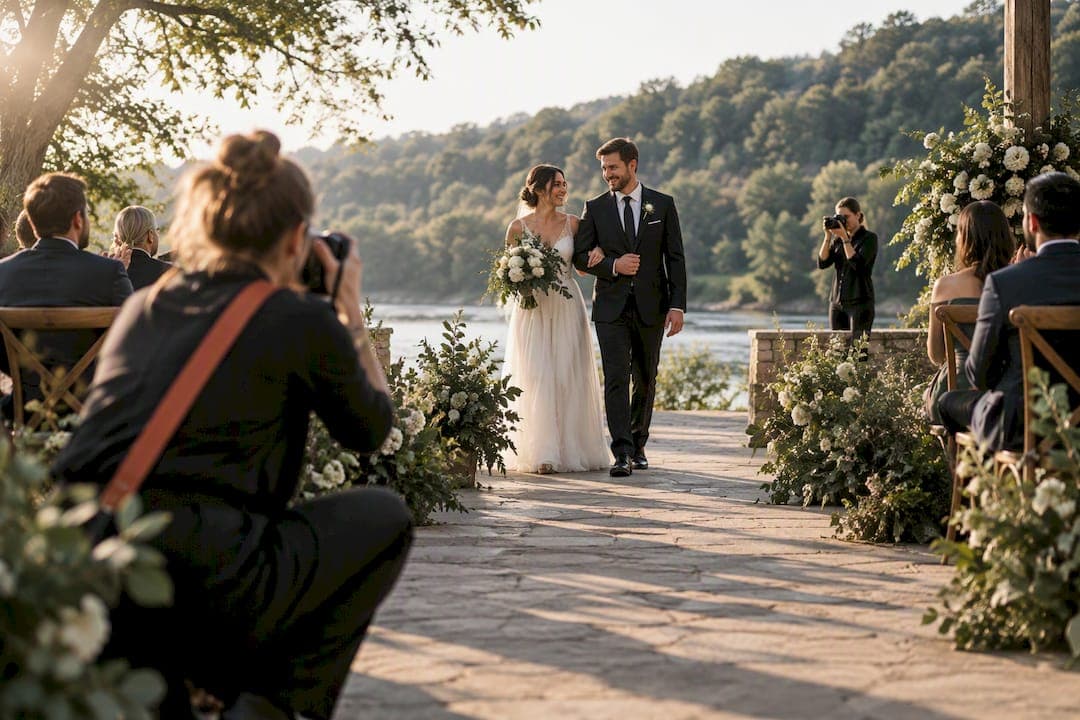
A wedding second shooter is a second photographer, working alongside your lead, who captures alternate angles, backup coverage, and moments the lead physically cannot reach alone. The quick rule: hire one if your day involves split preparation locations, multiple venues, a large guest list, or a tight golden-hour window. If none of those apply, extra hours with your lead photographer may serve you better. The sections below unpack exactly what this role covers and how to decide.
TL;DR:
- A second shooter is most valuable for weddings involving multiple venues, large guest lists, or tight golden-hour windows to ensure comprehensive coverage.
- They operate independently from the lead photographer, capturing unique angles, assisting with formal portraits, and providing backup against equipment failures.
- Proper preparation, including syncing camera settings and clarifying expectations beforehand, is essential to produce a cohesive gallery.
- For smaller or simpler weddings, investing in extended hours with the lead photographer may yield better value than hiring a second shooter.
- Contract details such as coverage hours, image rights, and expenses should be confirmed in writing to avoid disputes and ensure clarity.
Table of Contents
- What is a wedding second shooter, and how does it differ from an assistant?
- What are the key benefits of hiring a second shooter?
- Do you need a second shooter for your wedding?
- What does a second shooter photograph during the day?
- How can second shooters improve their craft and reputation?
- What contract and image-rights details should you confirm before booking?
- How does Life in Style Photography approach second shooter coverage?
- What most guides get wrong about hiring a second shooter
- Ready to talk wedding coverage?
- Selected authoritative resources and guides
- Sources
- FAQ
What is a wedding second shooter, and how does it differ from an assistant?
A second shooter, sometimes called a second photographer, is a working photographer in their own right, not someone carrying bags or holding reflectors. They shoot independently throughout the day, often reporting directly to the lead photographer for shot list priorities and timeline changes. This is the key distinction that trips up a lot of couples during planning.
An assistant supports the lead's equipment and logistics but rarely fires a shutter. A second shooter operates their own camera, builds their own frames, and contributes an entire second stream of images to your final gallery. The role exists specifically because one person can't capture two angles of the same moment, whether that's the groom's reaction and the bride walking down the aisle simultaneously, or your parents' faces during vows while the lead frames the couple.
- Second shooter: shoots independently, contributes original images, works from a shared shot list
- Assistant: manages gear, lighting, or crowd logistics, rarely photographs the day themselves
- Reporting line: the second typically follows the lead's direction on positioning and priorities, but retains creative judgement in the moment
What are the key benefits of hiring a second shooter?
The most obvious benefit is coverage from angles your lead simply cannot occupy at the same time. While your photographer captures you walking down the aisle, a second can be positioned at the altar catching your partner's expression as you appear. That single frame often becomes one of the most requested images in the entire gallery.
Beyond angles, a second shooter acts as insurance. Gear fails. Batteries die at the worst moment. Cards corrupt. Having two photographers with two full kits means a single equipment failure never costs you the day's coverage.
Second shooters also speed up formal portraits considerably, since one photographer can direct family groupings while the other keeps working the room for candid reactions, meaning fewer minutes lost from your reception. And they free the lead to focus on hero shots by picking up detail work: rings, table settings, décor, and the small guest interactions that happen away from the main action.
- Alternate angles at ceremony and speeches
- Backup against equipment or timing failures
- Faster formal photo sessions
- Broader detail and candid coverage across the whole guest list
A second shooter earns its cost fastest when the day has parallel prep locations, multiple venues, a large guest list, or a narrow golden-hour window, because those are exactly the scenarios where one photographer physically cannot be everywhere that matters.
Do you need a second shooter for your wedding?
Run through this checklist with your photographer during your planning consult. The more items that apply, the stronger the case for booking a second.
- Guest count. Larger weddings mean more candid moments happening simultaneously, and more family combinations to photograph for formals.
- Separate getting-ready locations. If you and your partner are prepping at different addresses, one photographer cannot cover both without missing something.
- Multiple venues. A ceremony at one site and reception at another eats travel time your lead can't spend shooting.
- Tight golden-hour window. If your ceremony, portraits, and reception are compressed into a narrow evening light window, a second can keep multiple threads moving at once.
- Large wedding party or multi-ritual day. More people in formals, or cultural ceremonies with distinct segments, both benefit from split coverage.
If two or more of these apply to your day, a second shooter is generally worth the cost. If none do, that budget might work harder as extended hours with your lead, a larger album, or additional edited images. Bring this list to your consult and ask your photographer to weigh it against your actual timeline, not a generic recommendation.
What does a second shooter photograph during the day?
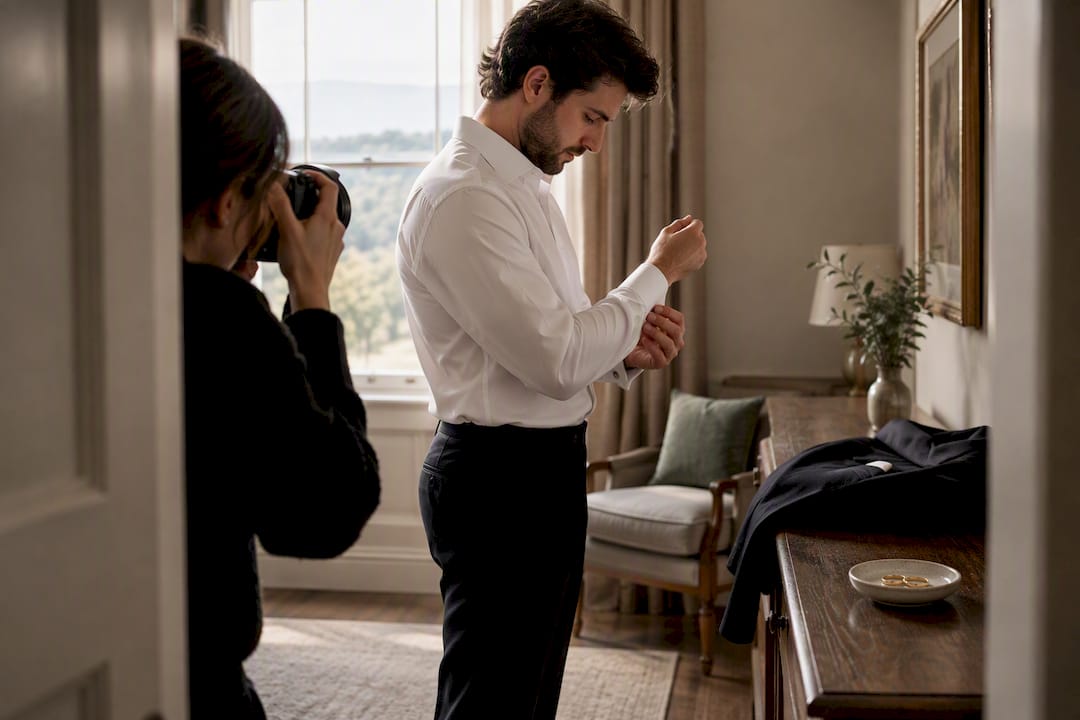
The second's coverage generally shadows the wedding's natural phases, filling gaps the lead can't reach. During getting ready, the lead usually stays with the bride while the second covers the groom's preparation, or vice versa, plus detail shots like rings, invitations, and dress hanging shots. Our complete wedding shot list breaks down exactly which details are worth prioritising in this window.
At the ceremony, the second typically works from the back or side aisle while the lead shoots from the front, capturing guest reactions, the processional from a different angle, and moments the front-facing lead simply cannot frame.
During portraits and formals, the lead directs poses while the second works candidly around the group, catching laughter between setups, or breaks off entirely to photograph guests mingling nearby.
At the reception, the second typically handles:
- Guest candids and table interactions throughout the room
- Reception details: florals, place settings, cake, favours
- Dance floor coverage from a second angle while the lead follows the couple
Behind the scenes, both photographers need their camera clocks synced so timestamps align during editing, matching RAW file settings, and a clear plan for handing over memory cards at the end of the night. Sorting this before the wedding, not during it, is what makes two photographers' work merge into one cohesive gallery.
How can second shooters improve their craft and reputation?
Photographers building a second-shooting career get repeat bookings by making the lead's job easier, not by chasing their own hero shots. Here's how to do that well.
- Get the pre-wedding brief right. Ask for the shot list, discuss the lead's editing style, and clarify any no-shoot zones (some couples request no photography during vows, for instance).
- Bring proper gear. A backup body, a 24 to 70mm and a 70 to 200mm or equivalents, spare batteries and cards, and a small flash for reception coverage are standard expectations for a properly equipped second.
- Sync before you shoot. Match white balance settings, RAW profiles, and camera clocks with the lead so both galleries blend seamlessly in post.
- Mind your on-the-day presence. Dress to blend in with guests, never cross into the lead's frame, and stay aware of sightlines during the ceremony.
- Clarify handover expectations early. Confirm whether you deliver RAWs only or edited selects, whether you can use images in your own portfolio, and how you'll be credited.
Pro Tip: Ask the lead for their actual shot list from a past wedding gallery, not just a verbal description. Seeing real examples of what they consider a "must-have" frame will align your instincts faster than any briefing conversation.
What contract and image-rights details should you confirm before booking?
Get these points in writing before the wedding, not after. Ambiguity here is where most disputes between couples, leads, and seconds start.
- Hours and coverage segments. Specify exactly which parts of the day the second covers, start to finish.
- Image ownership. Clarify who owns the RAW files and whether the second can showcase images in their own portfolio.
- Fees and payment timing. Confirm the rate, deposit terms, and when final payment is due.
- Meals, travel, and insurance. Standard etiquette includes a meal for the second at reception; travel costs and public liability insurance expectations should be spelt out.
- Backup and substitution policy. Agree what happens if the booked second becomes unavailable close to the date.
Vetting a second properly means reviewing their full wedding galleries, not just a highlight reel, and putting these terms in a written agreement before the big day.
How does Life in Style Photography approach second shooter coverage?
Life in Style Photography is based in Auckland and works across wedding photography, couples, and personal branding genres, with a relaxed, engaging on-set style designed to put even camera-shy clients at ease. That same approach carries through when a second photographer joins a wedding package.
Briefing a second properly matters for consistency, and that means sharing the shot list, matching editing style, and confirming technical settings before the day starts, exactly the kind of preparation industry guides recommend for a gallery that reads as one cohesive body of work rather than two disconnected styles stitched together.
What most guides get wrong about hiring a second shooter
Most wedding photography advice treats a second shooter as a default upgrade, something every couple should add if the budget stretches. That framing misses the point entirely. The real question isn't whether a second shooter is nice to have. It's whether your specific timeline creates gaps one photographer physically cannot cover.
A intimate wedding at a single venue with a relaxed schedule rarely needs one. A day split across two locations with a compressed golden hour almost always does. Run the checklist honestly before you spend the money.
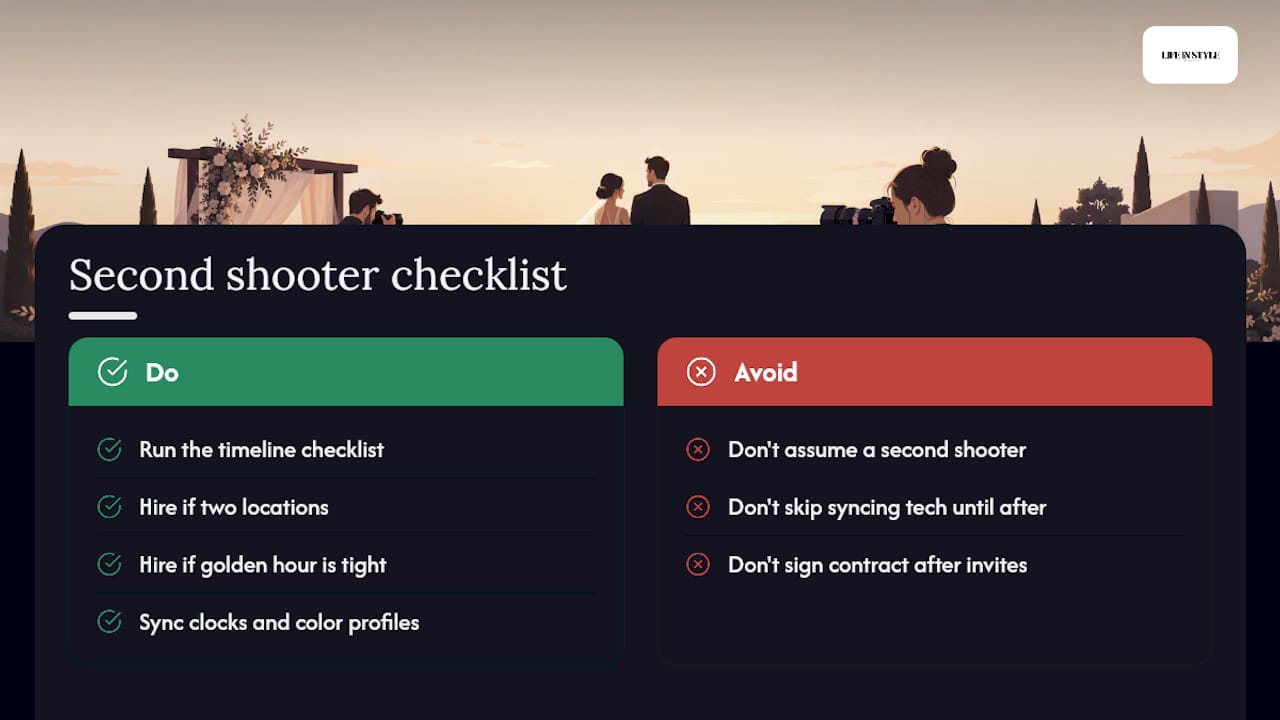
For photographers, the advice that's consistently underweighted is the technical handshake: syncing clocks and colour profiles before you shoot, not after. It sounds like a minor admin step, but it's the difference between a gallery that merges cleanly and one that takes twice as long to edit because nothing lines up.
Prioritise the decision criteria over the hype, and confirm the contract details before the invitations go out, not after.
— Rowan Freeman
Ready to talk wedding coverage?
If your day involves multiple venues, a large guest list, or a tight timeline, extra coverage is worth discussing before you lock in a package. Life in Style Photography's wedding options range from The Ceremony Collection through to half-day and full-day collections, with additional photographer coverage available where your day calls for it.
Every second photographer we bring onto a wedding is briefed against the lead's editing style and shot list beforehand, so your final gallery reads as one consistent body of work rather than two different visual voices. That preparation, paired with our relaxed, unscripted approach to directing couples and guests, is what keeps the day feeling natural instead of stage-managed. If your wedding plan includes separate prep locations, multiple venues, or a packed timeline, browse the wedding photography packages and get in touch for a quote tailored to your day.
Selected authoritative resources and guides
- Second Shooter Guide — role definitions, duties, and gear expectations
- How to be a good second shooter for a wedding — professional guide — vetting, contracts, and technical synchronisation
- Is a second shooter worth it? — decision framework for couples
- Second shooter photography guide (When, Why, Cost in 2026) — cost considerations and market context
Sources
- Second Shooter Guide
- How to be a good second shooter for a wedding — professional guide
- Is a second shooter worth it?
- Second shooter photography guide (When, Why, Cost in 2026) - Tov Studio Photo
FAQ
Is a second shooter necessary for a wedding?
Not always. A second shooter is most valuable when your day has split prep locations, multiple venues, a large guest list, or a tight golden-hour window; for smaller, single-venue weddings, extra hours with your lead may deliver more value.
How do I become a second shooter at a wedding?
Start by building a portfolio through assisting or shadowing, then approach local leads with your work and availability. Successful seconds prioritise clear communication about shot lists and expectations before the wedding day, and arrive with proper backup gear.
What is the 20 60 20 rule in photography?
Definitions of this rule vary across the industry and it isn't a fixed standard covered in second-shooting guidance, so treat any specific breakdown you encounter with caution. Ask your lead photographer directly how they structure coverage priorities across the day if this comes up in a consult.
How much does a wedding photographer cost in New Zealand?
Pricing depends heavily on package inclusions, hours, and whether a second shooter is included. Life in Style Photography's wedding collections start at $1,195 NZD for the Ceremony Collection, with half-day and full-day options available; second shooter availability and exact current pricing can be confirmed directly through the site.