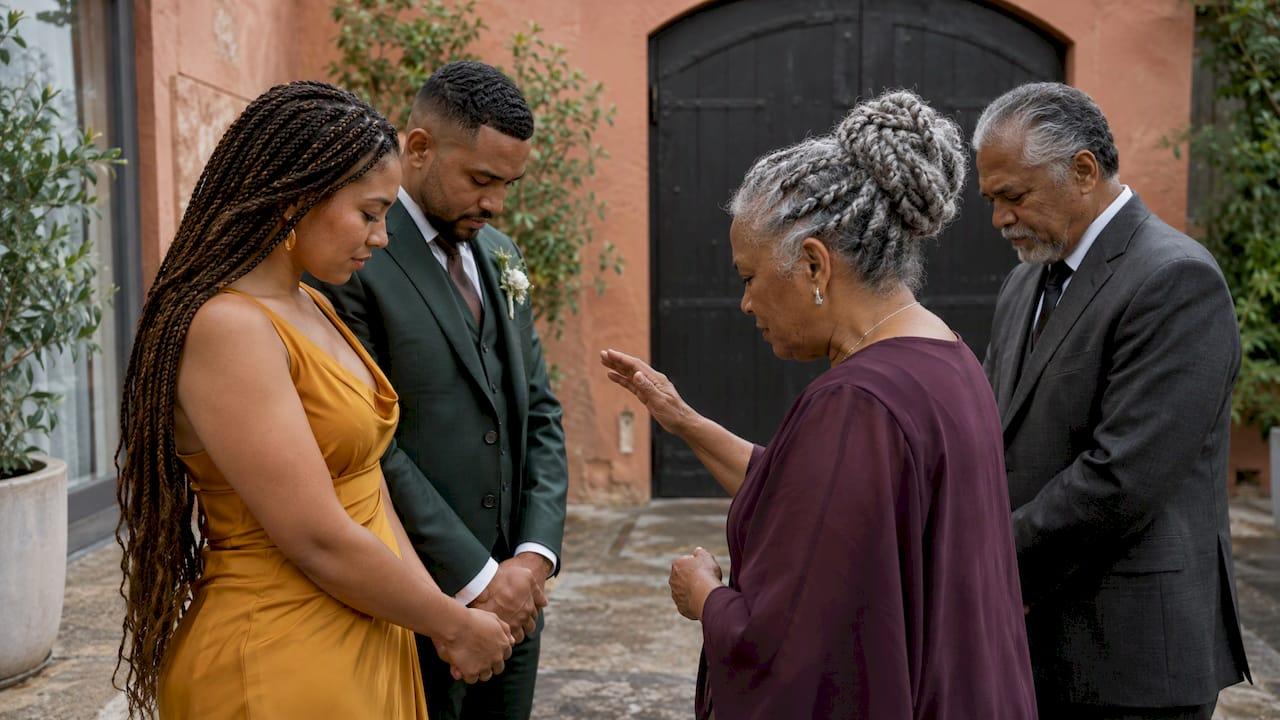
Cultural wedding photos in New Zealand are images that record the traditions, languages, clothing, rituals and people that make your wedding yours, whether that is a marae ceremony, a Tongan or Indian celebration, a blended family day or a quiet nod to a grandparent's homeland. The best results come from three things: telling your photographer early what matters, building the schedule around the rituals rather than squeezing them in, and agreeing with your officiant and whānau what can and cannot be photographed. This guide walks you through each step.
TL;DR
- Tell your photographer which rituals, elders, outfits and family groups matter most, in writing, at least a few weeks before the day.
- Build the day's timeline around the ceremony and rituals, then fit portraits around them, not the other way round.
- Check photography rules with your officiant, venue and kaumātua or family elders. Some moments are best left unphotographed or photographed from a distance.
- Plan more coverage time than a standard wedding if you have several ceremonies, a long guest list or multiple outfit changes.
- Appoint one trusted relative to point out the people and moments your photographer might not recognise.
Table of Contents
- What cultural wedding photos mean for NZ couples
- Moments couples often want photographed
- How to explain your cultural priorities before the wedding
- Timing, portraits and locations around cultural ceremonies
- Restrictions and sensitivities to discuss with your officiant and whānau
- How a photographer can document traditions respectfully
- Including family and community in the photos
- Our perspective
- Choosing coverage and budgeting for your cultural wedding
- Plan your cultural wedding photos with us
- FAQ
- Sources
What cultural wedding photos mean for NZ couples
New Zealand weddings are rarely one tradition. Many couples bring together Māori, Pasifika, Asian, European and other heritages in one day, and they want the photos to show it. A NZ Herald feature on multicultural Kiwi weddings describes couples who want their cultural identity visible in the photos, including blessings in English, Tongan and Māori, extensive photography to share with relatives who could not attend, and portraits in traditional dress to honour family members overseas.
So "cultural wedding photos" usually covers four things:
- The ritual itself: the blessing, the exchange, the ceremony steps, the speeches and songs.
- The clothing and details: traditional garments, jewellery, flowers, adornments, food, gifts and décor.
- The people: elders, extended whānau and family groups, often in a particular order that matters to them.
- The feeling: the hongi, the tears, the laughter of a grandmother seeing the couple dressed in heritage clothing.
None of this needs to be staged. Our approach at Life in Style Photography is relaxed and conversational, so the people in front of the camera, from the couple to the aunties, can simply carry on with what they are doing while we work around them.
Moments couples often want photographed
Every culture has its own sequence, and your family knows it better than any photographer. These are the kinds of moments couples commonly ask us to plan around, and you can use the list as a prompt for your own.
Before the ceremony
- Getting ready in traditional dress, including the help of mothers, aunties or grandmothers who dress or adorn the couple.
- Blessings, prayers or gift-giving that take place privately with family.
- Detail shots of heirlooms, jewellery, fabrics and hand-made items, taken before the crowd arrives.
During the ceremony
- Entrances and processions, which often have a set order and happen only once.
- Language and ritual moments, such as vows or blessings in more than one language.
- Moments of physical or spiritual significance, such as a hongi, a garland exchange or a ring ceremony.
A good example from the public record: when actor Huia Max Rose married at Te Kūiti Pā marae in the Waikato, the ceremony was conducted entirely in te reo Māori, close family recited whakapapa, the couple shared a hongi in place of a kiss, and tā moko marked their ring fingers. It shows how much of a cultural wedding is spoken, shared and touched rather than simply seen, and why a photographer needs to understand the order of events before the day.
After the ceremony
- Large family group portraits, including both sides and, where relevant, the whole community.
- Couple portraits in traditional clothing, which many couples now do in addition to modern outfits.
- Food, dancing, songs, speeches and the moments when generations mix.
How to explain your cultural priorities before the wedding
Most photographers are happy to be guided, but they cannot read your mind. The most helpful thing you can do is put your wishes in a short written brief. We have a copyable 8-point photography brief for New Zealand clients that you can adapt, and for a cultural wedding we suggest adding the following.
A short list of must-have moments
Keep it to a realistic number, around eight to twelve. Describe each moment in a sentence: what happens, who is involved and roughly when. "Mum and Auntie pin the veil, about 10:30 am, at the family home" is far more useful than "getting ready photos".
A family group list
For cultural weddings, the family list is often the most important document of the day. Write the groups in the order you want them, with names, and note any who need to leave early or who have limited mobility. Photographing one group at a time with a named person calling them in is the quickest way to avoid a long, chaotic session. If you want a sense of how many images a photographer can realistically deliver, our guide on how many wedding photos to expect per hour gives a useful benchmark.
A "please do" and "please don't" list
Some things might be sacred, private or restricted. Note them clearly: moments to be photographed only from the back, moments with no photos at all, people who prefer not to be photographed, and any areas of a venue that are off limits.
A key person
Name one relative or friend who knows both families and who can quietly point out the important people to your photographer. It saves time and ensures the grandfather who travelled from overseas is not missed.
If you are still choosing, our guide to how to choose a wedding photographer in Auckland covers the questions worth asking in your first conversation, including how they like to be briefed.
Timing, portraits and locations around cultural ceremonies
Cultural ceremonies rarely run to a clock, and some are far longer than a typical two-hour wedding ceremony. That changes how you plan the day.
Plan the day around the ritual
Start with the ceremony and any rituals that must happen at a certain time, then work out the portraits. Our wedding photo timeline is a good template to copy and adjust. For a cultural day, add buffer time between segments, because blessings, speeches and processions tend to run over.

Allow more coverage time
If your celebration includes several ceremonies, an outfit change or an event spread across a morning and evening, a half or full day of coverage gives your photographer time to be present for everything without rushing. We offer three wedding collections for different needs, which are listed further down, and a conversation about your schedule is the best way to choose between them.
Shoot family portraits early
Elders tire, children get restless and guests drift to the food. If family portraits matter, schedule them right after the ceremony or before it, in a space with good light and shelter from wind and rain. New Zealand weather changes quickly, so ask your photographer for a wet-weather location, such as a covered verandah, a hall entrance or a marquee edge.

Consider a first look or private moment
If you want to wear traditional clothing for portraits but also want to be present at the ceremony in a different outfit, a private session before or after can reduce pressure. Our guide to first look alternatives explains how to protect the reveal while still saving time.
Think about the crowd
Large cultural celebrations can have hundreds of guests, with children running about and relatives who all want the photographer's attention. Keeping aisles clear, entrances managed and the ceremony space uncluttered helps everyone, the photographer included. If your event is big enough to need venue crowd management, this venue security checklist for NZ is a practical starting point for thinking about access and flow.
Restrictions and sensitivities to discuss with your officiant and whānau
Photography rules vary by place, person and tradition. The safest approach is to ask early and ask everybody who has a say.
Venues and institutions
Some venues set clear rules. For example, Auckland Museum states that flash photography and video are not allowed during its Māori Cultural Experience, and photos during the performance are permitted except during the karakia and haka. The same page says wedding photography is not permitted inside the Museum unless the ceremony or reception takes place there. That is one venue, but it shows the sort of rules that can apply to culturally significant spaces, so ask your own venue what it allows.
Churches, temples and marae
Places of worship often have their own guidelines. Trinity Napier, for instance, says that a minister will discuss guidelines with couples to minimise distraction from photography and video during the ceremony. Expect similar conversations with other officiants. For a marae, speak with the kaumātua or the person who manages the marae about where photographers can stand, whether any parts of the day are tapu or restricted, and what is appropriate before the day. Your photographer should follow the guidance you are given without argument.
Guests and social media
You can decide how guests share images. Bride & Groom Magazine suggests that your officiant or MC can set social media expectations before the ceremony, which helps respect your preferences. The same article suggests a sign with a chosen hashtag so you can gather candid guest photos afterwards, which is a handy way to build a wider record of the day that includes your professional images.
A quick checklist for the conversation
- Are there moments when no photography or video is allowed?
- Where can the photographer stand during each part of the ceremony?
- Is flash acceptable, or should natural light only be used?
- Are there people who should not be photographed, or photographed only with permission?
- Who will tell guests, and how: the officiant, the MC or a sign at the entrance?
How a photographer can document traditions respectfully
Respect starts before the camera comes out. A photographer who works well at a cultural wedding does the following.
- Listens first. They ask about the meaning of each ritual, not just the timing, so they know what matters and what to avoid.
- Asks permission. They check with the officiant, elders and family before moving close to rituals or sacred items.
- Stays quiet and low-profile. Natural light, no flash where it is not welcome, careful movement and a respectful distance from prayers, speeches and songs.
- Visits the venue or reviews the plan. They know the space, the entrances, the light and the likely positions of key people.
- Photographs people, not just costumes. The best cultural photos show relationships: a father adjusting a garment, a grandmother laughing, cousins dancing.
- Follows your lead. They check the must-have list during the day and let a family contact guide introductions.
This suits how we like to work. Every session we run is relaxed and engaging, and we plan carefully and give clear guidance so nobody has to know how to pose. For a cultural wedding, that means your family can focus on the ceremony while we focus on the details you have told us matter. The best preparation is a conversation, and we are glad to talk through your plans before you book.
Including family and community in the photos
Cultural weddings are rarely about the couple alone, and the photos should reflect that. Some ways to make it happen:
- Group portraits by branch. Start with the largest group, then move to smaller ones. Include elders first so they can sit down.
- Generational portraits. Grandparents, parents and the couple together are often the images families treasure most.
- Honouring those who are absent. The NZ Herald article mentions couples photographing in traditional dress to honour relatives who could not travel. A portrait with an empty chair, a photo held in the hand or a framed picture placed in the ceremony space can serve the same purpose.
- Candid moments. Ask your photographer to spend time with children, elders and guests during speeches and meals, not just during formal portraits.
- A guest hashtag. As noted above, a hashtag and sign gather the guests' own photos in one place.
If you want your engagement photos to reflect your heritage too, our engagement photo ideas for NZ couples include location and styling suggestions, and a session in traditional clothing before the wedding is a good way to become comfortable in front of the camera.
Our perspective
We believe a cultural wedding is photographed best when the photographer treats the brief as seriously as the camera. The couples we meet are usually not worried about poses. They are worried that the one moment their grandmother has waited for will be missed, or that a ritual will be photographed carelessly.
That is why we start with a conversation. We ask what the day means, who needs to be in the frame, what must not be photographed and how the schedule will actually unfold. Then we plan around it, with clear guidance on the day and a relaxed manner that helps even camera-shy family members feel at ease.
We would rather have a longer, more thorough conversation before the wedding than a rushed one on the morning. If you tell us what matters, we will build the coverage around it, and the images will show your people being themselves.
Rowan Freeman
Choosing coverage and budgeting for your cultural wedding
The right amount of coverage depends on how many rituals you want documented and how long they take. These are our current wedding collections, as published on our wedding photography page:
| Collection | Price (NZD) | Best suited to |
|---|---|---|
| The Ceremony Collection | $1,195 | A single ceremony with a short set of portraits |
| The half day collection | $1,895 | A ceremony, family portraits and part of the celebration |
| The full day collection | $2,995 | Getting ready, ceremony, portraits and reception, with time for several rituals |
| The proposal | $575 | A proposal photographed discreetly |
If your celebration spans several ceremonies or runs longer than a standard day, we recommend a conversation about your timeline before choosing. For a wider look at what couples typically spend across the country, read our wedding photography prices guide for NZ.
Add a couples session
Many couples want a calmer, separate session in traditional dress away from the crowd. Our couples sessions are the Full Session at $575 and the Extended Session at $800, which can be done before the wedding or on another day, so you have time to relax and try several outfits.
Plan your cultural wedding photos with us
We are an Auckland photography studio that photographs weddings, couples and events, and we would be glad to hear about your day: the ceremony, the people and the moments you want recorded. Browse the collections on our wedding photography page, get in touch and tell us what matters, and we will help you decide which coverage fits.
If you would like to see how we work with couples before you decide, our couples portfolio is a good place to start.
FAQ
How early should I tell my photographer about cultural traditions?
As soon as you book, and again in a written brief a few weeks before the wedding. Early notice gives your photographer time to plan the schedule, understand the order of events and discuss any restrictions with your officiant or venue.
Can I ask for no photos during certain parts of the ceremony?
Yes. Many officiants, venues and families set their own guidelines, and some parts of a ceremony may be sacred or private. Agree the rules with your officiant and elders first, then give your photographer a clear list of the moments to avoid or photograph from a distance.
How much coverage do I need for a multi-ritual wedding?
More than a standard wedding, in most cases. If you have several ceremonies, outfit changes or a long guest list, a half or full day gives your photographer time to be present without rushing. Talk through your schedule with us and we will suggest the right collection.
Can we take portraits in traditional dress as well as modern outfits?
Yes, and many couples do. It is best to allow extra time, so schedule the traditional portraits early or arrange a separate couples session. Bring any accessories, and ask a relative to help with garments if they are complex.
How do I get photos from guests as well as my photographer?
Choose a hashtag and display it on a sign at the ceremony or reception, and ask your MC or officiant to mention it. Bride & Groom Magazine suggests this as a simple way to gather guests' candid photos, and your photographer's images will cover the rest.
Sources
- What a Kiwi multicultural wedding looks like, NZ Herald
- Actor Huia Max Rose honours Māori culture in wedding, Now To Love
- Photography and filming, Auckland Museum
- Weddings, Trinity Napier
- Weddings and social media, Bride & Groom Magazine