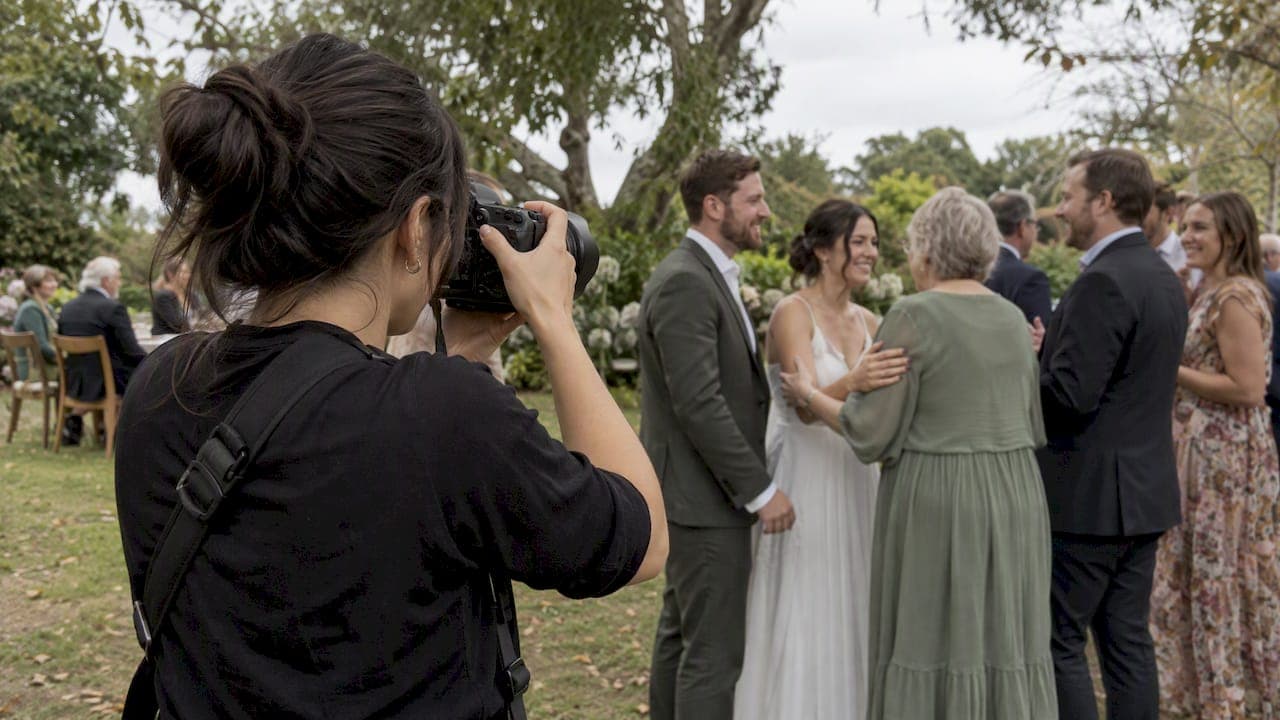
Most wedding photographers deliver between 50 and 100 edited images for every hour of coverage, so a 3 hour elopement typically lands around 150 to 300 images, and a full 8 hour day often produces 400 to 800. The exact figure depends on whether your photographer counts edited files only or includes raw frames, and whether a second shooter is on hand. We've worked through hundreds of these conversations with clients, and Rowan Freeman shares the practical detail below.
TL;DR:
- Confirm whether the quoted total means finished, edited images; raw files are usually excluded, while proofs and social sharing highlights may be separate deliverables.
- Coverage length, locations, guest count, and reception activity affect the final gallery; dim venues can reduce clean images, while a second shooter adds angles.
- Sneak peeks often arrive within days and contain a few dozen images; ask when the full gallery will arrive, since editing continues afterward.
- Before signing, confirm the edited image count, raw file policy, revision limits, extra image fees, and whether delivery comes through a gallery, USB, or prints.
- If choosing between a larger image quota and more coverage, prioritize extra hours or a second shooter; they capture moments a higher quota cannot create.
Table of Contents
- Expected image counts by coverage length
- What photographers include when they quote a photo count
- Factors that change the final photo total
- How to set expectations and questions to ask your photographer
- How we decide what to deliver at Life in Style Photography
- Balancing quantity and quality: an editorial view
- Wedding packages built around these expectations
- FAQ
- Sources
Expected image counts by coverage length
The 50 to 100 edited images per hour guideline isn't arbitrary. It reflects the time a photographer needs to shoot, cull and edit to a consistent standard, according to MyWeddingGuide's breakdown. A photographer working solo in tricky light will usually sit nearer the lower end, while a team with a second shooter and strong natural light can push towards the higher end without sacrificing quality.
Here's how that plays out across common booking lengths:
- Micro wedding or elopement (2 to 3 hours): roughly 100 to 300 images, usually covering getting-ready details, the ceremony and a short portrait session.
- Part-day coverage (4 to 6 hours): roughly several hundred images, adding more portrait variety and the start of the reception.
- Full day (8 to 10+ hours): roughly several hundred to around a thousand images, covering preparation, ceremony, formal portraits, reception speeches and dancing.
Most couples receive a sneak-peek gallery first, often containing a few dozen images, shared within days so you have something to post or send to family while the full gallery is still being edited. The complete gallery follows later, built from the entire day's coverage rather than a quick highlight reel.
What photographers include when they quote a photo count
The number your photographer quotes depends entirely on what they mean by "photo." Clarifying these terms before you sign anything saves a lot of confusion later.
- Edited images are the final, colour-corrected and retouched files delivered in your gallery. This is almost always the figure photographers mean when they quote a total.
- Raw files are unedited camera files. Most studios don't hand these over, since they represent unfinished work rather than a deliverable.
- Proofs sit between the two: lightly adjusted previews used for selection, common with print-focused studios but less common with digital-first delivery.
- Highlights or social-size images are a curated subset, often 20 to 50 shots sized for sharing online, separate from the full gallery count.
Technical choices behind the scenes also shape the final number. How aggressively a photographer culls burst sequences, whether a second shooter's frames are merged into the main gallery, and how strict the editing standard is all change what ends up in your hands.
Factors that change the final photo total
A quoted range is a starting point, not a promise, because several variables push the total up or down.
- Event length and number of locations: more time and more venues mean more opportunities, and more images.
- Guest count: larger weddings generate more candid, documentary-style frames as photographers capture interactions throughout the day.
- Second shooter: an extra photographer covering different angles, or shooting the groom's preparation while the lead shoots the bride's, adds meaningfully to the final gallery.
- Portrait time and reception dancing: longer formal sessions and an active dance floor both produce more usable frames than a quiet, low-key reception.
- Lighting conditions: a dim reception venue or harsh midday sun reduces the number of technically clean frames a photographer can confidently deliver.
- Family photo combinations: requesting many different group combinations adds posed shots but also adds culling time, which can slow delivery without proportionally growing the final count.
Pro Tip: If your reception venue has poor lighting, ask your photographer in advance how they plan to handle it. It affects both the look of your images and how many make the final cut.
How to set expectations and questions to ask your photographer
The best way to avoid disappointment is to ask specific questions before you book, not after the wedding.
- "How many edited images will we receive, and over what coverage length?"
- "Will we get raw files, or only the finished edited set?"
- "What's the delivery timeline for the sneak peek and the full gallery?"
- "Are sneak-peeks included, and roughly how many images are in one?"
It also helps to agree on a short shot priority list beforehand, so your photographer knows which moments matter most to you and doesn't burn time on shots you don't care about. Our wedding shot list is a useful starting point if you want to adapt one rather than build it from scratch.
Before signing, check the contract covers revision limits, pricing for extra images beyond the included set, and the delivery format, whether that's a digital gallery, USB or prints.
| Coverage length | Typical edited image range | Common add-on worth considering |
|---|---|---|
| 2 to 3 hours | 100 to 300 | Extending by an hour |
| 4 to 6 hours | roughly several hundred | Second shooter for key moments |
| 8 to 10+ hours | several hundred to around a thousand | Second shooter plus extended portrait time |
If you're deciding between paying for more edited images versus adding coverage time, extra time and a second shooter almost always deliver better value, since they capture moments that simply wouldn't otherwise exist.
How we decide what to deliver at Life in Style Photography
Our culling process prioritises emotion and connection over sheer volume. We'd rather hand you 350 images that genuinely move you than 600 where half feel repetitive.
- We review every frame for expression, light and composition before it earns a place in your gallery.
- Galleries for our half day and full day wedding collections generally track the hourly guideline above, scaled to your specific timeline and locations.
- We factor in natural light conditions on the day, since a golden-hour ceremony yields more keepers than one shot under marquee lighting.
For couples who want to go deeper on planning, our wedding photo timeline and shot list guides pair well with this article.
Balancing quantity and quality: an editorial view
A bigger gallery isn't automatically a better one. We'd argue a tightly curated set of 400 genuinely strong images serves a couple far better than an unculled 700, because it's the editing, not the raw count, that turns a day into a story worth revisiting. If you're weighing where to spend your budget, extra coverage time or a second shooter usually buys more real value than paying simply for a higher image count.
— Rowan Freeman
Wedding packages built around these expectations
Our wedding packages are structured to match the coverage lengths couples actually book, with options for shorter, ceremony-focused days and longer, multi-location celebrations.
- Part-day weddings typically pair well with the half day collection.
- Full-day celebrations with multiple locations suit the full day collection.
- Shorter ceremonies or elopements often fit neatly within the Ceremony Collection.
If you'd like to confirm exactly what your gallery will include before booking, get in touch through our wedding photography page and we'll talk through your day in detail.
FAQ
Is 500 photos enough for a wedding?
For a part-day or shorter full-day wedding, 500 edited images is a reasonable, often generous, total based on the 50 to 100 images per hour guideline. It depends on how many hours of coverage you've booked and how many locations or guests were involved.
How many photos for a 3 hour wedding?
A 3 hour wedding typically yields somewhere between a low to moderate number of edited images, following the same per-hour guideline. The exact figure shifts depending on lighting conditions and whether a second shooter was present.
Is 200 photos enough for a wedding?
For a short ceremony or elopement of around 2 to 3 hours, 200 edited images sits comfortably within the expected range for shorter coverage. For a full-day celebration, 200 would be on the low side relative to the typical several hundred to around a thousand images for longer coverage.
How many photos are included in a wedding package?
This varies by photographer and depends on the coverage length and package booked. Galleries typically scale with the hours booked under collections like the Ceremony, half day and full day packages, so it's worth confirming the specific gallery size when you book.