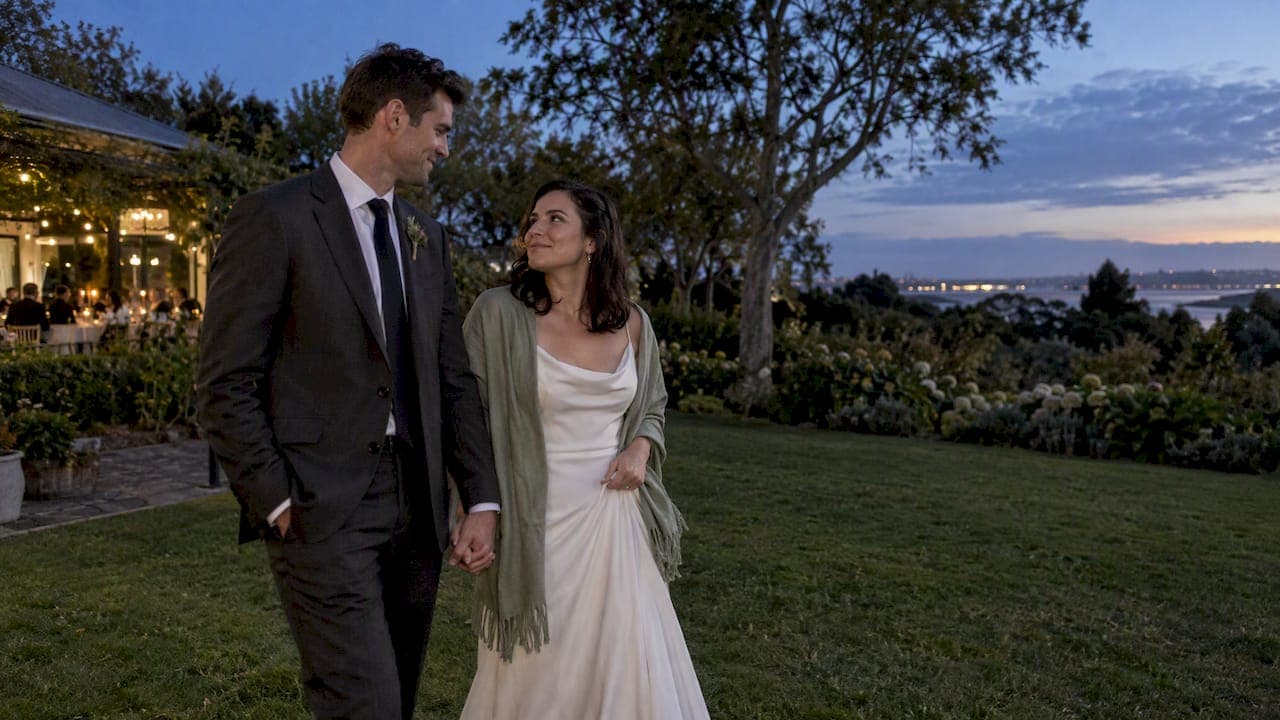
Blue hour wedding photos are taken in the short window just after sunset, when the sky turns deep blue and the light is soft and even. In New Zealand that window is usually only 20 to 30 minutes, so the photos happen only if the day's timeline is built around it. This guide covers when blue hour falls in Auckland, how to fit it into your wedding day, what the photographer needs to get right, and what to ask before you book.
TL;DR
- Blue hour starts as the sun drops below the horizon and usually lasts 20 to 30 minutes, depending on cloud and atmosphere.
- Plan 15 to 20 minutes away from your reception for couple portraits, and build the schedule around the light instead of hoping the light suits the schedule.
- Official sunset times assume a flat horizon. Hills and buildings can hide the sun earlier, so keep a buffer and check the venue in advance.
- Blue hour is dim, so your photographer needs the right equipment, a plan for the first 10 minutes and a couple who are relaxed in front of the camera.
- Winter weddings have the easiest timing, because sunset falls early enough for blue hour to happen before dinner is over.
Table of Contents
- What blue hour is, and how it differs from golden hour
- When blue hour happens in Auckland
- An occasional bonus: volcanic afterglow
- Building your wedding timeline around the light
- Where to shoot: choosing a location for blue hour
- How photographers handle the low light
- Posing for blue hour (without feeling awkward)
- What if the weather does not cooperate?
- Our perspective: why we plan blue hour before the day
- Wedding photography with Life in Style
- Choosing a photographer for blue hour
- FAQ
- Sources
What blue hour is, and how it differs from golden hour
Golden hour is the stretch before sunset (and after sunrise) when the light is warm, low and directional. Blue hour comes straight after it, once the sun is below the horizon. The sky no longer glows orange. It turns a cooler, deeper blue, and the light becomes soft and almost shadowless. Auckland Weddings describes the same sequence for New Zealand, with golden hour lasting about an hour and the productive blue hour window being much shorter.
The two looks suit different moods:
| Golden hour | Blue hour | |
|---|---|---|
| Light | Warm, directional, sun still visible | Cool, soft, no direct sun |
| Mood | Glowing, romantic, classic | Moody, cinematic, quiet |
| Length | Around an hour | Roughly 20 to 30 minutes |
| Skin tones | Warm and golden | Cool, need careful handling |
| Best for | Walks, laughter, movement | Close portraits, silhouettes, city lights |
If you want a deeper comparison with settings for each stage, we have written a full guide to golden hour versus blue hour in NZ. Many couples end up wanting both, and that is possible with some planning.
When blue hour happens in Auckland
The starting point is sunset. On 20 October 2026, sunset in Auckland is at 7:40 pm and civil twilight ends at 8:07 pm, about 27 minutes later. That 27-minute stretch is a good picture of the usable blue hour for portraits. Full darkness arrives at about 9:12 pm, but by then the sky is too dark for the soft blue look without added light.
A few things change the picture from day to day:
- The date. Sunrise and sunset times shift by roughly two minutes a day, so a wedding in March has very different timing from one in July. Always calculate for your exact date.
- Winter versus summer. Sunset in Auckland in May is around 5:22 pm, according to monthly figures from the same source. That means a winter blue hour can happen before the main meal. A midsummer wedding pushes it much later, which may clash with speeches, dinner or guests who have been drinking since the afternoon.
- Your horizon. Official sunset times are calculated for a flat, unobstructed horizon. Hills or tall buildings can make the sun disappear earlier than the tables suggest, so a venue tucked below a ridge or between city towers loses its light sooner.
- Cloud and haze. Heavy cloud flattens the sky and shortens the colour. A thin layer can do the opposite and give you more tone in the sky.
Your photographer can work all of this out ahead of time with a sun-position tool such as the Sunseeker app, then confirm on the day by looking at the actual sky. We always like to know the date, the venue and which direction the ceremony space faces before we draft a timeline.
An occasional bonus: volcanic afterglow
New Zealand twilights can sometimes be more colourful than usual. NIWA scientists explained that after the 2022 Tongan eruption, stratospheric aerosols scattered the light of the setting sun and produced glows in blue, purple and violet. That is not something to plan around, and it depends on events nobody can schedule. But it is a reminder that a twilight sky is never identical twice, and that a photographer who stays flexible will take advantage of an unusually good evening.

Building your wedding timeline around the light

The biggest mistake we see is a timeline fixed first and the light considered later. Local professionals say much the same: the schedule should be built around the light, not the other way around. Auckland Weddings recommends a mid-afternoon ceremony, with formal family photos done early, so you can step away from the reception for 15 to 20 minutes during golden or blue hour.
Here is a simple way to work it out:
- Find the sunset time for your date and venue.
- Mark blue hour as the 25 minutes or so after it. Treat the first 10 to 15 minutes as the best colour.
- Work backwards. Ceremony, family photos and canapés should finish early enough that you are free and dressed for the evening before sunset.
- Choose a slot in the reception. Between the end of dinner and the start of the dancing is common, or just before speeches if sunset lands there.
- Add a buffer of 10 to 15 minutes for walking to the spot, touch-ups and the unexpected.
- Tell your MC and your venue the exact time you will be gone, so nobody is looking for you.
Our complete wedding photo timeline is a template you can copy and adapt, and it shows where a blue hour slot fits. If you want a general checklist for the rest of the planning, this wedding checklist timeline is written for UK weddings, but its order of tasks translates well to a New Zealand schedule once you adjust for local suppliers and seasons.
A worked example for a summer evening
Say your sunset is at 8:10 pm. A schedule that respects it might run like this:
- 2:30 pm: ceremony
- 3:15 to 4:15 pm: family and group photos
- 4:30 to 6:00 pm: couple portraits in golden light, if you want them
- 6:30 pm: dinner
- 7:50 pm: speeches finish, you slip out with your photographer
- 8:10 to 8:35 pm: blue hour portraits
- 8:45 pm: back for the cake and first dance
The timings are only an illustration, not a rule. The principle is that blue hour is a fixed appointment, and everything else moves around it.
Where to shoot: choosing a location for blue hour
Blue hour rewards locations with something to look at. A flat blue sky on its own is a quiet backdrop, so we look for foreground and background interest within a short walk of the reception.
- Water. A harbour, beach or lake reflects the sky and keeps its colour for longer. A calm evening makes a big difference.
- Lights. City lights, fairy lights, a lit-up veranda or car headlights in the distance add warm points against the cool sky. This is the combination that gives blue hour its cinematic look.
- Silhouettes. Trees, a pier or a ridge line make a clean shape against a deep blue sky.
- Open sky. Check that the sky is visible in the direction you plan to shoot. A western horizon blocked by a hill loses its glow early.
If you are still choosing a venue, our shortlist of Auckland wedding venues is a good place to start, and it is worth asking each one which way the grounds face. For a home or garden celebration, our backyard wedding tips explain how to reserve 20 to 30 minutes for portraits without losing your guests.
How photographers handle the low light
You do not need to understand the technical side, but it helps to know what a prepared photographer is thinking about. As the sun sets, the ambient light drops quickly. Faster shutter speeds or a stable tripod become necessary, because the light that was plentiful ten minutes earlier is now thin.
In practice, this means:
- Exposure that changes every minute. Settings that worked at sunset will be wrong by the end of the window. A good photographer adjusts constantly.
- Fast lenses and steady hands. Wide apertures let in more light, so you keep sharp, clean files at lower shutter speeds.
- A tripod for stationary shots. If you stand still and the photographer uses a tripod, you get the sky and the faces both sharp. Movement, in contrast, needs a faster shutter speed.
- A little added light. A small off-camera flash or a continuous light, used softly, keeps your faces from sinking into shadow while the sky stays blue. Done well, it is barely visible.
- Colour balance. Skin tones can go too blue or too grey in a twilight scene. Careful editing keeps you looking like yourselves and keeps the sky's mood.
The key point is that blue hour portraits are not a point-and-shoot moment. Ask any photographer you are considering to show you real blue hour or night images from a real wedding, not only golden hour galleries.
Posing for blue hour (without feeling awkward)
Most people tell us they do not know how to pose, and the evening light is forgiving because it is so soft. These simple ideas work well:
- Stay close. Standing forehead to forehead or with arms around each other suits the intimate feel. It also helps the light reach both faces.
- Slow movement. A slow walk, a spin or a gentle dip shows more life than a fixed pose, and low light handles slow motion better than fast.
- Face the remaining glow. Turning slightly towards the brighter part of the sky lifts your faces.
- Use the lights. Standing a few metres in front of fairy lights or a lit window gives a soft glow behind you.
- Keep a few seconds still. For tripod shots, we ask you to hold a pose for a couple of seconds. It feels strange, but the images are very sharp.
- Bring a layer. New Zealand evenings cool quickly. A jacket for between frames keeps you comfortable and smiling.
If you would like more ideas on couple shots in general, our engagement photo ideas cover a lot of poses and settings that translate to the wedding day. And for the moment on the dance floor, see our advice on first dance photos.
What if the weather does not cooperate?
New Zealand weather is changeable, and you cannot guarantee a clear sky at sunset. Rain obviously changes the plan, but heavy cloud alone does not ruin the evening. A thick grey sky removes the colour gradient, yet it can still produce even, flattering light, and city or venue lights become the main feature. We cover this in more detail in our guide to cloudy day photos in NZ.
Two habits help:
- Check the forecast the day before and on the morning, and tell your photographer if rain looks likely, so you can decide on a covered spot with lights.
- Agree a backup time. If the sky is clear a little earlier than expected, or you realise a timeline is running late, your photographer should know in advance which part of the evening is flexible and which is not.
Our perspective: why we plan blue hour before the day
We photograph weddings across Auckland, and the evening portraits are often the images couples say they treasure most. They are quiet, and they are the only time all day the two of you are alone. But they are also the portraits most likely to be lost, because a late ceremony, long photos with extended family or a delayed dinner can quietly use up the light.
That is why we talk about timing early, ideally when you are building your schedule and not the week before. Our approach is relaxed and engaging, and we do not expect you to know how to pose. We give clear guidance, keep the session short and let you enjoy the moment, so a 20-minute window feels like a breather and not a performance. If you are comfortable and your guests know where you have gone, the photos look it.
Our honest advice: if you want blue hour portraits, tell your photographer when you choose your date, keep the ceremony early enough, and protect the time as you would a dinner booking. Everything else is easier from there.
— Rowan Freeman
Wedding photography with Life in Style
If you are planning a New Zealand wedding and want blue hour images built into the day, we would love to hear your date and venue. Our wedding photography collections include The Ceremony Collection at 1195 NZD, The half day collection at 1895 NZD and The full day collection at 2995 NZD. We can talk through which one gives enough time on the day for the portraits you have in mind. You can also see our work on the portfolio page.
If you want a shorter session for the two of you, our couples sessions start with the Full Session at 575 NZD, and you can see the couples options here.
Choosing a photographer for blue hour
Not every wedding photographer is equally comfortable in low light, so a few questions are worth asking before you book:
- Can I see a full gallery from a wedding where you shot after sunset?
- How do you plan the timeline around sunset, and do you visit the venue first?
- What equipment do you use when the light drops?
- How long do you need from us, and where would you like us to be?
- What is the backup plan if it rains?
We also suggest meeting or calling the photographer, because blue hour depends on trust. You will be stepping away from your own party for a short portrait session, and you want to feel at ease with the person leading it. For more on what to look for, read how to choose a wedding photographer in Auckland.
FAQ
Is blue hour good for wedding photos?
Yes, if you want a moody, cinematic look with soft, even light and a deep blue sky. It suits close portraits, silhouettes and scenes with warm lights in the background. It is less suited to big group shots, because the light is dim and your photographer needs more time to set up.
How long does blue hour last in New Zealand?
Usually about 20 to 30 minutes after sunset, depending on cloud cover and atmospheric conditions, according to Auckland Weddings. The best colour is often in the first 10 to 15 minutes. On 20 October 2026 in Auckland, civil twilight ends about 27 minutes after sunset.
Can I have both golden hour and blue hour photos?
Often yes, especially with a late-afternoon ceremony. You would take golden hour portraits before sunset, return to your guests for dinner, and slip out again for a short blue hour session. It works best in autumn and winter, when sunset is earlier, and it needs a photographer on site for long enough to cover both.
What if my venue loses the sun early?
The sun can vanish behind hills or buildings before the official sunset time, because the published times assume a flat horizon. Your photographer should check the venue's surroundings in advance. If the horizon is blocked, shoot a little earlier or choose a spot with a clear view of the sky.
How long should I set aside for blue hour portraits?
Plan 15 to 20 minutes away from your reception, plus a few minutes to walk to the location. That is the range recommended by local planners and it keeps you from missing your own celebration. A shorter session with a clear plan produces better images than a longer, rushed one.
Sources
- Golden Hour - The Best Time of Day for Wedding Photos, Auckland Weddings
- The Sunrise in Auckland, Explore Auckland
- Seen a stunning sunrise or sunset lately? The Tongan volcano may be the cause, NIWA
- Auckland Sunrise & Sunset Times, Alpenglow