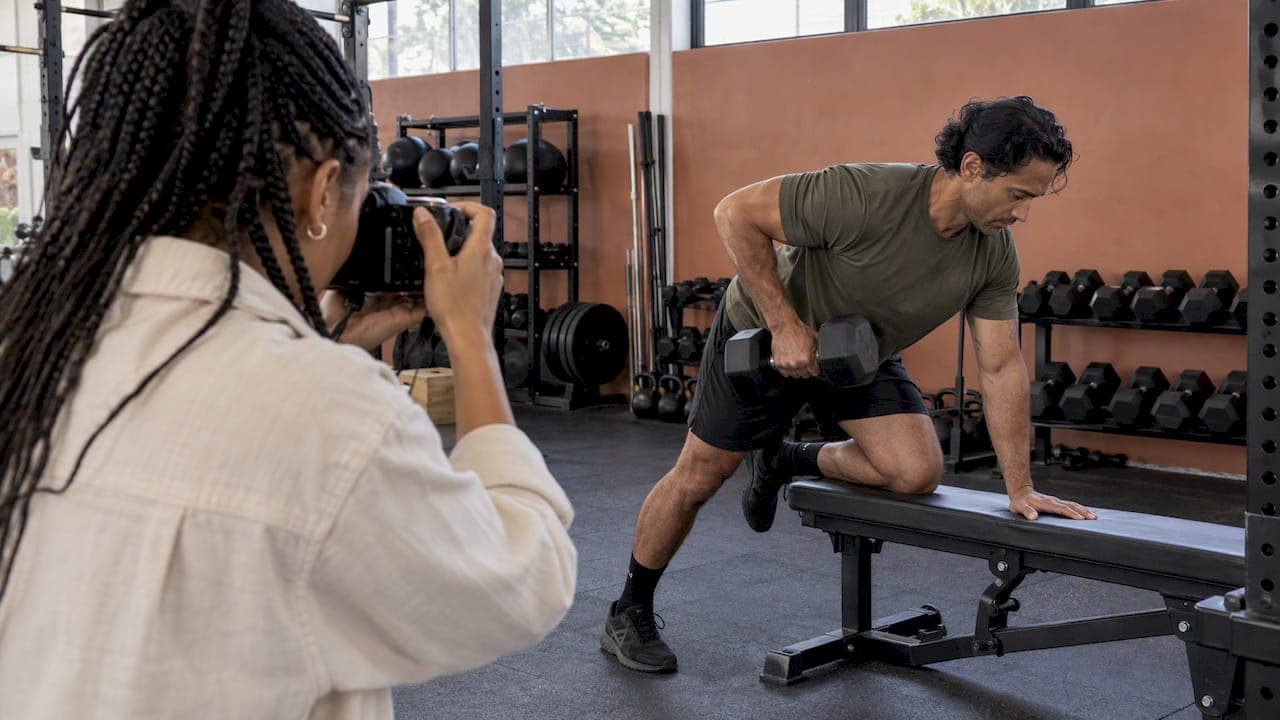
A personal trainer photoshoot is a planned session that gives you a set of images for your website, social media, packages and printed material, so potential clients can see who you are and how you train before they ever message you. In Auckland, our fitness sessions start at 460 NZD and run to 800 NZD, and the real work happens before the camera comes out: choosing the shots, sorting gym permission and preparing your body and wardrobe.
This guide covers all of that from a New Zealand point of view, including the privacy and health and safety points that catch trainers out.
TL;DR
- Decide what the photos must do first (win online clients, support a gym profile, sell packages), then build a shot list around that.
- Ask the gym owner for permission well ahead. Gyms are workplaces with their own duties and policies, and other members have privacy rights.
- Bring two or three outfits, train lightly beforehand and skip any crash plan. Consistent habits show up better on camera than last-minute tricks.
- Our fitness shoots in Auckland are 460 NZD (The Mini Shoot), 570 NZD (The Standard Shoot) and 800 NZD (The Premium Shoot). Personal branding sessions run from 575 NZD.
Table of Contents
- Why trainers in New Zealand need their own photos
- What to put on your shot list
- Choosing the location: gym, studio or outdoors
- Getting permission to shoot in a gym
- Preparing so you look like yourself, on a good day
- What a personal trainer shoot costs in Auckland
- Using the photos once you have them
- Our perspective
- Ready to book your shoot?
- FAQ
- Sources
Why trainers in New Zealand need their own photos
Most trainers here work for themselves, or close to it. The Careers New Zealand job profile for personal trainers notes that trainers often run as independent small business owners and need sales, marketing and client-building skills. It also reports, from 2022 data, that trainers typically earn between $45 and $90 per hour, while self-employed trainers can earn between $50 and $120 per hour depending on how well the business does.
That spread is wide, and your photos are part of what moves you along it. A client choosing between two trainers at a similar price usually can't judge programming quality from a profile. They judge whether you look credible, approachable and good at what you do. Stock images and gym-mirror selfies don't say that. A planned session does.
Good trainer photography does three jobs at once:
- Trust. A clear, well-lit portrait tells a stranger you take your business seriously.
- Proof of method. Action shots show how you coach, not only how you look.
- Consistency. One shoot gives you a matching set for your website, Instagram, booking page, flyers and business card.
What to put on your shot list
Before you book anyone, write down where the images will live. A website hero image needs room for text. An Instagram grid wants a mix of verticals and squares. A gym profile page may only need a clean headshot.
A balanced set for a personal trainer usually includes:
- A headshot and half-length portrait. Relaxed, direct, in your coaching clothes. This is the image people see first.
- Coaching shots. You demonstrating a movement, spotting a client or explaining a drill. If you want to show clients, they need to be willing and informed (more on that below).
- Solo training action. Lifts, sprints, rope work, bodyweight movements. These are the dynamic images that make a feed stand out.
- Detail and equipment shots. Hands on a barbell, a kettlebell on the floor, shoes on turf. Useful for backgrounds and social posts.
- Lifestyle frames. Walking into the gym, tying shoes, with a drink after a session. They make you feel like a person rather than a poster.
- Space to crop. Ask for some wide frames with empty areas so a designer, or you in a simple design app, can add text.
We've put together a copyable list in our fitness photoshoot ideas with a 10 shot brief, and a version for open-air sessions in our outdoor fitness photo brief. If your work leans towards yoga, pilates or wellness coaching, the wellness photoshoot ideas are a closer fit.
Choosing the location: gym, studio or outdoors
Each setting has trade-offs, and the right one depends on how you coach.
| Setting | Best for | Watch out for |
|---|---|---|
| Your own gym | Showing the real environment where clients train | Permission, other members in frame, equipment access |
| Studio | Clean, controlled portraits and dramatic lighting | Less sense of your real coaching space |
| Outdoors (beach, park, track) | Bootcamp, running and functional training | Weather, council or park rules, daylight window |
| Home or private space | Online coaches who film from home | Clutter, limited room for lighting |
Many trainers combine two: a short block at the gym for credibility shots, then portraits somewhere with better light. Auckland's weather can change the plan, so build a backup into the booking rather than reshuffling on the day.
Getting permission to shoot in a gym
This is the step most trainers leave too late. Many New Zealand gyms are independently run and set their own rules on cameras. Don't assume that because you train or work there, you can bring in a photographer and lights.
Why gyms say no (or ask for conditions)
Gym owners are what WorkSafe calls PCBUs, persons conducting a business or undertaking. WorkSafe explains that a PCBU must take reasonable care to keep everyone at the workplace safe, and that includes visitors, not only staff. A photographer with tripods, cables and light stands is a visitor creating new trip hazards on a busy floor. That is why a manager may ask when you plan to shoot, where, and how equipment will be placed.
Privacy is the second concern. The Office of the Privacy Commissioner says that taking photos in public places is generally allowed, but whether the Privacy Act applies depends on whether the person taking them is a business or organisation or an individual. A gym isn't a public place in the usual sense, and a commercial shoot for your business is different from a personal snapshot. If other members are recognisable in your marketing images, you've collected and used their image for business purposes.
How to ask so the answer is yes
- Ask early. Two to three weeks ahead gives the manager time to say yes without feeling rushed.
- Offer a quiet time. Early morning or mid-afternoon is usually emptier than evening.
- Explain the footprint. Tell them how many people are coming, what equipment will be used and that nothing will block machines or walkways.
- Keep other members out of frame. Shoot in a corner, a studio room or a zone you can close off for an hour.
- Tell members what is happening. Signage at the entrance and a clear way to opt out are sensible, even where the law might not strictly require them. The Privacy Commissioner treats transparency about why images are taken and who will see them as the best approach to consent.
- Offer something back. Many gyms are happy to have good images of their space, as long as the shoot is tidy and short.
If you want to feature clients in your photos, get their agreement in writing and tell them where the images will appear (website, Instagram, print). Children and young people need extra care. The Privacy Commissioner has specific guidance on photographing and filming children and young people, so check it before including anyone under 18.
Our own approach to privacy and consent for business shoots is set out in our brand photoshoot planning guide for NZ small businesses.
Preparing so you look like yourself, on a good day
The question we hear most often, and it shows up in searches too, is how to look leaner before a shoot. Our honest answer is that the best preparation is boring. Sleep, steady training, normal meals and plenty of water do more than anything drastic. Cutting water or food hard in the final days can leave you flat, tired and irritable on camera, and that shows in your face.
A few practical points:
- Keep your normal training in the week before. The Ministry of Health's Eating and Activity Guidelines for New Zealand Adults recommend at least 2½ hours of moderate or 1¼ hours of vigorous activity a week, plus muscle-strengthening on at least two days. Most trainers already do far more than that, so there's no reason to change your routine to suit the camera.
- Train lightly on shoot day. A short warm-up gets blood flowing and loosens the shoulders. A huge session beforehand can leave you shaky and fatigued.
- Avoid new products. A fresh self-tan or a skincare product you've never used is a risk. Stick with what you know.
- If you have a specific medical concern, injury or are returning from one, speak to your GP or physio before attempting heavy or unusual movements for the camera. Posed, repeated lifts with a photographer asking for "one more" can strain a body that isn't warmed up.
- Rest your hair and skin. Get a haircut a week out, not the day before.
Wardrobe matters as much as the body. Bring two or three outfits so you have a choice of colours and a change of mood. Plain, well-fitted gear without large logos usually photographs best, and a mix of a fitted training top, a looser layer and something smarter for portraits covers most needs. Our fitness photoshoot preparation guide goes through wardrobe and warm-up in more detail, and this checklist of what to bring covers the small things people forget.
What a personal trainer shoot costs in Auckland
Prices vary widely by photographer, and a few things drive them: session length, number of edited images, location and whether you want a commercial licence for your marketing. Here is what we publish for Auckland.
Fitness sessions
| Package | Price |
|---|---|
| The Mini Shoot | 460 NZD |
| The Standard Shoot | 570 NZD |
| The Premium Shoot | 800 NZD |
You can see how these differ on our fitness photography page.
Personal branding sessions
If you want more than training shots, such as portraits, workspace images and lifestyle frames that tell your business story, our personal branding photography packages may suit you better:
| Package | Price |
|---|---|
| Starter Brand Session | 575 NZD |
| Signature Brand Session | 1035 NZD |
| Complete Brand Session | 1495 NZD |
If you only need a polished portrait for your website, a booking platform or a gym profile, our headshot packages start from 345 NZD.
How do you compare that to your income? Take a rate within the range Careers New Zealand reports for self-employed trainers, say $50 to $120 an hour. A session that gives you a year or more of usable images only has to help win a handful of long-term clients to pay for itself. That depends on your pricing and client base, so work out your own numbers before choosing a package.
Using the photos once you have them
Images sitting in a folder don't win clients. Plan where each type goes.
- Website hero and about page: your best portrait and one strong action image.
- Booking page: a friendly coaching shot, so a nervous beginner can picture working with you.
- Instagram and Facebook: a mix of action, detail and lifestyle. Post over weeks, not all at once.
- Printed and shared contact details: use your portrait on a digital card or flyer. When you add your profile links, avoiding common print mistakes with LinkedIn on NZ business cards helps your details stay readable and correct.
- Local partnerships: physios, cafes and gyms are more likely to share your content if the images are clean and well-lit.
To keep your look consistent, use the same two or three colours in your wardrobe, graphics and captions. You can see the style we aim for in our personal branding portfolio.
Our perspective
We photograph a lot of people who tell us in the first five minutes that they hate being photographed, and trainers are no exception. They coach confidently in front of clients all day, then go stiff when a lens points at them. That isn't a flaw. It's just that coaching and posing are different skills.

Our job is to take the pressure of posing away. You don't need to know how to pose. We plan the shot list with you beforehand, guide you through each frame and keep the mood relaxed, so the images look like you coaching rather than you performing. That is what we hear back most often from clients: they didn't expect to enjoy it.
Our view is that most trainers over-invest in the body and under-invest in the plan. A clear brief, a gym that has said yes in advance and a calm shoot day will do more for your results than a last-week crash diet. We would rather you arrive rested, with two outfits and a list of what the photos are for.
— Rowan Freeman
Ready to book your shoot?
If you're in Auckland and want to talk through your goals, start with our fitness photography services. Send an enquiry with your location, the gym you have in mind and what the photos need to do, and we'll put together a plan and a quote. You can also browse our wider portfolio first to see whether our style suits you.
FAQ
How much should I budget for a personal trainer photoshoot in New Zealand?
For a fitness session with us in Auckland, packages are 460 NZD, 570 NZD or 800 NZD. If you also need broader brand imagery, branding sessions run from 575 NZD to 1495 NZD. Other photographers price differently, so compare the session length, number of edited images and usage rights.
Can I take photos or film in my gym?
Not automatically. Gyms are workplaces with their own policies, and owners have health and safety duties towards visitors, so a business shoot needs their approval. Ask the manager well in advance and keep other members out of the shot.
Do I need consent from clients who appear in my photos?
For marketing, yes: get their informed agreement and tell them where the images will be used. The Office of the Privacy Commissioner points to transparency and a simple way to opt out as best practice. If a client is under 18, read the Commissioner's guidance on children first.
What should I wear to a personal trainer photoshoot?
Bring two or three outfits in plain, well-fitted gear, with a mix of training tops, a looser layer and something smarter for portraits. Avoid big logos and anything you haven't worn before. Choose colours that suit your skin tone and that you'll be happy to repeat in your branding.
Sources
- Personal Trainer/Exercise Professional, Careers New Zealand
- What to know about 'other persons' at work, WorkSafe
- Recording people in public places, Office of the Privacy Commissioner
- Children and young people: photography and filming guidance, Office of the Privacy Commissioner
- Eating and Activity Guidelines for New Zealand Adults, Ministry of Health