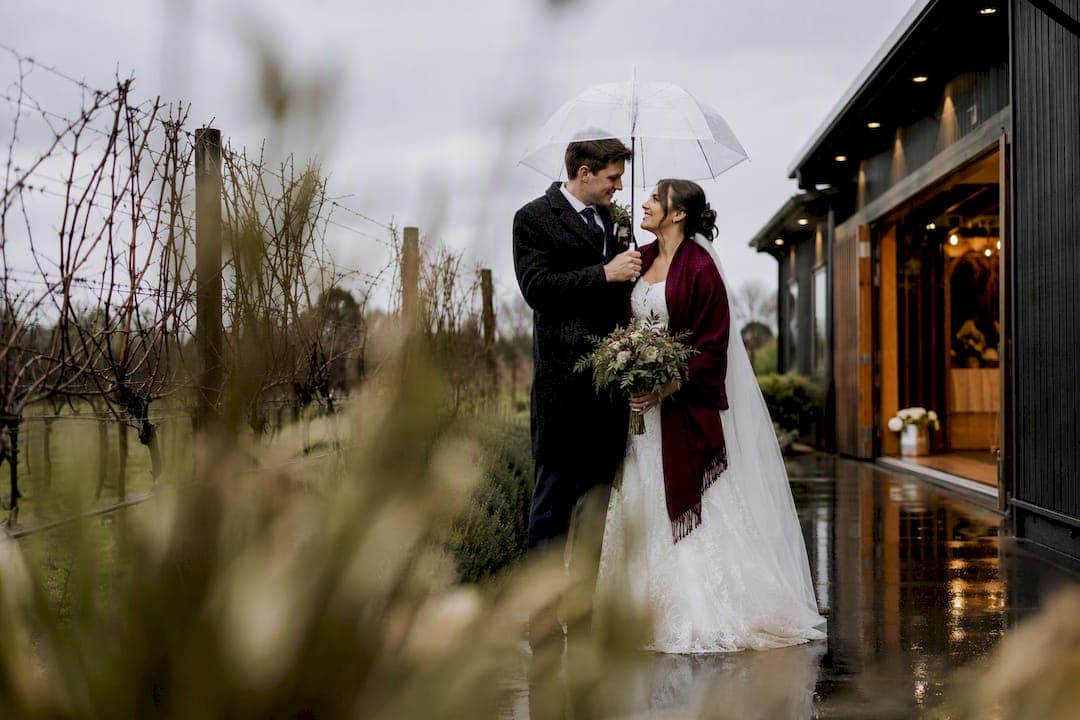
Yes, winter weddings can produce some of the most intimate and cinematic wedding photos you'll ever see, provided you plan around light, gear and warmth. Short daylight windows and cold hands sound like obstacles, but they're really just constraints that force better decisions. Get the timing right, protect your equipment, and dress for the season rather than against it, and the results often outshine a summer shoot. For comprehensive advice, see our guide on how to plan a photoshoot. Experienced photographers treat these conditions as a creative advantage rather than a compromise.
TL;DR:
- Winter light is often flat and pale, requiring careful exposure adjustments, especially around a stop of overexposure for faces when shooting snow scenes.
- Planning outdoor portraits early in the day and using shelter options like marquees help maximize limited daylight and keep couples warm during winter shoots.
- Using props like blankets, hot drinks, and close embraces helps couples stay relaxed and look natural despite the cold.
- Cold temperatures drain batteries quickly, so keep spares warm in a pocket and manage gear carefully to avoid condensation or malfunction.
- Shooting with specific winter-themed ideas, such as backlit snow or candlelit moments, enhances the season's romantic and cinematic qualities.
Table of Contents
- Creative winter wedding photo ideas worth requesting
- Exposure, flash and battery strategy for winter light
- Posing and wardrobe that keep couples warm and photogenic
- Timing your winter wedding day around the light
- Fixing common winter wedding-day problems on the spot
- An effective approach to winter weddings
- Why winter weddings deserve more credit
- Booking your winter wedding photographer: what to ask
- Sources
Creative winter wedding photo ideas worth requesting
The best winter wedding photo ideas lean into what the season actually offers: low golden light, dramatic contrast, and an excuse for closeness that summer weddings rarely need. Snow, frost and candlelight all behave differently in front of a lens than warm-weather scenes, and the couples who get the best galleries are the ones who ask for these shots specifically rather than hoping their photographer thinks of them.
- Backlit snow or frost portraits. Position the couple with a low sun or off-camera light behind falling snow. It lights up individual flakes and gives the whole frame a cinematic, almost glowing quality.
- Fireplace and candlelit moments. A crackling fire or a table of candles gives skin a natural warm cast. Keep other light sources dim so the flame stays the dominant light in the frame.
- Fairy-light bokeh and table details. Shoot reception details wide open (f/1.8 to f/2.8) so string lights melt into soft circles behind the subject, which works particularly well for cosy indoor styling that leans into candlelight rather than fighting it.
- Blanket and hot-drink candids. Hand the couple a shared mug or wool blanket between formal poses. It gives them something to do with their hands, which almost always produces a more relaxed, natural moment.
- Sparkler exits and silhouettes. Night exits photograph beautifully in winter because darkness falls early enough that guests aren't fighting fatigue by the time the sparklers come out.
- Seasonal texture close-ups. Frosted leaves, bare branches, woollen details on the dress or suit, and steaming drinks all add texture that a summer wedding simply can't replicate.
Seasonal roundups consistently point couples toward dramatic winter backdrops like open vistas, moody tree lines and grand architecture, and Auckland has no shortage of both if you know where to look.
Exposure, flash and battery strategy for winter light
Winter light is unforgiving in a specific way: it's often flat, low, and reflecting off snow or pale sky, which tricks most cameras into underexposing faces. Here's how to handle it.
- Expose for skin, not the background. Snow scenes often need around a stop of extra exposure compensation, since your camera's metering wants to darken all that white rather than protect faces.
- Shoot manual or aperture priority with exposure compensation dialled in, rather than trusting full auto in mixed snow and shade.
- Use subtle fill flash sparingly. A small off-camera flash with a warm gel lifts faces during dim receptions without flattening the atmospheric light that makes winter photos feel special.
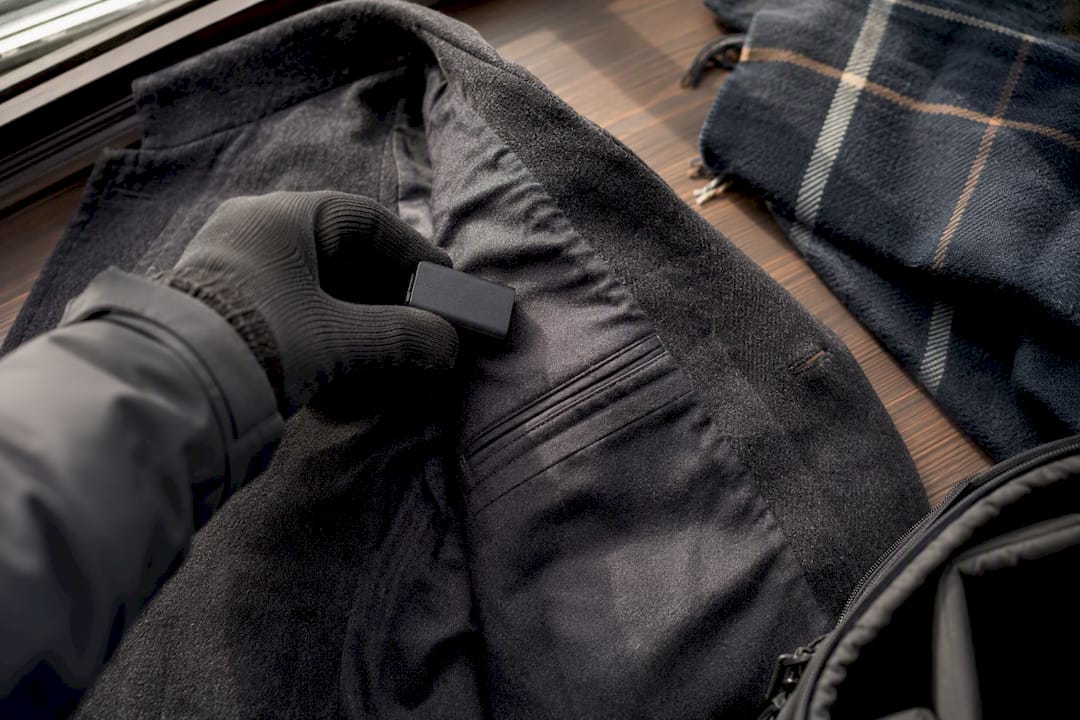
- Manage batteries actively. Cold drains batteries fast, so carry spares and keep them close to your body rather than in a cold bag, and rotate them through often.
- Prevent condensation with a two-body system. Keep one camera body outdoors and a second one indoors, and if a lens does come in from the cold, seal it in a bag before it warms up so moisture forms on the bag, not the glass.
Some photographers also test gear in similar cold conditions ahead of the wedding day, since a handful of camera models slow down or misbehave below freezing, and finding that out beforehand beats discovering it mid-ceremony.
Pro Tip: Pack your spare batteries in an inside jacket pocket, not your camera bag. Your body heat keeps them warmer than the ambient air, and a battery that's been warmed against your chest can outlast one left in a cold bag by a surprising margin.
Posing and wardrobe that keep couples warm and photogenic
Cold couples pull faces, hunch their shoulders and rush the shot, so wardrobe and posing decisions matter as much as anything technical.
- Layer with texture, not just warmth. Wool coats, faux fur stoles and long sleeves photograph beautifully and keep the couple comfortable, which is one reason textured winter fabrics show up in almost every seasonal styling guide.
- Pose to hide the shiver. Close embraces, foreheads touching, and tucking hands into pockets or a partner's coat all read as intimate rather than cold.
- Use props with a purpose. A shared blanket, a hot drink, or an umbrella against light snow gives couples something to hold and a reason to lean in.
- Choose footwear for the terrain. Heels sink into soft ground and ice; a low boot or a pair to change into for the walk to location saves both the photos and the ankles.
- Prep hair and make-up for wind and moisture. A light-hold spray and a touch-up kit in the car matter more in winter than any other season, since wind and drizzle undo styling fast.
For more on poses that read as natural rather than staged, our guide to posing for couples covers positions that work particularly well when hands need somewhere warm to go.
Timing your winter wedding day around the light
Winter daylight disappears fast, often by mid-afternoon in New Zealand's cooler months, which means portrait scheduling needs to shift earlier than a couple would plan for a summer wedding.
- Book portraits for the brightest window, generally soon after the ceremony rather than saving them for "golden hour," which arrives far earlier than most timelines expect in winter.
- Build in buffer time for coat changes, warming breaks, and quick moves between locations, since cold slows everyone down.
- Pair a short outdoor set with a longer indoor session. Ten focused minutes outside for the dramatic shots, then move indoors where you're not racing the light.
- Have a shelter fallback ready. A porch, marquee or car with the heater running keeps the couple warm between locations without losing momentum.
- Sample flow: ceremony, 15 to 20 minutes of outdoor portraits, indoor bridal party and family shots, reception, and any night shots or sparkler exits once darkness has properly settled.
Fixing common winter wedding-day problems on the spot
Winter throws curveballs, but most have a fast fix that doesn't derail the schedule.
- Rain: A clear umbrella keeps hair and dress dry without hiding faces, and wet pavement makes surprisingly good reflection shots.
- Wind: Let a veil fly rather than fighting it. Movement photographs as drama, not disaster.
- Heavy snow or slush: Pull back to close-up detail shots or move the session indoors until conditions ease.
- Condensation: Bag the lens before bringing it inside, wait for it to acclimatise, and shoot on the spare body in the meantime.
Pro Tip: Keep a mental triage order: safety first, dress second, schedule third. A wet hem can be dried; a missed ceremony moment can't be redone.
An effective approach to winter weddings
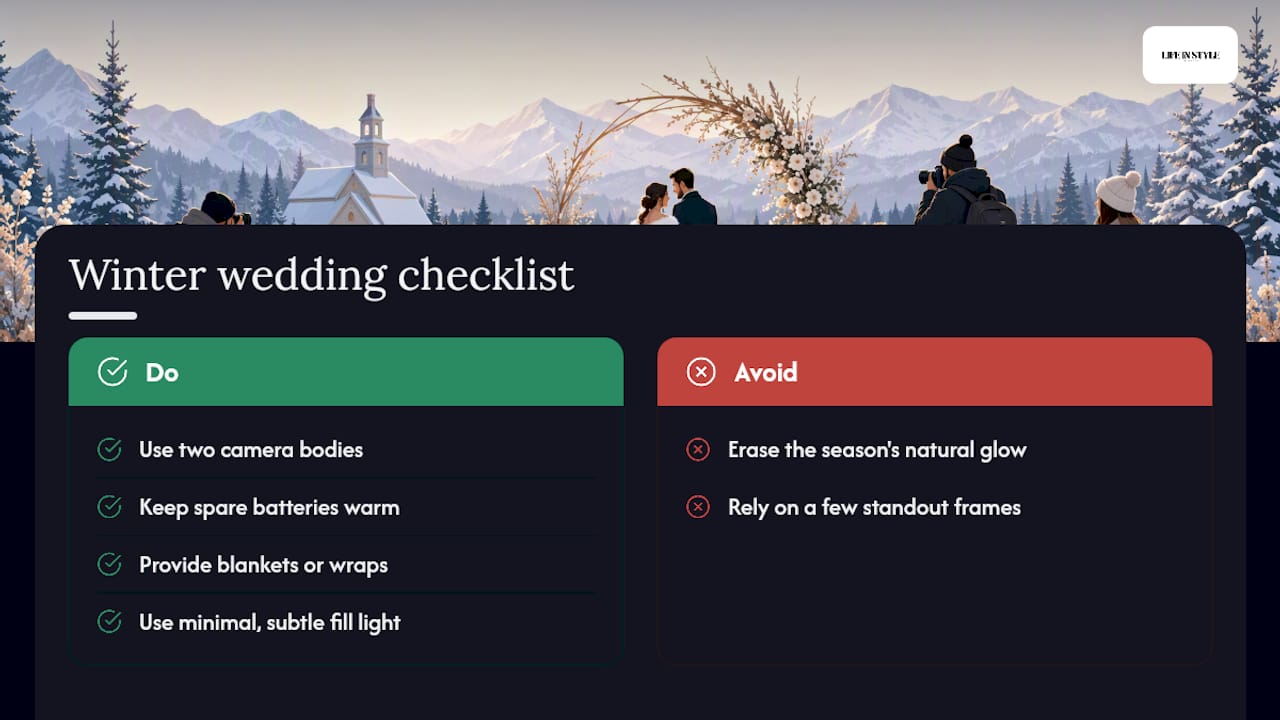
Every winter booking runs on the same practical checklist: two camera bodies, spare batteries kept warm, blankets or wraps on hand for the couple, and a minimal fill-light setup that lifts faces without erasing the season's natural glow. Rowan Freeman balances ambient winter light against just enough artificial fill to keep skin tones true, which is where a portfolio of finished couples' galleries is worth studying before you book anyone. Look for consistency across a full gallery, not just a handful of standout frames, since that's the real test of a photographer's winter workflow.
Why winter weddings deserve more credit
Winter weddings get treated as the fallback option, the season couples choose when the good dates are booked out. That's backwards. The shorter days and colder air create a kind of urgency and closeness that summer weddings, with their long lazy golden hours, don't naturally produce. Couples huddle. They lean in without being asked. The light is softer and more forgiving of skin tones than the harsh midday sun most photographers spend summer fighting against.
What I'd say to any couple weighing up a winter date: plan tighter, dress smarter, and trust that the constraints will work in your favour rather than against you. Reach out early so your photographer can build the timeline around your specific ceremony and reception times.
— Rowan Freeman
Booking your winter wedding photographer: what to ask
Life in Style Photography treats a winter booking differently to a summer one, and it's worth asking any photographer you're considering the same three questions. First, what's their coverage plan for short daylight hours? Second, do they run a two-body, spare-battery system to avoid gaps from condensation or cold-drained gear? Third, how do they coordinate the portrait timeline with your ceremony and reception vendors so nothing gets rushed?
When you're comparing packages, look for dedicated portrait time scheduled for peak daylight, options for night or sparkler-exit coverage, and whether a second shooter is included to cover both the couple and the wider reception at once. These details matter more in winter than in any other season, because there's less light to work with and less room to improvise.
If you're ready to lock in a date, the wedding photography page has package details and a straightforward way to get in touch. Winter dates tend to book out early precisely because the light is so good, so enquire while your preferred weekend is still open.
Sources
- Tips for shooting winter wedding photography | Fstoppers
- 7 Must-Have Fall & Winter Wedding Photography Ideas
- River Cottage (site highlights)