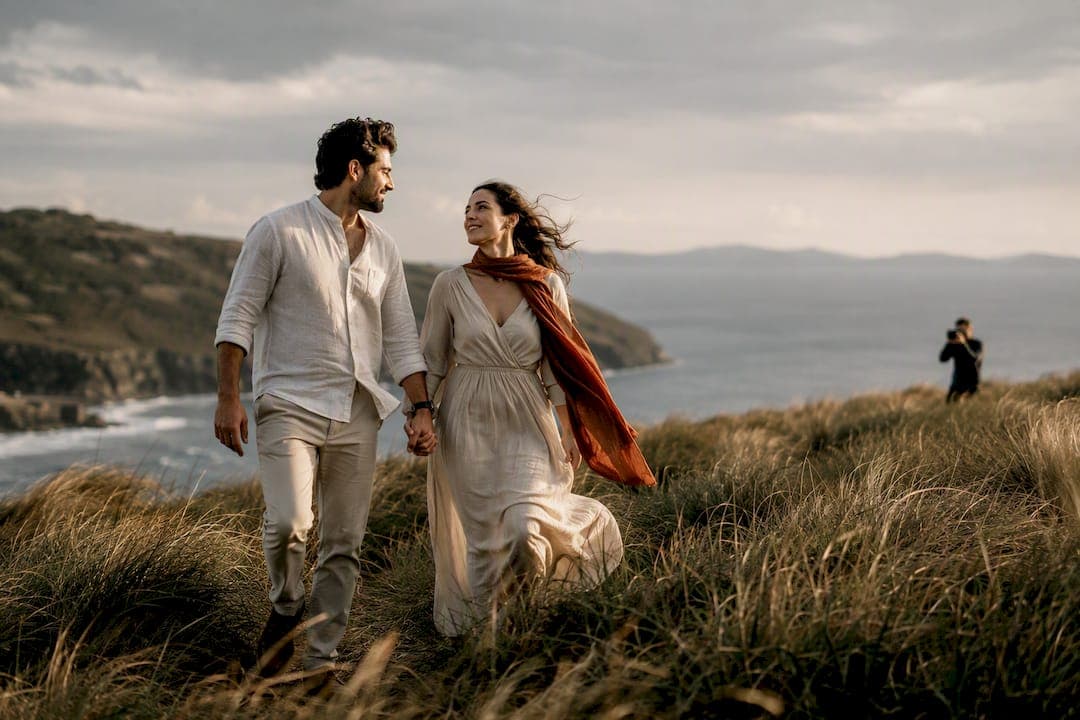
Yes, a pre-wedding shoot is worth it for most engaged couples, provided you actually plan to use the images and want practice in front of the camera before the big day. It's most valuable if you want relaxed, natural wedding-day portraits and photos for save-the-dates or signage. It's more optional if your budget is tight or you're happy relying solely on wedding-day shots. Rowan Freeman from Life in Style Photography has seen both approaches work, depending on what a couple actually wants from their photos.
TL;DR:
- Scheduling the shoot 6 to 9 months before the wedding allows enough time for editing and stationery production while capturing optimal lighting conditions.
- A pre-wedding shoot typically lasts 2 to 3 hours, with a warm-up phase, outfit changes, and multiple locations to maximize relaxed shots.
- Couples often use the images for save-the-dates, signage, social media, or backup photos if weather or venue restrictions interfere with wedding-day photos.
- The cost depends on session duration, location, and add-ons like hair and makeup, with packages ranging from basic local shoots to destination experiences.
- Choosing a photographer who prioritizes comfort and natural interaction can significantly improve both the shoot experience and wedding-day photos.
Table of Contents
- What is a pre-wedding shoot, and how does it differ from an engagement session?
- What are the real benefits of a pre-wedding shoot?
- What happens during a pre-wedding shoot, and when should you schedule it?
- How much does a pre-wedding shoot cost, and is it worth the spend?
- How do you decide, and what should you ask your photographer?
- What should you pack and plan for your pre-wedding shoot?
- Why a studio's approach to pre-wedding shoots actually matters
- A photographer's honest take on whether it's worth booking
- How Life in Style Photography can help you plan yours
- Sources
What is a pre-wedding shoot, and how does it differ from an engagement session?
A pre-wedding shoot is a styled, planned photography session that typically happens 3 to 6 months before the wedding. It's more curated than a casual engagement shoot: outfits are chosen deliberately, locations are scouted in advance, and the session is often built around a specific purpose, whether that's stationery, decor, or simply getting comfortable with a camera in your face before the ceremony.
Engagement sessions and pre-wedding shoots get used interchangeably by a lot of couples, but there's a genuine timing and mood difference worth knowing about. Engagement photos tend to happen earlier, often 12 to 18 months out, right after the proposal, and they're usually less formal. A pre-wedding shoot sits closer to the wedding date and carries more intention. You're not just celebrating getting engaged. You're building a visual language for the wedding itself, matching tones, palettes, and even locations to what's coming.
That distinction matters because it changes how you plan. If you're doing both, the engagement shoot can be spontaneous and fun, while the pre-wedding session becomes more strategic. If you're only doing one, most couples lean towards the pre-wedding version because the output has more practical uses.
Those uses are where the real value shows up:
- Save-the-dates and wedding invitations
- Guest books and welcome signage at the reception
- Slideshow content for the reception or rehearsal dinner
- Social media announcements and wedding websites
- A visual "trailer" for guests who haven't seen you together in your wedding aesthetic
Couples who skip a pre-wedding shoot often end up scrambling for a decent photo when the save-the-date deadline hits, usually settling for a phone snap that doesn't match the tone of the wedding at all. That's the gap this type of session closes.
What are the real benefits of a pre-wedding shoot?
The benefits split into two camps: practical and emotional. Both matter, but couples usually underestimate the practical side until they've lived through a wedding-day photo session without any prior camera experience together.
Here's what a pre-wedding shoot actually delivers:
- Comfort and rapport with your photographer. Photographers who specialise in this space report that the biggest value isn't the photos themselves. It's the psychological shift from anxiety to confidence that comes from having done this before. Couples who've never been photographed together as a pair often freeze up, and that stiffness shows on film. A pre-wedding session works like a rehearsal, and it changes how naturally you move together when the wedding-day camera comes out.
- A live test run for hair, makeup, and outfits. Photos under real lighting conditions tell you things a mirror never will. Does that foundation shade photograph warm or grey? Does the dress colour clash with an outdoor backdrop? You get to find out months before it matters, not on the morning of the wedding.
- A gallery you can actually use, and a backup. Beyond stationery, these images become a fallback. If weather ruins your outdoor wedding portraits or a venue restricts photography time, you've already got a polished set of images that represent you as a couple.
- A relaxed celebration of the relationship itself. Weddings are logistics-heavy. A pre-wedding shoot is one of the few moments in the entire planning process that's just about the two of you, with no seating charts or vendor calls competing for attention.
Pro Tip: Treat the pre-wedding shoot as a low-stakes trial for anything you're nervous about on the wedding day, whether that's an outfit, a hairstyle, or simply being looked at by a camera for two hours straight.
Photographers who run these sessions regularly describe the wedding-day difference as noticeable: couples who've done a pre-wedding shoot tend to move into poses more naturally and need far less direction, because the rehearsal effect carries through. If you're camera-shy, that alone can be worth the cost.
What happens during a pre-wedding shoot, and when should you schedule it?
A typical pre-wedding shoot runs 2 to 3 hours, covering a warm-up period, a mix of posed and candid frames, and usually one outfit change partway through. Half-day sessions, closer to 4 or 5 hours, suit couples chasing a more elaborate concept or multiple locations, particularly for destination-style shoots.
The session itself tends to follow a loose rhythm:
- A warm-up phase where the photographer gets you moving and talking, easing you into the camera's presence
- Posed portrait frames at your primary location
- Candid, walking or interacting shots that capture more natural expressions
- An outfit change, often moving from casual to elevated
- A second location or lighting setup if time allows
Timing the shoot well makes a real difference to the final images. Golden hour, the window shortly after sunrise or before sunset, gives you soft, flattering light that's hard to replicate any other time of day. If you need images for save-the-dates, work backwards from your mailing date: allow 3 to 4 weeks for photo delivery and stationery production, which usually means scheduling the shoot 6 to 9 months before the wedding rather than the standard 3 to 6.
Location choice matters just as much as timing. Public parks, beaches, and city streets are common choices around Auckland, though some council reserves and heritage sites require a photography permit if you're bringing extra equipment like lighting stands. Check with your photographer whether they handle permit arrangements or whether that falls to you.
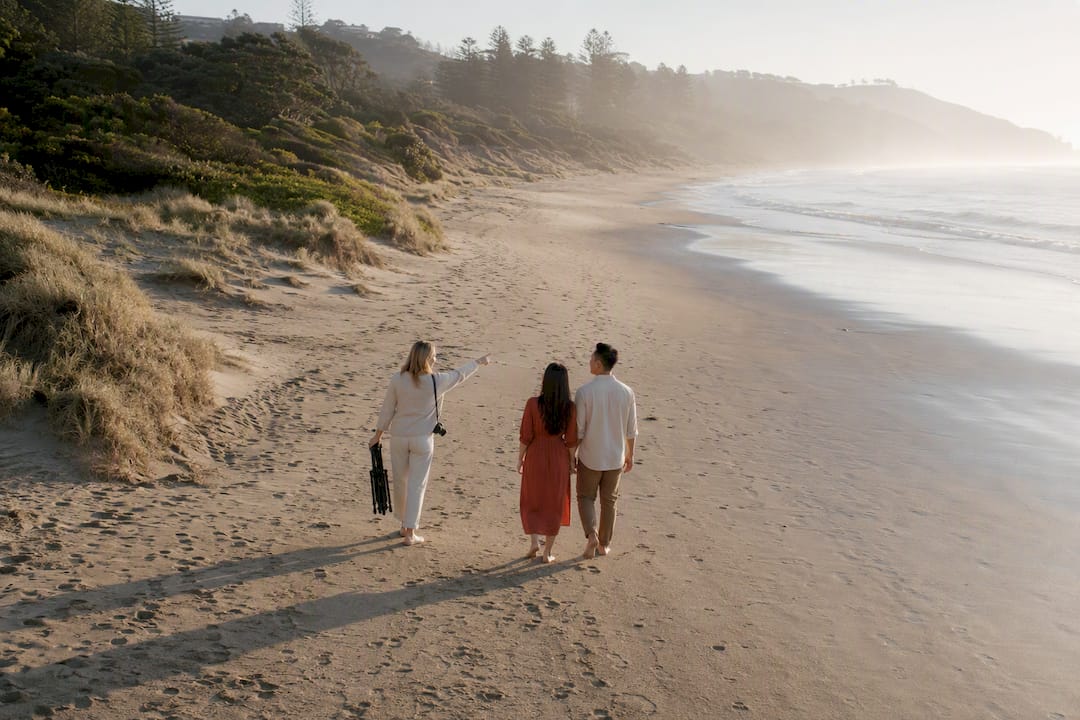
Pro Tip: Ask your photographer to pad the start time by 30 to 45 minutes before the "real" shooting begins. That buffer lets nerves settle and gives you a chance to move naturally before the camera starts capturing usable frames.
Avoid packing too many locations into one session. Rushing between spots creates stress that shows up in stiff, distracted expressions, undoing a lot of the relaxed rapport the shoot is meant to build.
How much does a pre-wedding shoot cost, and is it worth the spend?
Costs vary widely depending on who you book and what you're after. Local one to two hour sessions sit at the entry-level end, established photographers running half-day sessions charge more for the added time and locations, and destination packages command premium pricing given travel and logistics. For a New Zealand-specific sense of where these figures land locally, it's worth checking current wedding photography pricing before comparing quotes.
On top of the base session fee, budget for a few common add-ons:
- Professional hair and makeup, if you want salon-level polish rather than doing it yourself
- Location permits, particularly for reserves, heritage buildings, or private estates
- Travel costs if you're shooting somewhere outside your photographer's usual radius
- Outfit rental or a second outfit purchase, if your wedding-day looks aren't ready yet
Statistic Callout: Half-day sessions with established photographers often run considerably higher than a basic one to two hour local shoot, and destination packages sit higher again once travel and multi-day logistics enter the picture. The spread is wide enough that a written quote, not a rough estimate, should always guide your decision.
Whether that spend is worth it comes down to a simple checklist:
- Frequency of use. If you're getting save-the-dates, signage, and a slideshow out of one session, the cost-per-use drops fast.
- Emotional payoff. Some couples genuinely value the standalone experience of a relaxed, just-us photoshoot, separate from anything the wedding day produces.
- Alternatives. Wedding-day portraits alone can cover some of these needs, but they arrive too late for stationery and won't help with camera nerves beforehand.
- When it isn't cost-effective. If your budget is genuinely stretched and you're not planning to use the images beyond a quick social post, that money is usually better redirected towards the wedding-day photography package itself.
How do you decide, and what should you ask your photographer?
A short decision framework beats agonising over the choice for weeks. Run through these four questions before you book anything:
- What's the actual purpose? Are you after stationery images, wedding-day rehearsal, or just a keepsake session? The answer shapes everything from location to timing.
- What's the real budget, including add-ons? Factor in hair, makeup, permits, and travel before comparing photographer quotes, not just the base session price.
- Does the timeline actually work? If you need save-the-dates in the mail by a set date, count backwards from delivery time, not forwards from "whenever feels right."
- How will the images actually get used? If you can't name three concrete uses, the shoot may be more about the experience than the output, which is a fine reason too, just be honest about it.
Once you've settled those, bring specific questions to your photographer consultation:
- How long until we receive the final edited gallery?
- Do we get full usage rights to print and share these images ourselves?
- What's the policy if weather forces a reschedule?
- Who handles location permits, you or us?
- Will you personally edit the images, or does that get outsourced?
Watch for a few red flags in quotes and contracts: vague delivery timelines with no date attached, unclear ownership or usage rights over the final images, and packages that don't specify how many edited photos you'll actually receive. A photographer who can't answer these clearly at the quote stage is worth a second look before you commit a deposit.
What should you pack and plan for your pre-wedding shoot?
Good preparation removes most of the stress from shoot day, and it starts with outfits. Two looks is the practical sweet spot: one casual, one more elevated, giving your gallery visual range without turning the session into a full costume change every half hour. Coordinate both outfits loosely with your wedding palette so the images sit well alongside your other wedding content later.
A short checklist covers most of what trips couples up:
- Bring one or two small props that mean something (a shared item, a pet, a meaningful object), which give you something natural to interact with rather than just posing at the lens
- Book your hair and makeup trial at least a few weeks ahead so the shoot-day look isn't the first time you're testing it
- Confirm parking near your location, especially for busy Auckland spots where street parking can be limited
- Check the weather forecast a few days out and agree on a backup date or indoor option with your photographer
- Ask whether a change space is available on location, or plan to arrive in one outfit and bring the second in a garment bag
Pro Tip: Practice a few simple movements before the shoot: a slow walk while talking, a forehead touch, a gentle spin. These small prompts break stiffness fast and tend to produce far more natural expressions than standing still and smiling on command.
For extra inspiration on posing naturally rather than looking stiff and staged, it's worth browsing a guide to natural couple poses before your session.
Why a studio's approach to pre-wedding shoots actually matters
Rowan Freeman has spent years photographing couples across Auckland, and one pattern shows up constantly: the couples who arrive relaxed are rarely the ones who felt naturally confident. They're the ones who'd already done a pre-wedding shoot with a photographer who prioritised comfort over just clicking the shutter.
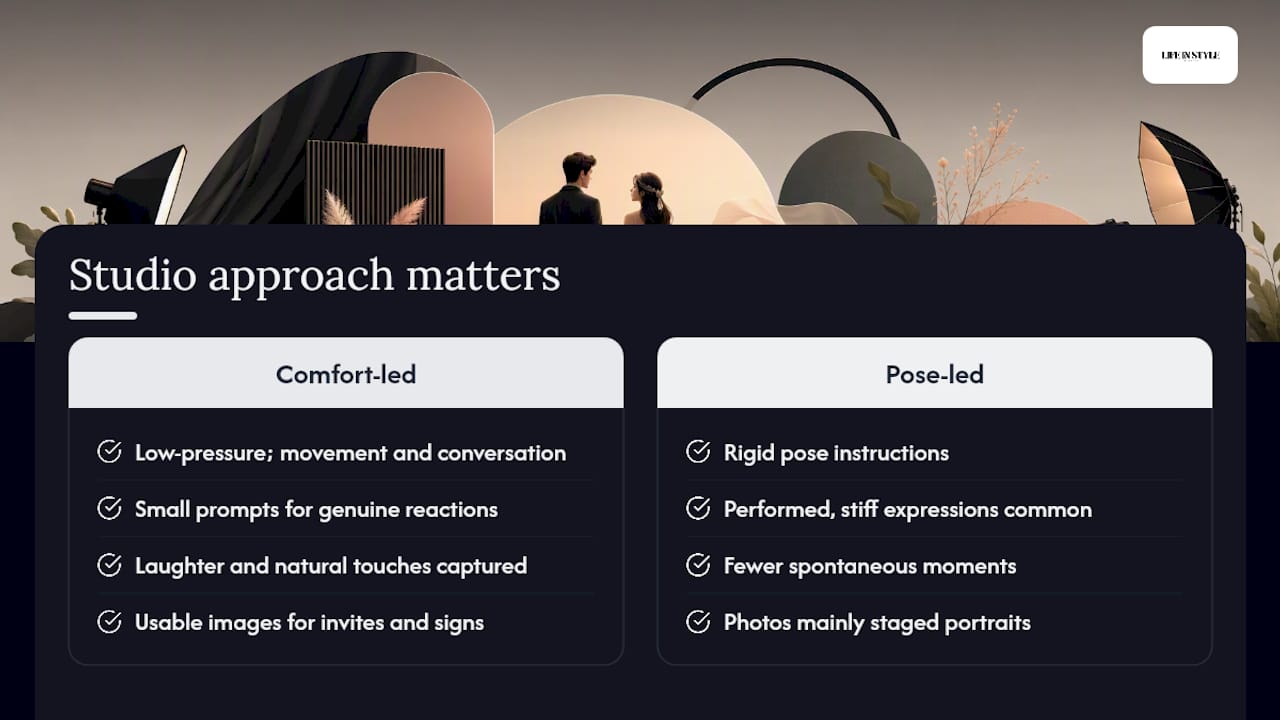
At Life in Style Photography, sessions lean on an engaging, low-pressure style specifically to help camera-shy clients loosen up. Rather than issuing rigid pose instructions, the approach favours movement, conversation, and small prompts that pull out genuine reactions instead of performed ones. Look through the couples portfolio and you'll notice it: laughter mid-frame, hands reaching for each other without being told to, the kind of moments that don't happen when someone's stiffly holding a pose.
One recent couple came in nervous, having never been professionally photographed together before. They walked away with images they used across save-the-dates, a welcome sign, and their reception slideshow, and reported feeling noticeably more at ease during their wedding-day portraits a few months later. That's the real return on a pre-wedding shoot: not just a gallery of pretty photos, but a couple who know how to be photographed together before it counts most.
A photographer's honest take on whether it's worth booking
If you're still weighing it up, here's the honest version: a pre-wedding shoot won't fix a relationship or save a wedding budget, but it will almost always make your wedding-day photos better, because you'll know how to exist in front of a lens together by the time it matters. I've watched couples transform from awkward and giggly to genuinely present within one session, and that shift carries straight through to the big day.
If you're curious what that looks like in practice, browse the couples photography services or get in touch to talk through what you actually want from your session. It's worth the conversation, even if you decide against booking.
— Rowan Freeman
How Life in Style Photography can help you plan yours
Life in Style Photography runs pre-wedding sessions across Auckland with the same relaxed, engaging style that makes even the most reluctant subjects forget the camera's there. Packages typically include a set session length, a set number of locations, an outfit change, and a fully edited digital gallery, scaled to whether you want a compact local shoot or a more elaborate half-day concept with multiple looks.
Enquiring is straightforward: get in touch with your preferred date range and what you want the images for, whether that's save-the-dates, signage, or simply a relaxed session together, and you'll receive a tailored quote based on session length and location. A deposit secures your date, and your timeline gets mapped backwards from any deadline you're working towards, like a stationery mailing date, so nothing arrives too late to use. If you'd rather see pricing shapes first, the photography packages page lays out what's included at each level. When you're ready, browse the couples portfolio and send through your preferred dates to lock in a session before your ideal golden-hour window fills up.
Sources
- Pre-Wedding Photoshoot Guide: How to Plan, Pose, and Use Your Photos - Paperlust
- Is a pre-wedding shoot worth it? — Louder Than Fire
- Pre Wedding Photoshoot: Complete Guide with Ideas, Outfits, Poses & Costs - GlossWardrobe