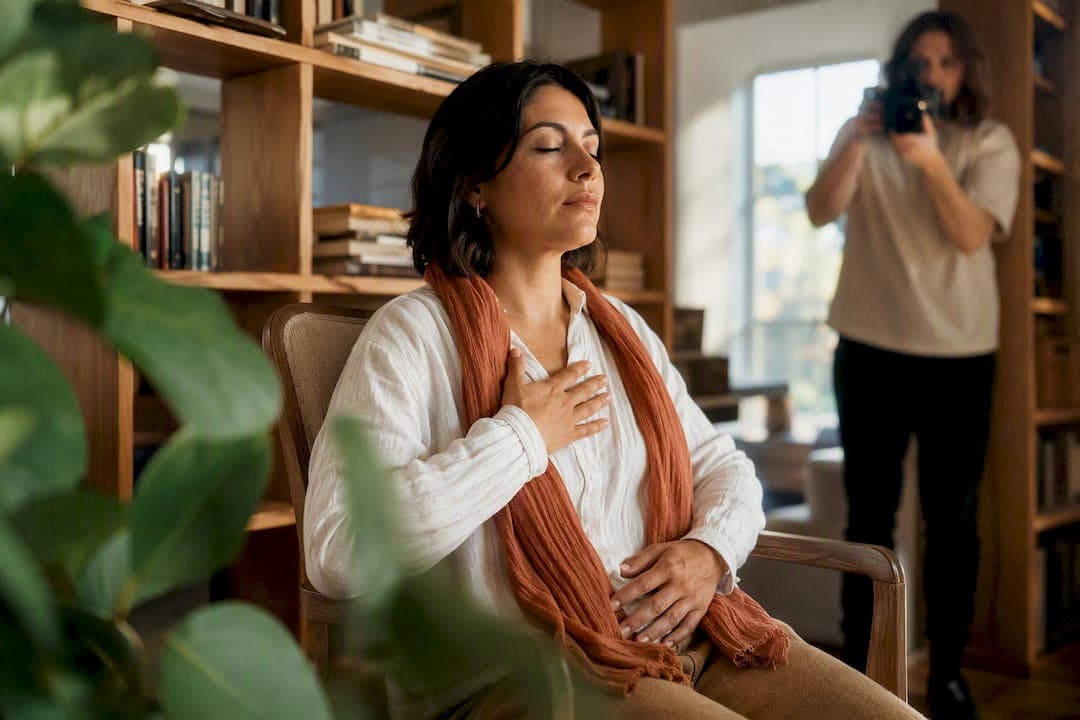
The fastest way to calm down in front of a camera is a short diaphragmatic breathing cycle, a deliberate shoulder drop, and a quick word with your photographer about the shots you actually want. These three moves take under a minute and work on the body before your mind catches up with the nerves. The rest of this guide walks through the practice drills and day-of tactics that make relaxed photoshoot tips actually stick when the camera is pointed at you.
TL;DR:
- Preparing with simple breathing exercises, shoulder drops, and movement can significantly reduce tension and improve confidence during a shoot.
- Practicing low-stakes exposure, like selfies or casual photos with friends, helps desensitize nerves and builds comfort in front of the camera.
- Wearing comfortable, well-fitting clothing in neutral tones and bringing familiar objects or props can ease anxiety and add authenticity to images.
- Communicating openly with your photographer about preferences, limits, and support options enhances the session's comfort and outcome.
- Choosing familiar locations and avoiding busy patterns or bright colors can create a more relaxed environment and more flattering photos.
Table of Contents
- Relaxed photoshoot tips you can use during the session
- How do you practise relaxing before a photoshoot?
- What should you wear and pack for a relaxed shoot?
- What should you say to your photographer on the day?
- Why these techniques actually work
- Why a pre-session chat changes everything
- How can you shift your mindset before a shoot?
- Does your location affect how relaxed you feel?
- Can a familiar object help you relax during a shoot?
- Should you eat and drink before your session?
- How do you set boundaries during a photoshoot?
- Camera nerves are normal, not a flaw
- How Life in Style Photography works with camera-shy clients
- Sources
- FAQ
Relaxed photoshoot tips you can use during the session
Feeling stiff in front of a lens is not a personality flaw. It is a physical stress response, and physical responses respond to physical fixes. Here is the order that tends to work, drawn from breathing science, posing psychology, and what photographers see change a session in real time.
-
Reset your breath before every frame. Try the 5-2-5 count: inhale for five seconds, hold for two, exhale for five. Box breathing (four seconds in, four hold, four out, four hold) works just as well. Diaphragmatic breathing slows your heart rate and switches off the fight-or-flight signal that makes your smile look forced.
-
Drop your shoulders and soften your neck. Most visible tension in photos sits in the trapezius, the muscle running from your neck to your shoulders. Inhale, lift your shoulders toward your ears, then exhale and let them fall. Your jaw and eyes soften almost immediately.
-
Use the squinch and a genuine smile. A "squinch" is a slight narrowing of the lower eyelid, which reads as confident rather than startled in photos. Pair it with a Duchenne smile, one that reaches the eyes, not just the mouth. Small facial adjustments like these genuinely change how confident you look on camera.
-
Move instead of freezing. Static poses read as stiff. Walking a few steps, laughing at something your photographer says, or adjusting your jacket gives the shot a natural rhythm. Photographers who specialise in nervous clients often build candid prompts and short movement sequences into the session for exactly this reason.
-
Anchor to a real memory. Before a shot, think of one specific moment where you felt genuinely happy or proud, held for ten to fifteen seconds. The facial feedback hypothesis suggests that producing a relaxed expression can trigger the feeling behind it, not just the other way around.
-
Ask for direction, out loud. Say the words: "Can you show me what you mean?" or "Give me something to react to." Silence from a photographer makes most people more self-conscious, not less, because you start monitoring yourself instead of listening for cues.
-
Take breaks when tension builds. A thirty-second pause, a sip of water, or a short walk resets your body if you feel your shoulders creeping back up. There is no prize for pushing through a stiff run of frames.
Pro Tip: Ask your photographer to angle your chin forward by about a centimetre before a headshot. It sounds tiny, but it tightens the jawline and removes the "double chin" shadow that makes people hate photos of themselves for no real reason.
How do you practise relaxing before a photoshoot?
Comfort on camera is mostly a rehearsal problem, not a personality problem. The novelty of seeing yourself photographed, rather than in a mirror, is a documented trigger for camera shyness, and novelty fades with repeated, low-stakes exposure.
-
Start with selfies no one will see. Take twenty or thirty on your phone, delete them all, and notice which small changes (chin angle, shoulder position) you preferred. This is pure desensitisation with zero social risk.
-
Move to a trusted friend with a camera. Ask someone you're comfortable with to take a few casual photos. The stakes rise slightly, which is the point. You're building tolerance in small, manageable steps.
-
Try a short video call with your camera on. Video adds movement and voice, which is closer to how a real session feels. Even two or three minutes helps.
-
Practise your breathing routine daily for a week. Five minutes of the 5-2-5 count or 4-4-4 box breathing, done consistently, makes the technique automatic rather than something you fumble through mid-shoot.
-
Drill the squinch and chin-forward move in a mirror. Ten reps a day, watching for a soft (not squinting) eye and a defined jaw. Film a fifteen-second mock session on your phone if you can stand it. Watching it back, without judgement, is its own exposure exercise.
None of this needs to take long. A short daily rehearsal in the week before your session, even just five to ten minutes, is usually enough to take the edge off when the real camera comes out.
What should you wear and pack for a relaxed shoot?
Half of photoshoot stress is logistical, not psychological, and logistics are fixable the night before.
- Choose well-fitting, comfortable clothes over anything trendy but restrictive. If you're tugging at a waistband, it shows.
- Avoid tiny, busy patterns (fine stripes, small checks) which can create a distracting moiré effect on camera.
- Bring two to three outfit options, including one neutral, solid mid-tone piece as a safe fallback.
- Build a simple moodboard of reference images and send it to your photographer beforehand. It aligns expectations and removes a huge amount of in-session guesswork, a habit most experienced photographers actively recommend.
- Consider professional hair and makeup if your session allows for it, or pack a basic touch-up kit: blotting paper, a small brush, and a few bobby pins.
- Pack water, a light snack, and a safety-pin kit. Small annoyances (a hungry stomach, a loose hem) compound nerves fast.
What should you say to your photographer on the day?
A few rehearsed lines take the guesswork out of asking for what you need, and most photographers welcome the clarity.
- Open with something like: "I get nervous in photos, so please coach me through poses," or "I prefer candid shots over posed ones."
- If a pose feels awkward, say: "Can you show me what you mean?" or "Could we try that a bit slower?"
- If tension creeps in, ask for a short walk, a thirty-second breathing reset, or even a quick hum to loosen your jaw and shoulders.
- If you think it would help, ask whether bringing a support person is an option. Many sessions run more smoothly with a familiar face in the room.
Pro Tip: If you're camera shy specifically around commercial or branding shots, tell your photographer that upfront. It changes how they direct you, usually with more movement and fewer "look here and hold" instructions.
Why these techniques actually work
Diaphragmatic breathing and a deliberate shoulder drop calm the sympathetic nervous system, the part of your body responsible for that jittery, on-edge feeling. That is why belly breathing before a shoot has a visible effect within seconds, not minutes.
On the photography side, small adjustments (chin forward, a slight weight shift, relaxed hands) do more than any instruction to "just relax." Guided coaching consistently beats silence, because quiet photographers leave clients monitoring themselves instead of the moment. If you'd like hands-on support working through this, a pre-session consultation is worth requesting before you book.
Why a pre-session chat changes everything
Booking a session without ever speaking to your photographer beforehand is one of the biggest, and most avoidable, sources of on-the-day anxiety. A short pre-session consultation, even a fifteen-minute phone call, lets you cover the timeline, the posing style, and whether hair and makeup or a support person makes sense for you. Photographers who take this step consistently get more natural results from nervous clients, simply because nothing on the day is a surprise.
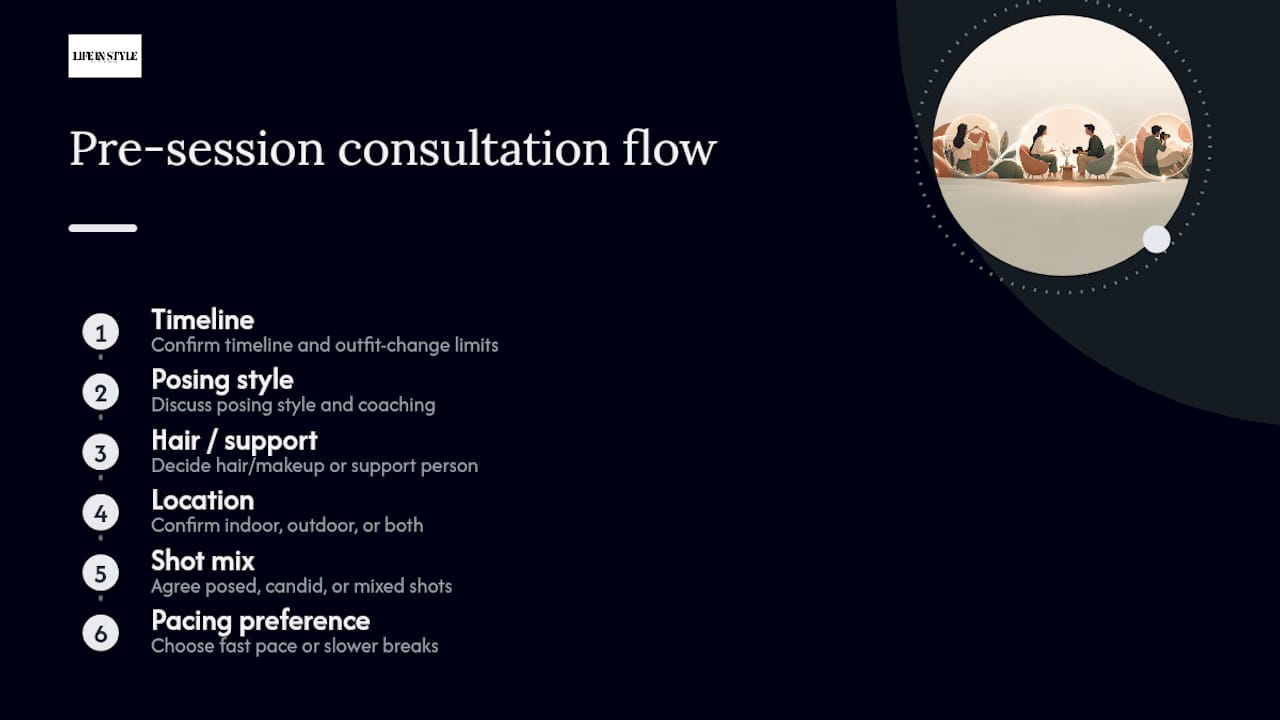
Use the call to ask direct questions: How many outfit changes fit in the time booked? Is the location indoors, outdoors, or both? Will there be posed shots, candid shots, or a mix? If you know you tense up under direct instruction, say so now, not fifteen minutes into the shoot. A good photographer will adjust their coaching style based on that one piece of information alone.
This is also the moment to ask about pacing. Some people do best with a fast, high-energy shoot that leaves no time to overthink. Others need slower pacing with more breaks. Neither is wrong, but your photographer can only plan for it if you tell them. If you're weighing up photographers for a branding or portrait session, the pre-session conversation is generally a good signal of how well they will work with a nervous subject on the day itself.
How can you shift your mindset before a shoot?
Reframing what the session actually is does more for your nerves than any breathing exercise alone. A single photoshoot is not a verdict on how you look. It is one data point, taken on one day, under one set of lighting conditions. Treating it as a rehearsal rather than a final exam removes an enormous amount of pressure.
A simple mindset shift: stop aiming for "the perfect photo" and aim for "an honest photo." Perfection is a moving target that generates anxiety. Honesty, catching a real laugh, a genuine glance, a moment of connection, is achievable and tends to produce better images anyway.
Visualisation helps too. Before you arrive, picture the session running smoothly: you laughing at something, moving comfortably, feeling like yourself. This is not wishful thinking. It primes your body to expect a low-threat situation rather than a high-stakes one, which lowers baseline tension before you've even met your photographer.
Finally, separate the outcome from your worth. A photo you dislike says nothing about your character, your success, or your relationships. It says the angle, the light, or the moment was not quite right, and that's a technical problem, not a personal one. Anxious clients who hold onto this distinction tend to relax measurably faster once the shoot begins.
Does your location affect how relaxed you feel?
The environment you choose does more heavy lifting than most people expect. A studio can feel exposed and clinical if you have never been photographed professionally before, while a familiar or personally meaningful location often removes a layer of self-consciousness before you've even picked up your phone to check the time.
Consider a place you already associate with comfort: your own home, a favourite café, a park you walk through regularly, or a beach you know well. Familiar surroundings give you something to focus on other than the camera, which quietens the self-monitoring that makes people stiffen up.
Lighting matters too, but not in the technical sense most people assume. Soft, natural light (an overcast day, open shade, a window with diffused sun) is more forgiving and less intense than a spotlight-style studio setup, which can feel like being under interrogation if you're already nervous.
If you're booking a commercial or branding session, ask whether the shoot can happen somewhere connected to your work or your everyday life rather than a blank backdrop. A workshop, an office you love, or a favourite outdoor space gives you a natural reason to move and interact, which produces far more relaxed results than standing against a plain wall waiting for instructions.
Can a familiar object help you relax during a shoot?
Holding something familiar gives anxious hands somewhere to go, and it gives your mind a small anchor point that has nothing to do with being watched. A coffee cup, a book you're reading, a pet, a musical instrument, or a tool from your trade all work for this purpose.
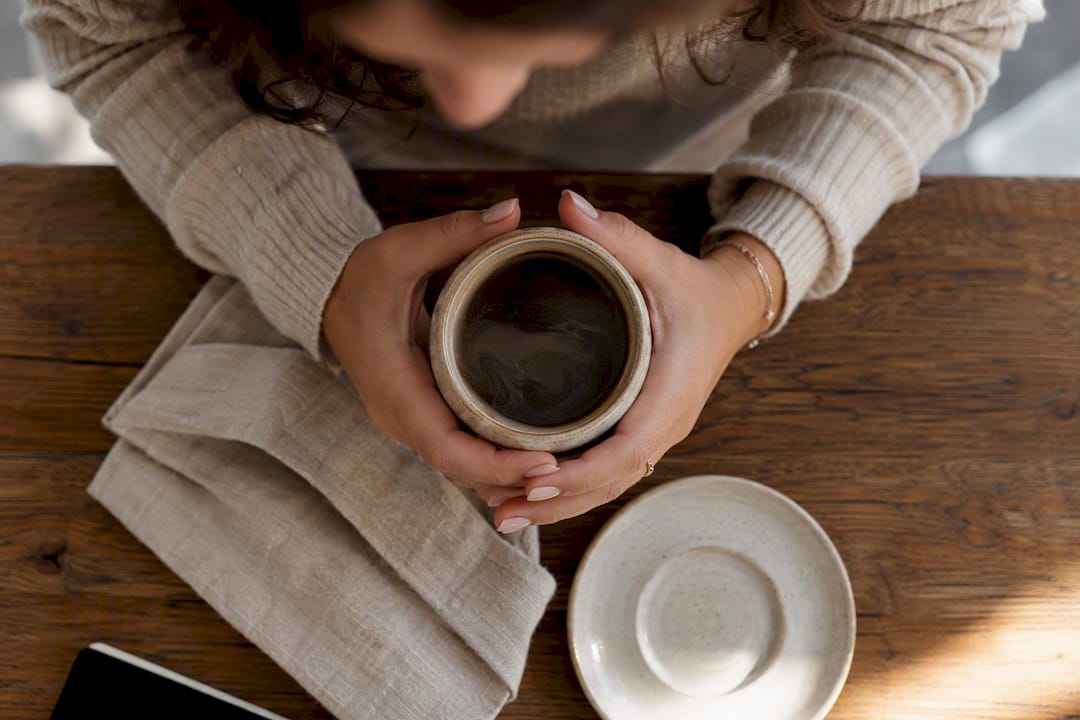
Props do two jobs at once. First, they occupy your hands, which stops the awkward fidgeting or stiff at your sides look that comes from not knowing what to do with them. Second, they give you something to engage with rather than the lens itself, which shifts your focus outward and produces a more natural expression almost by accident.
For personal branding or headshot sessions, choose a prop connected to your work. A laptop, a set of tools, or a stack of your own product photographs makes the session feel like a moment from your actual working life rather than a staged event. That authenticity tends to come through clearly in the final images.
If you don't have an obvious prop, even a warm drink works. The simple act of holding something with both hands and occasionally sipping gives your body a task, which is often enough to break a nervous freeze without your photographer having to say a word.
Should you eat and drink before your session?
What you eat and drink in the hours before a shoot has more influence on how you look and feel than most people realise. Dehydration shows up quickly on camera: dry lips, dull skin, and under-eye puffiness are all worsened by low fluid intake, so aim to drink water steadily through the day rather than skipping meals and gulping a bottle right beforehand.
Avoid excess caffeine and alcohol in the lead up. Caffeine can spike a nervous system that's already on edge, making your hands shakier and your breathing shallower right when you need it steady. Alcohol, meanwhile, dehydrates and can leave your eyes puffy the next morning, which matters if your shoot is scheduled early.
Eat something light and satisfying beforehand rather than shooting on an empty stomach. Low blood sugar makes people irritable and easily flustered, which is the last thing you want when you're already managing nerves. A meal with protein and slow-release carbohydrates an hour or two before your session keeps energy steady without the sluggishness of something too heavy.
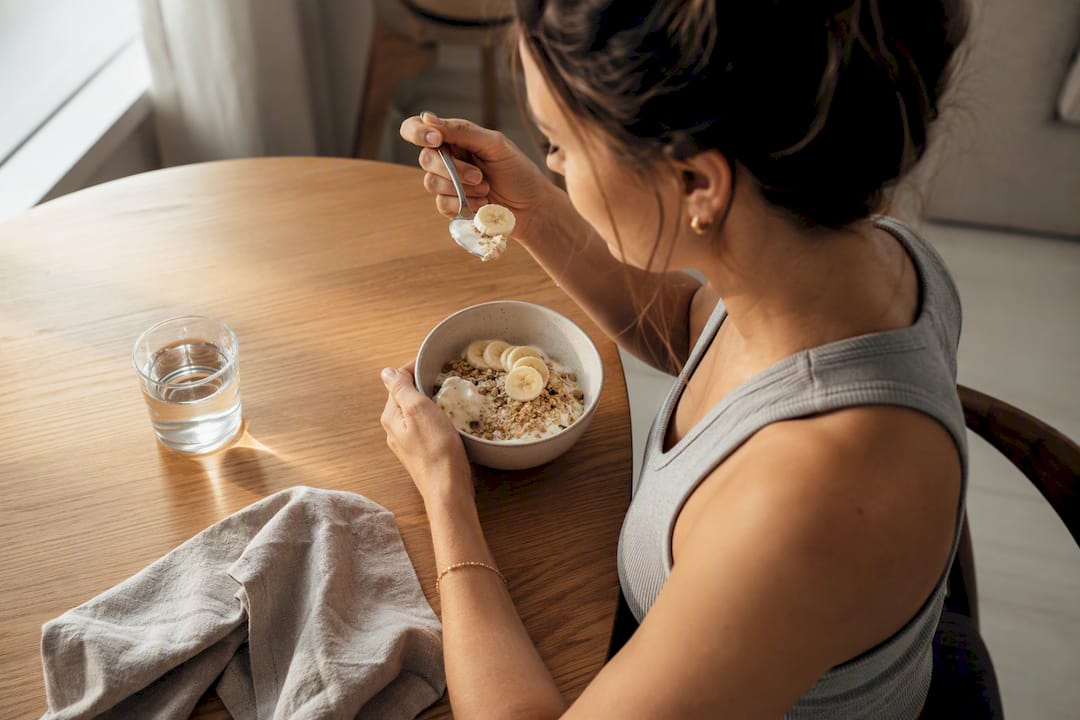
Pack a small snack and a water bottle for longer sessions, particularly outdoor or event shoots that might run over. A quick sip of water between setups is also a useful excuse for a natural pause if you feel tension building mid-shoot.
How do you set boundaries during a photoshoot?
You are allowed to say no to a pose, a location, or a pace that doesn't feel right, and saying so early makes for a smoother session, not an awkward one. Photographers who work regularly with nervous clients expect this kind of feedback and generally welcome it, because it means less guesswork on their end too.
If a pose feels physically uncomfortable or simply wrong for you, say so plainly: "That doesn't feel natural to me, can we try something else?" There is no pose so essential that it's worth pushing through genuine discomfort to achieve.
Set expectations about coverage too. If there are angles you dislike, features you'd prefer not to emphasise, or shots you want more of (hands, full body, close crops), say it before the session starts, not while reviewing the gallery afterwards. A quick, direct conversation avoids disappointment on both sides.
Timing boundaries matter as well. If you know your attention or energy drops after forty minutes, mention it upfront so your photographer can plan the shot list accordingly. Being clear about your limits isn't difficult for a good photographer to work with. It usually makes their job easier and your results better.
Camera nerves are normal, not a flaw
Almost everyone tenses up in front of a lens at some point, so if you dread being photographed, you're not unusual, you're just undertrained for it. Clients who use these breathing and posture habits before a session typically loosen up within the first ten minutes rather than the whole shoot. Treat each photo as practice, not a verdict, and the nerves lose most of their grip.
— Rowan Freeman
How Life in Style Photography works with camera-shy clients
This photography service is built around clients who tense up the moment a lens points their way. Headshot, personal branding, and portrait sessions often include relaxed, coached direction rather than silent, stiff posing, helping clients who arrive nervous leave with images that reflect their personality.
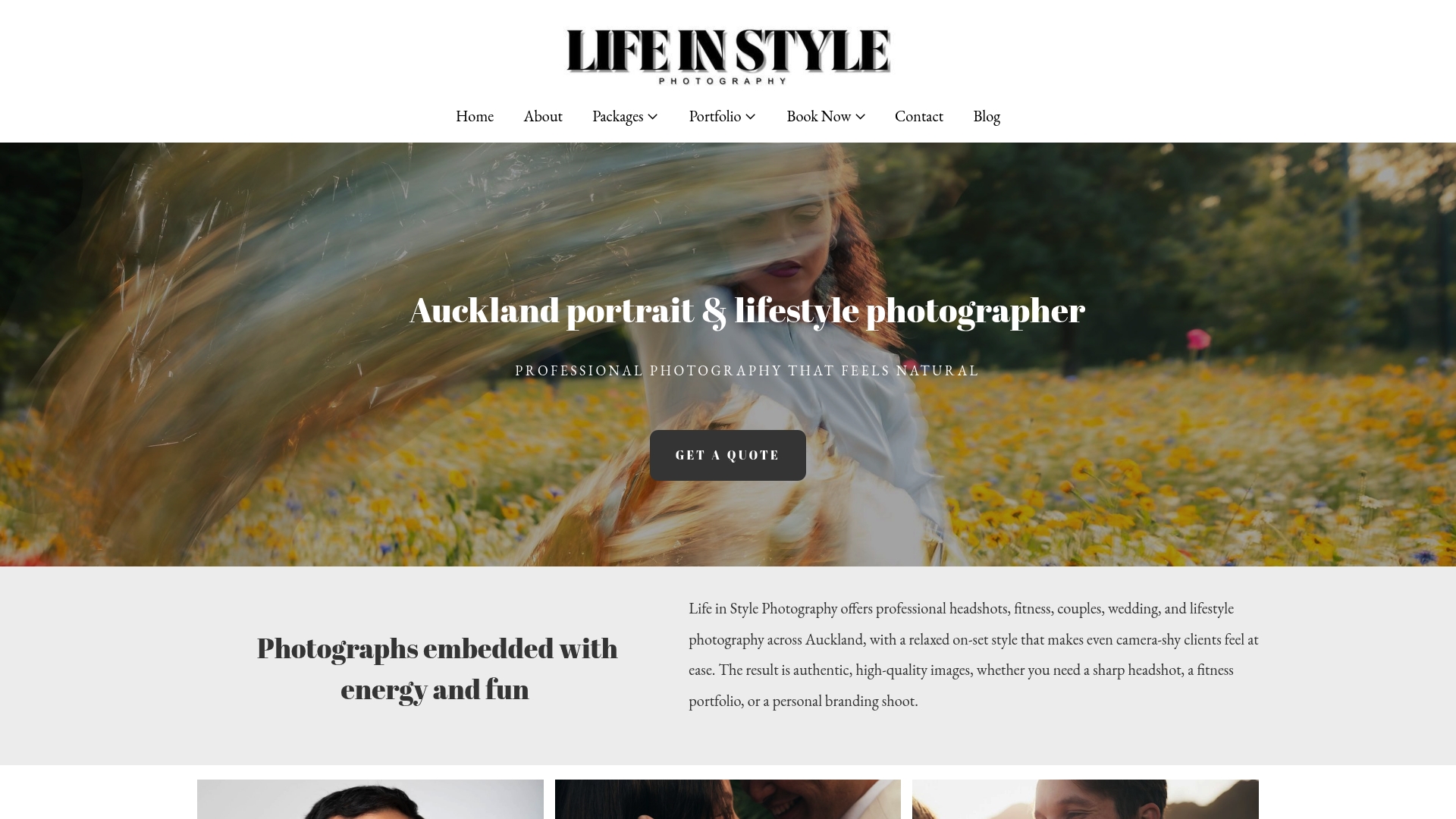
Bookings can start with a short pre-session consultation covering timeline, comfort level with posing, and considerations such as hair and makeup or support persons. It's the same groundwork covered above, just applied directly to your session before a single frame is taken. If you're in Auckland and want a guided, low-pressure experience for a headshot or branding shoot, book a consultation through our headshot photography services and tell us about your nerves upfront. We'll build the session around them.
Sources
The breathing guidance in this article draws on Harvard Health's belly breathing research, the psychology of camera shyness from AMPsych, and practical preparation advice from Kelly Tareski Photography. These three sources anchor the breathing, exposure, and pre-session guidance covered throughout.
- Ease anxiety and stress: take a belly breather — Harvard Health Blog
- Camera Shyness: Why Photos and Video Feel So Uncomfortable — AMPsych
- How to look confident in photos: 5 psychology-backed techniques — HeadshotPhoto
FAQ
What is the 20-60-20 rule in photography?
Definitions vary between photographers, so treat it as a rough pacing guide rather than a fixed formula.
What colours should you avoid for headshots?
Avoid tiny, busy patterns like fine stripes or small checks, which can create a distracting shimmer on camera, and be cautious with very bright or neon shades that can cast unflattering colour onto your skin. Solid, mid-tone colours generally photograph the most reliably.
What are basic tips for taking good photographs of yourself?
Reset your breathing before each frame, drop your shoulders, use a soft squinch with a genuine smile, move rather than freeze, ask for clear direction, take breaks if tension builds, and pack a comfortable, well-fitting outfit you've already tested.
Why am I not photogenic but I look good in the mirror?
Mirrors show a flipped, familiar version of your face, while photos show the real, unflipped version, which can feel unfamiliar even though nothing is actually wrong. Camera shyness is largely about this novelty and self-focused attention, and it fades with repeated, low-stakes exposure like the practice drills covered above.
How can I feel more comfortable during a professional photoshoot?
Book a pre-session consultation to align expectations, practise breathing and posture drills beforehand, and choose a photographer who gives clear, coached direction rather than silent instructions. Life in Style Photography structures sessions around exactly this kind of guided, relaxed coaching for camera-shy clients.