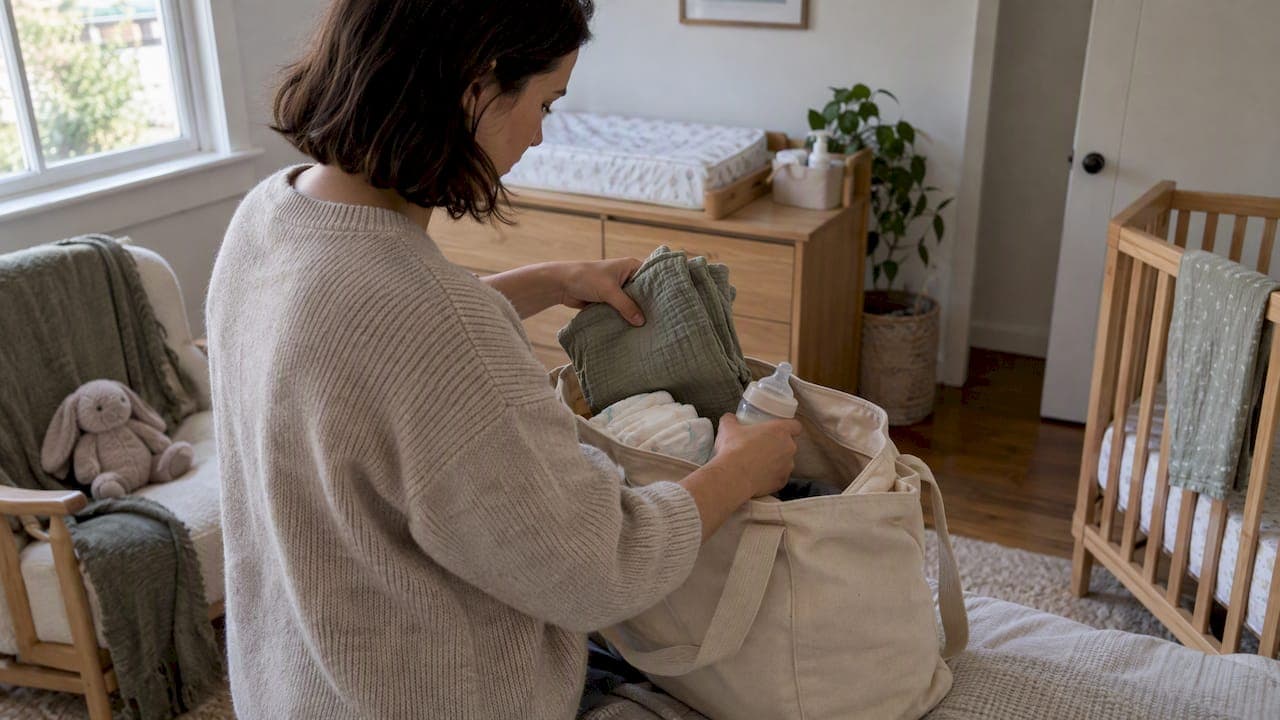
Yes, newborn photography can be safe when practitioners put baby welfare first and follow studio hygiene, safe-sleep guidance and professional safety checks. Before booking, ask about the photographer's newborn-specific training, hygiene routine, spotter policy for posed shots, heating and electrical safety, and their cancellation policy if your baby is unwell on the day.
TL;DR:
- Proper hygiene routines, including handwashing and sterilizing props, are essential to prevent infection risks during newborn photography.
- Safe sleep practices, such as keeping the baby's face clear and avoiding loose bedding, are non-negotiable during sessions.
- Most posed sessions are best scheduled between five and 14 days for optimal sleeping and curling, while lifestyle sessions suit older infants.
- Photographers should have documented training, clear safety policies, and use composite or supportive poses to avoid unsupported baby balancing.
- Postpone the shoot if the baby shows any illness signs, such as fever or symptoms of overheating, especially in infants under three months.
Table of Contents
- Safety fundamentals: infection control, safe sleep and monitoring baby wellbeing
- What to expect during a session: timing, pacing and posing styles
- How parents should prepare: what to wear, what to bring and when to postpone
- Safe posing, props and compositing explained
- How to choose a safe newborn photographer
- Author and studio proof: a safety-first approach in practice
- Why safety-first photography makes for better pictures
- How Life in Style Photography can help with your baby's session
- Sources
- FAQ
Safety fundamentals: infection control, safe sleep and monitoring baby wellbeing
Newborns have immature immune systems, so infection control is the first thing worth checking with any photographer. A responsible studio washes hands thoroughly before handling your baby, uses single-use or freshly laundered items for anything touching their skin, and sterilises reusable props between sessions.

Safe sleep matters just as much during a photo session as it does at home. The Photographic Society of New Zealand holds that subject welfare takes precedence over the image, which in practice means a photographer keeps your baby's face clear, avoids loose bedding near their nose and mouth, and never leaves them unsupervised on their front. HealthEd's Foundations for safe sleep guidance applies just as much in a studio as at home: baby should sleep on their back, on a firm flat surface, with their face clear and the room smoke-free.
SUDI causes a significant number of infant deaths in New Zealand each year, which is why safe-sleep practice is treated as non-negotiable rather than a nice-to-have during sessions.
A good photographer watches your baby throughout, not just through the viewfinder. Signs worth flagging immediately include:
- Flushed or blotchy skin, rapid breathing or irritability, which can point to overheating.
- Unusual lethargy or difficulty waking, especially in a baby under three months old.
- A temperature of 38°C or higher, which KidsHealth New Zealand treats as a medical emergency in infants this young and grounds to postpone the session.
Studio conditions play their own part. WorkSafe New Zealand recommends RCD protection, daily checks of cords and leads, and avoiding overloaded powerboards for high-draw heaters, all of which reduce the risk of shock or fire in a space where a baby is undressed and unsupervised for a moment.
What to expect during a session: timing, pacing and posing styles
Most posed newborn sessions are booked between five and 14 days old, while babies are still sleeping deeply and curling naturally, which makes gentle posing easier and calmer. Lifestyle sessions, where your baby stays mostly in your arms or on a parent's chest, are far more flexible on timing and work well at almost any age in the first few months.
Expect a session to run longer than you might assume. A proper newborn shoot builds in time for:
- Feeding and settling breaks whenever your baby needs them, not on a fixed schedule.
- Slow, unhurried transitions between poses so your baby stays calm rather than startled.
- Pauses to check temperature, nappy needs and comfort before continuing.
Posed shots that look like your baby is balancing unsupported are usually created with a spotter keeping hands within reach, or built from separate safe-support images merged afterwards. Lifestyle sessions sidestep this entirely by keeping handling to a minimum and your baby close to you throughout.
How parents should prepare: what to wear, what to bring and when to postpone
Simple, neutral clothing works best for parents and siblings alike. It should allow easy feeding access and skin-to-skin contact without pulling focus from your baby, and our guide to newborn session outfits runs through colour and fabric choices that photograph well without distracting from your baby.
A short checklist makes the morning of the shoot far less stressful:
- Feeds or expressed milk, enough for at least one full settle during the session.
- Spare nappies and a change of clothes for your baby and yourself.
- A small, familiar blanket or wrap that smells like home, for comfort between poses.
- Any medical notes relevant to prematurity or low birth weight, so the photographer can adjust handling.
- A contact number for your GP or Well Child provider, just in case you need advice on the day.
Postpone without hesitation if your baby has a fever, has been exposed to illness in the household recently, or is under three months old and showing any concerning symptoms. KidsHealth New Zealand is clear that any sign of illness in this age group warrants medical advice first, photos second. Our newborn at home guide covers more on timing decisions if you're planning an at-home session instead of a studio visit.
Safe posing, props and compositing explained
The poses that look most delicate, baby curled in a bucket or balanced on two hands, are rarely achieved by leaving a baby unsupported. A trained photographer uses a spotter, usually an assistant or the parent, positioned within arm's reach the entire time a baby is in an unsupported-looking pose.

Composite images take this a step further. The photographer captures the baby safely supported in one frame, then a clean background or prop in another, and blends the two in editing. The final image looks seamless, but no risky balancing ever actually happened, a technique covered in detail by Jodi Blodgett Photography.
Props themselves deserve scrutiny too:
- Firm, stable surfaces only, with nothing loose or soft near the baby's face.
- Freshly laundered fabric for every session, never reused without washing.
- Adult blankets, sheepskins or anything plush avoided for any pose where baby is left unsupervised, even briefly.
Pro Tip: Ask to see behind-the-scenes photos or short video of the photographer actually handling a baby during a pose. It tells you more about their technique than any finished gallery ever will.
How to choose a safe newborn photographer
A short conversation before booking reveals most of what you need to know. Worth asking directly:
- What newborn-specific training have you done, and have you worked with premature or low-birth-weight babies?
- What's your hygiene routine between sessions, and how do you sterilise props?
- How do you manage studio heating and electrical safety?
- Do you hold insurance, and have you had first-aid training for infants?
- What's your spotter policy for any pose where baby looks unsupported?
Trust signals to look for include membership adhering to the PSNZ code of conduct, a written safety policy you can read before the day, behind-the-scenes content showing real handling, and client feedback that mentions feeling reassured rather than just happy with the photos.
Red flags are just as telling. Be wary of a photographer with no written safety policy, reluctance to answer direct questions about training or hygiene, or insistence on a risky-looking pose without a spotter or composite technique to back it up.
Author and studio proof: a safety-first approach in practice
This guide was written by Rowan Freeman for Life in Style Photography, drawing on professional newborn photography standards and New Zealand public health guidance on safe sleep and infant care. Our newborn session outfits and newborn at home resources show these practices in context, including parent presence throughout, experienced handling, consistent hygiene routines and clear booking and cancellation terms if your baby is unwell.
Why safety-first photography makes for better pictures
Babies who feel settled, rather than rushed into a pose, give you more genuine expressions and softer body language. Prioritising sleep cues and comfort over a shot list almost always produces calmer images and a far less stressful morning for parents.
If a photographer welcomes your questions about training, hygiene or spotter technique rather than brushing them off, that openness is itself a good sign. Ask as much as you need to before you book. A practitioner confident in their safety practice will never mind explaining it.
— Rowan Freeman
How Life in Style Photography can help with your baby's session
Choosing a photographer who treats safety as the foundation, not an afterthought, means you get to relax and enjoy the session rather than watch every pose anxiously. Some photographers offer Tiny Moments baby shoots and Maternity & Baby packages designed with parent presence throughout, experienced handling and consistent studio hygiene.
Enquiring is simple: you'll get a short questionnaire about your baby's needs, including prematurity or any medical notes, before confirming with a deposit. This means we can plan feed breaks and handling around your baby from the start rather than improvising on the day.
- Tiny Moments baby shoot: a relaxed, safety-led session suited to babies in their first weeks.
- Maternity and baby packages: flexible options for expecting parents and newborns alike.
Full details and pricing for the Maternity and Baby photography packages are available on the photographer's booking page, where you can check availability.
Sources
- Photographic Society of New Zealand — ethics and codes of conduct
- HealthEd — Foundations for safe sleep (HE1099)
- KidsHealth New Zealand — temperatures and thermometers
- WorkSafe New Zealand — electrical equipment and appliances
FAQ
Is it safe to do a newborn photoshoot?
Yes, provided the photographer follows infection control, safe-sleep practice and studio safety checks, and never leaves your baby unsupported without a spotter or composite technique. Ask about their training and hygiene routine before booking to confirm they meet these standards.
How late can you do a newborn photo shoot?
Posed newborn sessions work best between five and 14 days old, while babies are still sleeping deeply enough for gentle curling poses. Lifestyle sessions, which keep your baby mostly in your arms, are flexible and suit almost any age in the first few months.
What should parents wear to a newborn photo shoot?
Simple, neutral clothing that allows easy feeding and skin-to-skin contact works best for parents and siblings. Our guide to newborn session outfits covers colour and fabric choices in more detail.
Is 2 weeks too old for newborn photos?
Two weeks is still within the typical window for posed newborn sessions, though babies this age may be slightly more alert and less likely to curl as easily as in the first days. A lifestyle-style session is a good alternative if your baby is already more awake and active by this point.