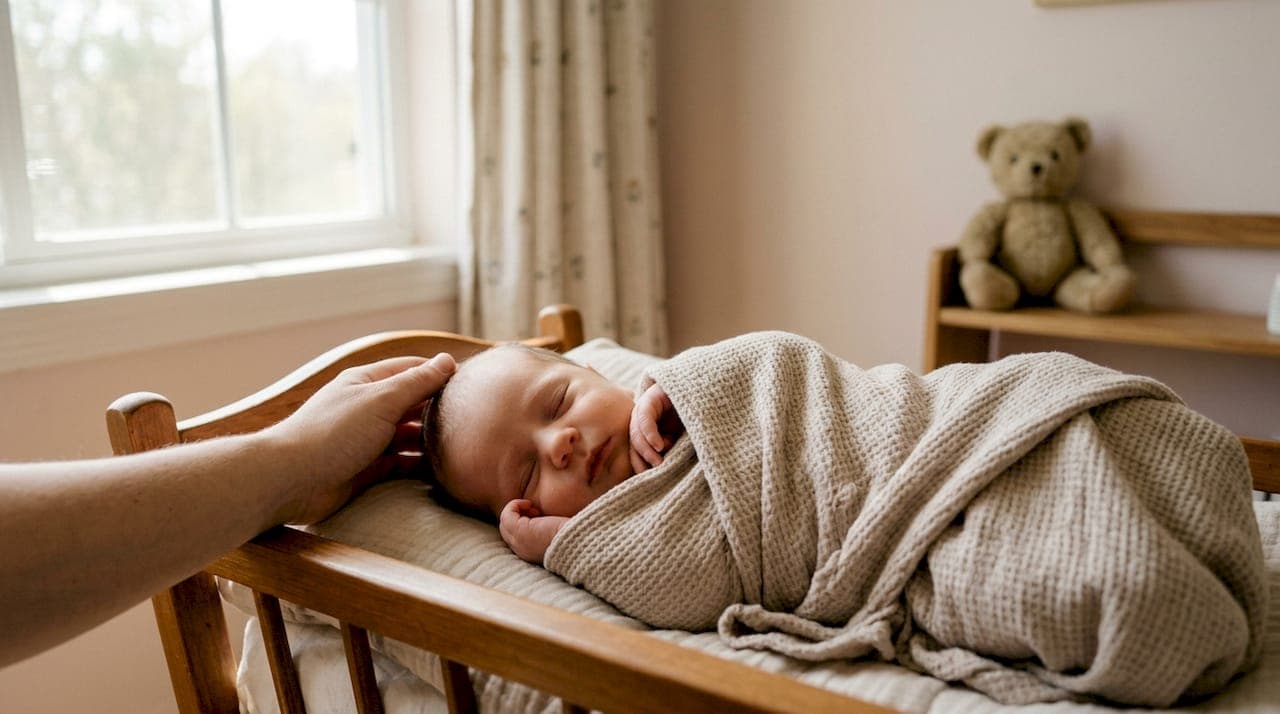
Fresh 48 photos are documentary newborn images taken within the first 48 hours of birth, capturing your baby and family exactly as you are in those earliest moments. Whether you're planning a professional session or picking up your phone yourself, here's what to do right now:
Key takeaways
A Fresh 48 session captures your newborn and first family moments within the first 48 hours of birth, using natural light and a documentary approach that no studio session can replicate.
| Point | Details |
|---|---|
| Timeframe is tight | Sessions must happen within 48 hours of birth; plan and contact your photographer before your due date. |
| Ask the hospital first | Confirm photography and visitor policies with your midwife or ward coordinator before booking. |
| Shot list priorities | Cover baby details (hands, feet, face), family moments (skin-to-skin, siblings), and room context shots. |
| Session length and gallery | Typical sessions run 30–90 minutes and deliver galleries of 30–80+ images depending on duration. |
| Life in style Photography | Offers Auckland-based maternity and baby photography with a documentary, on-location approach suited to Fresh 48 sessions. |
Table of Contents
- What are fresh 48 photos, and how do they differ from a newborn session?
- When and where do Fresh 48 sessions happen in New Zealand?
- What shots should you capture? A practical shot list
- How to prepare the room and what to wear
- Practical shooting tips for phones and cameras
- Safety, consent, and hospital rules
- How long do Fresh 48 sessions take, and what do they cost in New Zealand?
- How to book a Fresh 48 session with Life in Style Photography
- Ready to book your Fresh 48 session in Auckland?
- Sources
What are fresh 48 photos, and how do they differ from a newborn session?
A Fresh 48 session takes place within the first 48 hours of life and focuses on documentary, natural-light images that capture early family moments rather than posed studio portraits. The term "Fresh 48" is the widely used industry name for this style of newborn photography, sometimes also called a birth-day or first-day session.
The key distinction from a studio newborn session is context. Fresh 48 sessions emphasise candid, environmental images in the birth setting, while studio newborn sessions are more posed and prop-driven, typically scheduled one to two weeks after birth when babies are sleepier and more pliable for curled poses. A Fresh 48 session rarely uses elaborate props. Instead, the hospital bassinet, the name plate on the cot, and the look on a sibling's face when they meet the baby for the first time become the story.
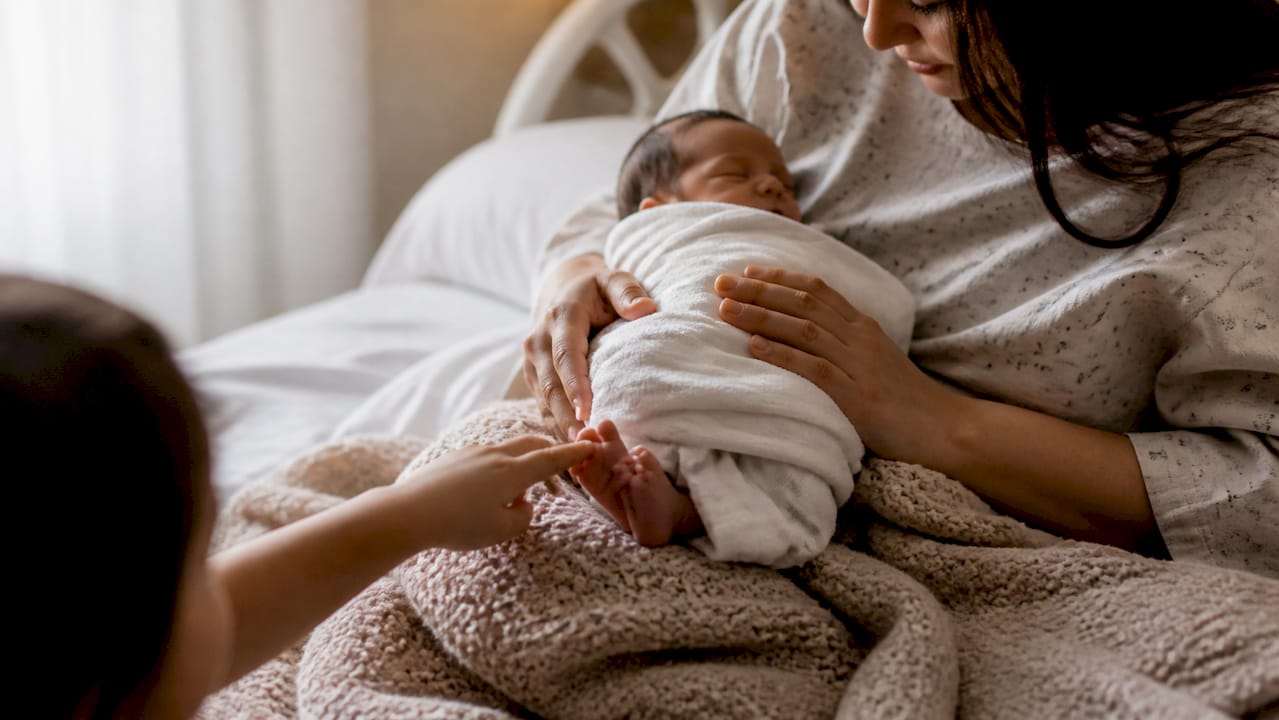
Common use cases include first-family introductions, sibling meetings, early skin-to-skin and breastfeeding moments, and detail shots of the hospital room itself as a time-capsule record. Parents often describe these images as the ones they treasure most, precisely because they show life as it actually was.
When and where do Fresh 48 sessions happen in New Zealand?
The 48-hour window moves quickly, so timing matters. Most photographers and parents aim for the session during daylight hours, when natural window light gives the warmest, most flattering results without disturbing the baby or other patients with flash.
Fresh 48 sessions in New Zealand most commonly take place in one of three settings:
- Hospital room: The most common option. Natural light from a window, a controlled environment, and staff on hand. Privacy rules vary between DHBs and private hospitals, so confirm the policy with your midwife or ward coordinator before the birth.
- Birthing centre: Often more relaxed about visitors and photography than a busy hospital ward, with homelier rooms that photograph beautifully.
- Home (post-birth): If you birth at home or transfer home within hours, your own space gives you full control over light, clutter, and timing.
Action steps for New Zealand parents:
- Contact your hospital or birthing centre before your due date to ask about their photography and visitor policy.
- Find out which staff member can authorise photography on the ward.
- Give your photographer a direct contact number (mobile is best) so they can be reached the moment labour progresses.
What shots should you capture? A practical shot list
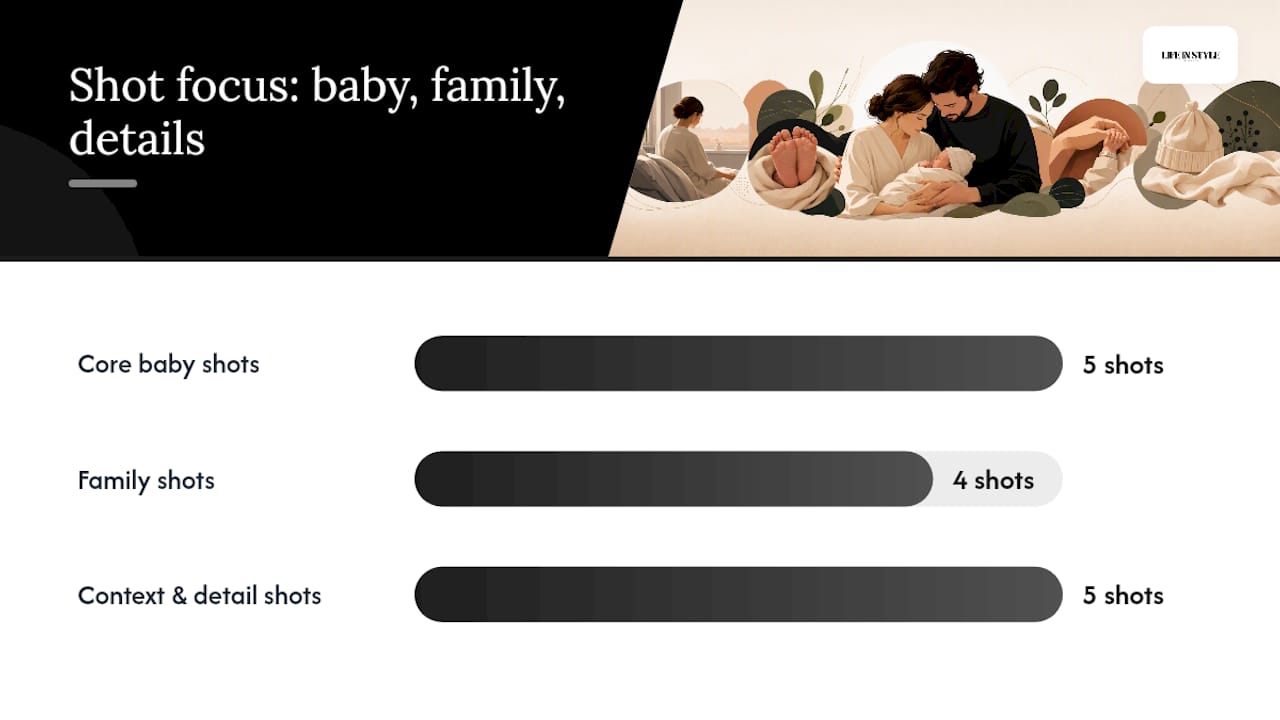
A good Fresh 48 gallery covers three layers: the baby alone, the family together, and the small details that disappear within days. Photographers recommend a flexible approach to shot lists and prioritise family connection and documentary moments over staged perfection, so treat this as a guide rather than a rigid checklist.
Core baby shots:
- Full body, both dressed and undressed
- Face close-up (sleeping and awake)
- Hands and feet
- Umbilical stump (a detail that changes fast)
- Sleeping face from above
Family shots:
- Birthing parent holding baby, skin-to-skin
- Partner holding baby
- Siblings meeting baby for the first time
- Grandparents or whānau portraits
Context and detail shots:
- Hospital name plate or cot card
- Birth notes or whiteboard
- Bassinet from above
- Parent's hands cradling baby
- Personal items: a watch, a phone showing the birth announcement, a meaningful piece of jewellery
HealthEd New Zealand advises parents to photograph their baby both dressed and undressed, including close-ups of face, hands, and feet, as these images serve as important personal and medical records.
Pro Tip: Include at least a few undressed baby shots if you're comfortable doing so. Parents often value these most years later, both as a time-capsule record and as a reference for developmental milestones.
How to prepare the room and what to wear
A little preparation makes a real difference to how your photos look and how smoothly the session runs.
Clothing for the birthing parent: Loose, comfortable tops or robes in neutral or solid colours photograph best. Wardrobe guidance for Fresh 48 sessions consistently recommends avoiding busy patterns and logos, which date quickly and draw the eye away from faces. A soft grey, white, or blush robe is a reliable choice. Try your outfit before the birth so you know it feels comfortable post-delivery.
Siblings and whānau: Keep it simple. Solid colours or subtle textures work well. Avoid matching outfits that look overly coordinated, as they can feel stiff in documentary-style images.
Room preparation:
- Clear the immediate frame of medical packaging, food wrappers, and clutter you don't want in photos.
- Open the blinds or curtains to maximise window light.
- Switch off harsh overhead fluorescent lights where possible; the window light alone is usually enough during the day.
What to pack for the session:
- Snacks and water for the birthing parent
- Spare nappies and wraps
- Baby's favourite blanket or a special hat
- A fully charged phone or camera
- A short list of people to include and any consent forms the hospital requires
Practical shooting tips for phones and cameras
You don't need professional gear to capture meaningful Fresh 48 images. The principles are the same whether you're using a smartphone or a mirrorless camera.
Phone tips
Use natural window light and keep the flash off entirely. Flash startles babies and flattens the warm, soft quality that makes these images feel intimate. Shoot in both portrait and landscape orientations so you have options when you look back at the gallery. Stabilise your phone by leaning it against a surface or resting your elbows on the bed rail for sharper shots in low light.
Camera settings
For photographers shooting with a DSLR or mirrorless camera, aperture priority mode is the most practical choice in a hospital room:
- Aperture: f/2–f/2.8 for tight portraits; f/2.8–f/4 for wider family shots that need more depth
- ISO: As low as the available light allows; push to ISO 1600–3200 in dim rooms rather than using flash
- Shutter speed: At least 1/125s for handheld shots to avoid motion blur
- File format: RAW if available, or the highest-quality JPEG setting
Natural window light during daylight hours gives the most consistent results, and keeping flash off preserves the documentary feel while avoiding distress to the baby.
Composition angles
Shoot from directly overhead (from above the baby's head) for full-body shots. Use a 45-degree angle for three-quarter family portraits. Get in close for hands, feet, and face crops — these tight detail shots are often the most emotionally resonant images in the gallery.
Documentary vs posed: which approach suits a Fresh 48?
| Style | Approach | Time required | Best for |
|---|---|---|---|
| Documentary | Candid, follows natural moments | about half an hour | Fresh 48 in hospital or home |
| Posed | Directed, uses props and wraps | 60–120 min | Studio newborn session (1–2 weeks old) |
Documentary style suits the Fresh 48 context because it works with the unpredictability of a newborn and a recovering parent. Posed sessions are better scheduled once you're home and settled.
Safety, consent, and hospital rules
Safety comes first, and it shapes every decision during a Fresh 48 session.
The guiding principle: The midwife or nurse is always in charge of the clinical environment. A photographer's role is to document, not to direct. If a staff member asks the photographer to step back or pause, that instruction takes priority over any shot list.
Consent and privacy steps:
- Ask your midwife or ward coordinator which staff member can authorise photography on the ward.
- Check whether there are privacy rules around photographing other patients or staff.
- Confirm any time-of-day restrictions or visitor limits that apply to your room.
Keeping baby comfortable:
- Keep the room warm, especially if you plan any undressed shots.
- Limit undressing to brief, purposeful moments and re-wrap the baby promptly.
- Never move or position the baby in a way that a midwife has not approved.
- If the baby is unsettled, pause the session. A calm baby and a calm parent always produce better images than a rushed shot list.
How long do Fresh 48 sessions take, and what do they cost in New Zealand?
Session length and pricing vary depending on the photographer, the hospital, and what you want to capture.
| Session type | Typical duration | Gallery size | Key pricing factor |
|---|---|---|---|
| Short/focused | about half an hour | 50 or more images | Travel to hospital, basic on-call fee |
| Fuller documentary | 60–90 minutes | 50 or more images | On-call time, extended family included |
Typical session durations vary, generally lasting from about half an hour up to one and a half hours, and many photographers factor on-call time into their pricing because birth timing is unpredictable. This means the photographer may charge a retainer or availability fee on top of the session rate, reflecting the reality that they need to be ready to travel at short notice, day or night.
When you enquire with a photographer, ask specifically about:
- Whether on-call time is billed separately or included in the package
- Travel costs to your hospital or birthing centre
- How many people are included in the base price
- Whether video clips are available as an add-on
- Turnaround time for proofs and the final gallery delivery
Galleries for hospital sessions frequently include 50 or more images, though this depends on session length and how much activity happens during the visit. Ask your photographer for a sample gallery so you know what to expect before you book.
How to book a Fresh 48 session with Life in Style Photography
Life in Style Photography offers maternity and baby photography in Auckland and can discuss Fresh 48 and early newborn coverage on enquiry. Their on-location, documentary approach is well suited to hospital and home settings, and they work around feeding, rest, and clinical needs rather than against them.
Booking steps:
- Contact Life in Style Photography via the website or phone to express your interest and share your estimated due date.
- Discuss your birth hospital or birthing centre and confirm the photography policy with your midwife before the session is confirmed.
- Share a direct mobile number so the photographer can be reached quickly once labour is progressing.
- Confirm the deposit, availability arrangement, and any on-call fee structure.
- Review and sign any consent or release forms required by the hospital.
What to include in your enquiry:
- Your estimated due date and birth location (hospital or birthing centre name)
- Preferred contact method and the best number to reach you during labour
- Who you'd like photographed: partner, siblings, grandparents, whānau
- Any special requests, such as cultural practices or specific moments you want documented
A photographer's note on what matters most in a Fresh 48
The images that mean the most to families years later are rarely the perfectly composed ones. They're the ones where a partner is looking at the baby with complete disbelief, or where a toddler sibling is reaching out with one cautious finger. Those moments happen whether or not the light is ideal or the room is tidy.
What I've seen consistently is that families who feel relaxed produce the most genuine images. That means we work around feeds, we pause when the baby needs settling, and we never rush a moment that's still unfolding. A Fresh 48 session should feel like a quiet visit from someone who happens to have a camera, not a production. The shot list is a guide, not a contract, and the best image of the day is often one nobody planned for.
Ready to book your Fresh 48 session in Auckland?
Life in Style Photography is Auckland's warm, documentary-style option for families who want their first hours captured with care and without fuss. Rather than a rigid studio setup, you get a photographer who comes to you, works around the natural rhythm of your hospital room or home, and delivers a gallery that reflects your family as it actually is in those first hours.
To get started, enquire about a Fresh 48 session and include your due date, birth location, and the people you'd like photographed. Life in Style Photography will confirm availability, walk you through the hospital permission steps, and answer any questions about what the session involves. Availability is limited, so reaching out before your due date gives you the best chance of securing a spot.
Sources
The following sources are worth bookmarking as you plan your session. New Zealand-specific resources are noted.
- 7 Photography Tips To Capture a Fresh 48 | Click Love Grow
- Fresh 48 Session vs Newborn Session - Bolt Photography
- The fresh 48: Everything you need to know about hospital newborn photography - Click Magazine
- A Guide on What to Wear for Fresh 48 Photos - Neyssa Lee Photography
- Fresh 48 Session Guide — White Elm Photography
Recommended
- Auckland Maternity and baby photography - Auckland Portrait, Branding & Wedding Photographer | Life in Style Photography
- Auckland Maternity and baby photography - Auckland Portrait, Branding & Wedding Photographer | Life in Style Photography
- Real Estate Branding Photos for Agents: Shot Checklist
- Portfolio - Auckland Portrait, Branding & Wedding Photographer | Life in Style Photography