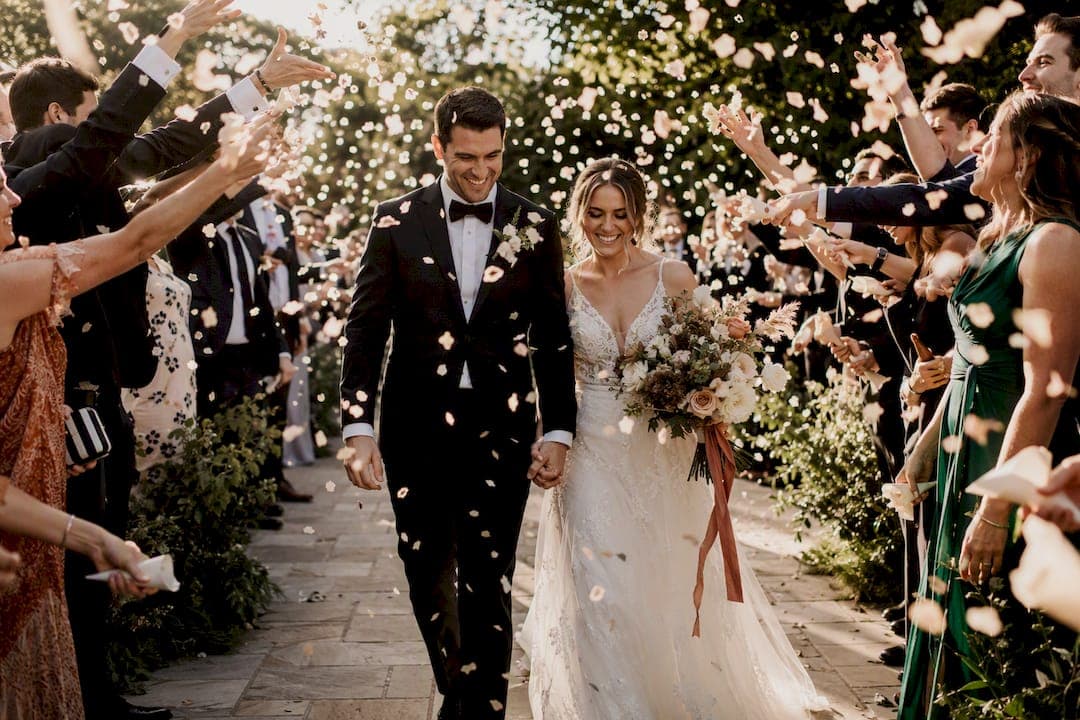
The best confetti wedding photos come from one simple combination: large, lightweight biodegradable pieces that hang in the air, enough volume to fill the frame, and guests briefed to throw "up and over" through a long tunnel. Add soft backlight or open shade, and you've got the recipe. Venue permit rules and a photographer who knows how to direct the moment, like the team at Life in style Photography, turn that recipe into a photo you'll frame.
TL;DR:
- Use large, lightweight biodegradable confetti like rice-paper or starch pieces for a longer, denser flutter suitable for cinematic photos.
- Brief guests to throw confetti upward and outward in two waves, with enough volume in their hands, to maximize visual impact and frame variety.
- Position the toss against simple, contrasting backgrounds with lighting coming from behind or the side for best visual clarity and glow.
- Check venue rules beforehand, as many parks and gardens prohibit confetti, and choose eco-friendly options that break down naturally if allowed.
- Plan the timing and location of confetti photos carefully, coordinating with the photographer, the MC, and backup weather plans to ensure a smooth, picturesque shot.
Table of Contents
- Best confetti materials and how each looks in photos
- Staging the tunnel: how to brief your guests for a cinematic throw
- Choosing lighting, background and weather for maximum impact
- How much confetti to buy and how to hand it out
- Checking venue rules, eco choices and clean-up before you commit
- Photographer checklist: what to tell your photographer before the day
- Safety precautions every guest should know before the toss
- Cleaning up after the toss without damaging the venue
- Why the standard confetti advice misses the point
- How a professional photography service plans your confetti moment
- Sources
- FAQ
Best confetti materials and how each looks in photos
Not all confetti behaves the same way in the air, and that difference shows up immediately through a camera lens. Heavy, small pieces drop fast and vanish from frame within a second. Light, broad pieces hang, tumble, and catch the light on the way down, giving your photographer several extra frames to work with.
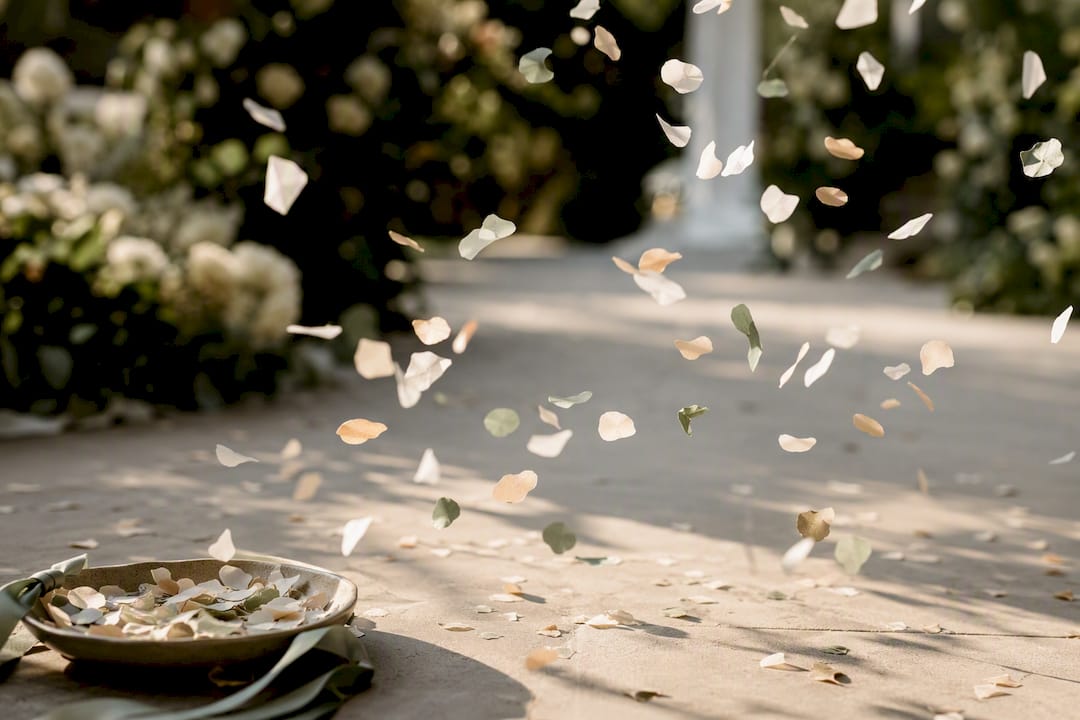
Biodegradable rice-paper or sweet potato starch confetti floats longer and creates a denser, slower flutter than small dried petals, which makes it the standout choice for anyone chasing that dreamy, suspended-in-air look. Larger tissue circles behave similarly and come in colour ranges that read well against most ceremony backdrops.
Here's how the main options stack up for photos:
- Rice-paper or starch confetti: slow fall, dense coverage, breaks down naturally, best all-rounder for photos.
- Large tissue circles: similar float time to starch confetti, wider colour range, slightly bulkier to store.
- Dried flower petals: pretty and natural-looking but heavier, so they drop fast and suit close-up, romantic shots rather than a big tunnel toss.
- Fresh petals: gorgeous colour saturation but the shortest float time of all, and they bruise or wilt if bagged too early.
Colour matters as much as material. Confetti needs to contrast against whatever's behind it, a stone church, a garden hedge, or a timber marquee wall, or it simply disappears in the final image. Pale confetti thrown against a dark backdrop and bold or bright confetti against a light backdrop both read clearly on camera, while confetti that matches its background often gets lost entirely.
Staging the tunnel: how to brief your guests for a cinematic throw
Confetti photos live or die on staging, not luck. A well-briefed group of guests standing in two lines will outperform a scattered crowd every time, because you're building a corridor of colour rather than a random puff.
- Line guests up in two facing rows, leaving a metre or so of walking space between them. The longer the tunnel, the more frames your photographer gets before the couple reaches the end.
- Hand out confetti in open baskets, not paper cones. Baskets encourage guests to grab generous handfuls, while cones tend to produce small, polite little sprinkles that barely register on camera.
- Have the celebrant or MC run a simple countdown: "Ready... and... throw it up and over!" Guests naturally aim too low and too gently unless someone tells them otherwise.
- Use the two-wave technique. Prompt one throw as the couple enters the tunnel, then a second as they reach the midpoint, extending the visible fall time and giving you a real shot at multiple keeper frames instead of one lucky click.
Kind Confetti's own guidance echoes this: communicate with your photographer beforehand, make sure there's enough volume in guests' hands, and brief everyone to throw up and out rather than forward.
Pro Tip: If a few guests seem shy about throwing directly at the couple, ask them to aim between the couple and the photographer instead. You still get the full canopy effect in the shot, and nobody ends up with a mouthful of rice paper.
Choosing lighting, background and weather for maximum impact
Confetti photos need light coming from behind or beside the couple, not blasting down from overhead. Backlight or open shade makes each piece glow as it catches the sun, while harsh midday light tends to flatten the effect and leave everyone squinting.
A clean, uncluttered background does more work than most couples expect. Confetti thrown in front of a busy car park or a cluttered garden bed competes for attention with everything else in the frame. Position the toss against a simple wall, a hedge line, or open sky instead, and use contrast deliberately:
- Light or pastel confetti photographs best against dark stone, timber, or foliage.
- Bright or jewel-toned confetti stands out clearly against pale walls or open sky.
- Avoid confetti colours that closely match the venue's dominant tones.
Weather plays its own role. A light breeze adds drama and movement to the fall, but water-soluble confetti begins breaking down quickly in rain or on damp ground, so keep it dry until the moment itself and have a backup plan. A covered porch, an entryway, or even a bubble send-off works well if the forecast turns against you.
How much confetti to buy and how to hand it out
Running short on confetti is one of the most common regrets couples raise after their wedding day, because a sparse toss reads as underwhelming in photos no matter how well it's staged. The fix is simple: buy more than you think you need.
New Zealand vendors typically size their bags around guest counts attending the toss, not your full guest list, since not everyone joins the tunnel.
If your numbers run larger, consider adding a confetti cannon for extra volume rather than simply buying more handfuls, particularly useful once you're past the 80 to 100 guest mark and want a dramatic burst on top of the tunnel throw. Store water-soluble confetti somewhere dry right up until the ceremony, since humidity and damp storage can cause it to clump before it's even left the bag.
Checking venue rules, eco choices and clean-up before you commit
Before you buy a single bag of confetti, check your venue's actual policy. Many public parks, regional parks and botanic gardens across New Zealand prohibit confetti outright, including dried petals and birdseed, and some sites permit only bubbles as an alternative send-off.
Auckland Botanic Gardens is a good example: their site hire terms specifically recommend bubbles over confetti to protect the grounds and simplify clean-up after the event. If your ceremony or reception venue has any planting, lawns, or heritage features, assume there's a restriction until you've confirmed otherwise.
Where confetti is allowed, biodegradable options solve most eco concerns:
- Rice-paper and sweet potato starch confetti break down naturally and won't harm wildlife if a few pieces get missed.
- Water-soluble confetti dissolves in rain or when hosed down, making outdoor clean-up faster.
- Dried petals compost easily but can still stain paving if left too long.
Clean-up itself is straightforward if you plan for it: a quick sweep or hose-down within a few hours prevents staining on stone or timber, and a few guests with garden bags can clear a lawn area in minutes. Venues appreciate couples who leave the site as they found it, and it protects your bond if one's required.
Photographer checklist: what to tell your photographer before the day
A short conversation before the wedding saves a lot of guesswork on the day. Tell your photographer your preferred confetti style, the background you're hoping for, whether the venue actually permits confetti, and your wet-weather backup.
On the day, an experienced photographer will usually position themselves slightly ahead of the tunnel to shoot back toward the couple, using a fast shutter speed to freeze individual pieces midair while keeping the couple's expressions sharp. They'll time the shutter to the celebrant's countdown rather than guessing, and adjust their position for backlight the moment they see where the sun sits.

Pro Tip: Share your confetti colour choice with your photographer in advance so they can suggest a background that will make it pop, rather than discovering a clash on the day.
Life in style Photography's couples portfolio shows the kind of natural, in-the-moment coverage this staging produces when it's planned properly.
Safety precautions every guest should know before the toss
A confetti tunnel involves a crowd throwing small objects at close range, and a few sensible precautions keep the moment fun rather than uncomfortable. Eye contact with confetti is the most common minor mishap, particularly with rice-paper or starch pieces that catch on the breeze and drift sideways into someone's face.
Remind guests to throw upward and outward rather than straight ahead at head height, both for better photos and for comfort. Anyone wearing contact lenses should be warned that confetti dust can irritate the eyes, and it's worth having a bottle of water on hand at the reception in case someone needs a quick rinse.
Slip hazards matter just as much, especially on tiled courtyards, marble entries, or polished timber decking. Biodegradable confetti and water-soluble varieties can turn slightly slick underfoot once trodden on, particularly in damp conditions. Keep the tunnel area clear of trip hazards like cables or garden edging, and ask anyone in heels to be mindful of loose confetti pooling near their feet.
If children are part of the toss, keep smaller handfuls for them and position them slightly further back from the couple's walking path, since younger guests often throw wildly rather than aiming up and over. None of this needs to feel clinical on the day. A quick, friendly reminder from the MC alongside the throwing instructions covers most of it without slowing down the moment.
Cleaning up after the toss without damaging the venue
Clean-up starts the moment the last confetti piece hits the ground, and how you handle it affects both your bond and your relationship with the venue. Biodegradable and water-soluble confetti make this considerably easier than traditional paper or foil varieties, since a hose-down or a decent rain shower finishes most of the job for you.
For dry, hard surfaces like paving, decking or tiled courtyards, a broom and a garden bag clear a tunnel area in a few minutes if a couple of guests pitch in straight after the photos are taken. Confetti left to sit for hours becomes harder to remove, especially once foot traffic grinds it into grout lines or timber grain.
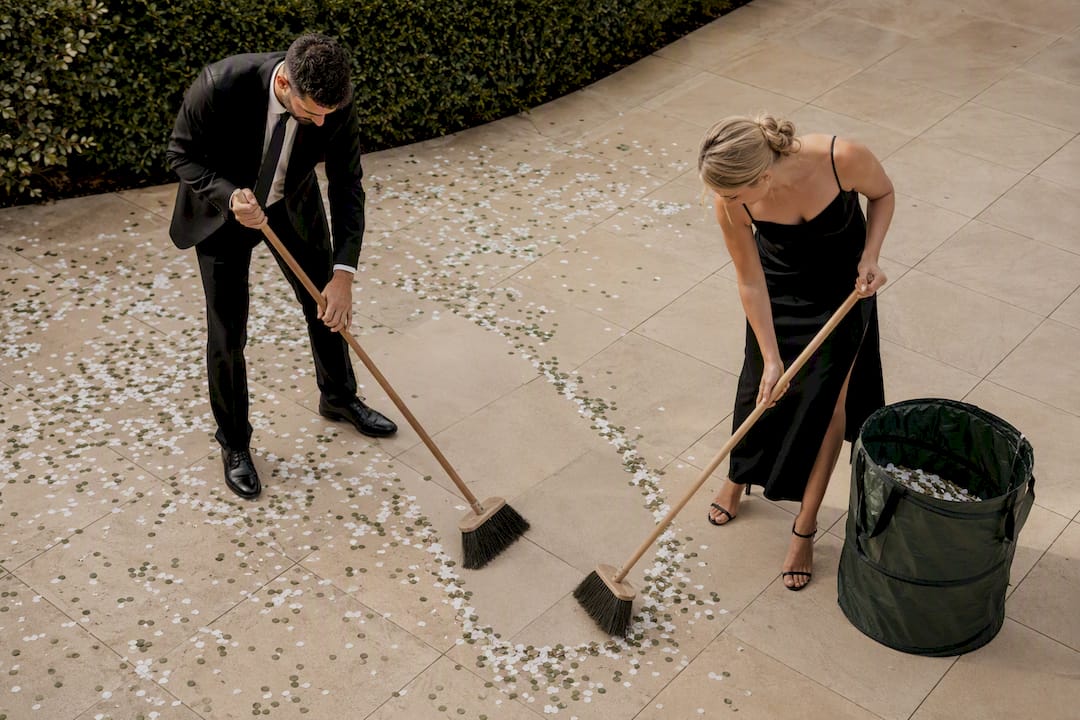
Lawns and garden beds need a gentler touch. Raking rather than sweeping avoids tearing up grass, and biodegradable confetti left in garden beds will break down on its own within days if the venue's happy to leave it. Always check first, though, since some venues specifically ask for confetti to be collected rather than left to decompose, particularly where there's ongoing lawn maintenance or wildlife on site.
Water-soluble confetti dissolves fastest in damp conditions, which sounds convenient until you realise it can also stain porous stone if it sits too long before a wash-down. A quick hose or a rain check within a couple of hours prevents this. Keep a rubbish bag and a small broom in your wedding-day kit, and assign the job to a willing bridal party member rather than leaving it to venue staff, who'll appreciate the gesture and remember it kindly for the next couple who asks about confetti permissions.
Why the standard confetti advice misses the point
Most guides treat confetti photos as a styling problem, matching colours to a theme, choosing a "pretty" material, and stopping there. That's backwards. The material and colour matter, but they're the easy part. What separates a forgettable confetti shot from a genuinely great one is staging discipline: a long enough tunnel, a proper briefing so guests throw up rather than forward, and a second wave timed to extend the fall.
Couples also underestimate how often venue rules derail the whole plan. I've seen far too many couples buy confetti, then discover on the day that their chosen park or garden doesn't allow it at all. Checking the permit conditions should happen before the confetti order, not after.
If there's one thing to prioritise above everything else in this piece, it's the guest briefing. Great confetti, perfect light, and a beautiful backdrop all count for little if forty guests throw a soft, low sprinkle because nobody told them otherwise. Get that instruction right and most of the rest falls into place.
— Rowan Freeman
How a professional photography service plans your confetti moment
Confetti tosses look effortless in the final gallery because someone planned them properly beforehand, and experienced photographers include this planning in their wedding packages. This typically involves choosing the right spot for light and background ahead of the day, coordinating timing with the celebrant or MC, and checking venue rules to avoid surprises on the day itself. If the forecast turns, a plan B is prepared, such as moving the toss to a covered spot or switching to bubbles where confetti isn't permitted.

Coordinating a confetti tunnel alongside catering timelines and other vendors can get complicated fast, and if you're managing multiple suppliers, event planning resources can help you keep the whole day's logistics on track. For the photography side, take a look through our couples and wedding portfolio to see how these moments come together, then get in touch through our wedding photography page to check availability for your date and start planning your confetti send-off with us.
Sources
- Biodegradable Confetti – Veils and More
- Auckland regional parks codes and conditions (venue permit guidance)
- 7 Tips for Perfect Wedding Confetti Photos | Kind Confetti
- Biodegradable Confetti | The Perfect Match NZ
FAQ
What confetti looks best in wedding photos?
Large, lightweight biodegradable confetti such as rice-paper or sweet potato starch pieces looks best, because it stays airborne longer and creates a fuller, slower-falling effect than small dried petals.
What does confetti symbolise at a wedding?
Confetti traditionally symbolises good luck, joy, and fertility for the newlyweds, and the modern tunnel toss has become a celebratory, photo-friendly send-off rather than a purely symbolic gesture.
How much confetti do you need for 100 guests?
For around 100 guests joining the toss, plan on two 500g bags or a bulk order, since NZ vendor guidance sizes a single 500g bag for roughly 50 to 60 guests.
Who throws confetti at a wedding?
Immediate guests standing in the tunnel typically throw the confetti, usually close family and friends positioned in two facing lines as the couple walks through after the ceremony.
When during the wedding day should confetti photos happen?
Confetti photos work best immediately after the ceremony, while guests are still gathered and energy is high, rather than waiting until the reception entrance when numbers have often thinned out.