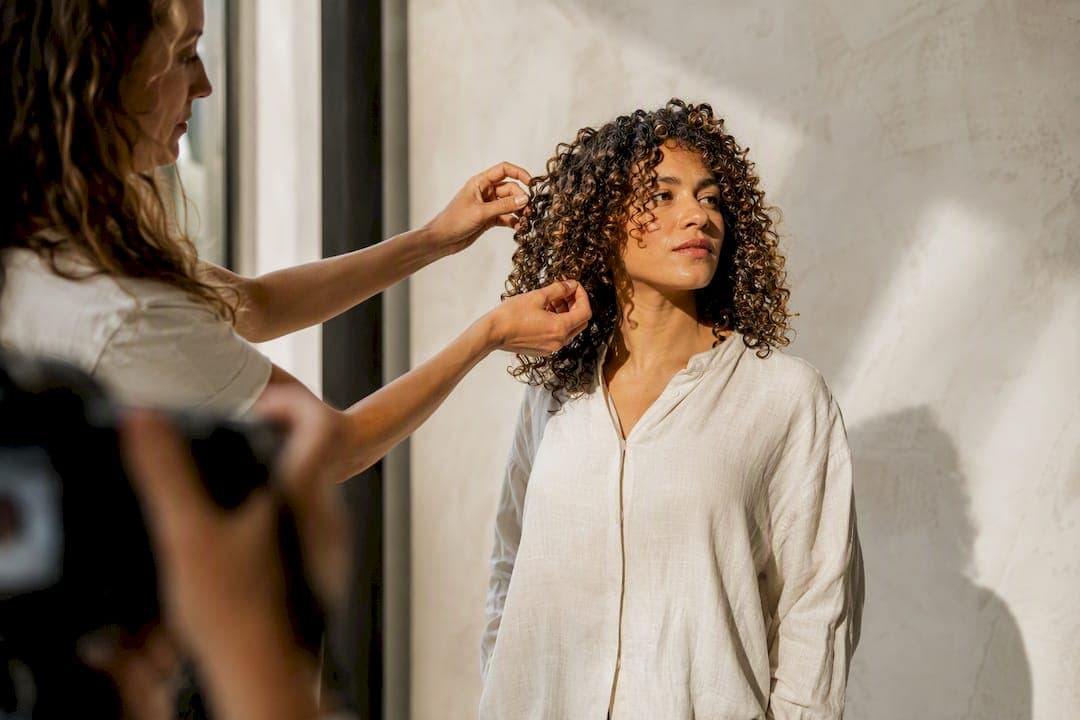
Yes, a professional photoshoot can capture your natural curls authentically, provided the photographer and stylist plan lighting, framing and prep around your texture rather than treating curly hair as an afterthought. A professional photographer works with clients across curl types for headshots, personal branding and couples sessions. Book a consult, or follow the checklist below before your shoot.
TL;DR:
- Curl patterns vary greatly, and products like gels and oils can reflect studio light, so use lightweight styling products and test them beforehand.
- Leaving generous space around the head and experimenting with asymmetrical parts or slight tilts enhances curl silhouette and visual interest.
- Booking a stylist experienced with textured hair and confirming their process reduces surprises and improves final image quality.
- Wash your hair two days prior to the shoot to allow curls to settle into a natural shape, and avoid heavy products that create unwanted shine or flatten volume.
- Natural flyaways are acceptable, but dry, unmanaged frizz can distract, making styling and shrinkage management essential for authentic results.
Table of Contents
- What makes a curly-hair photoshoot different
- Preparing your curls: what to do before shoot day
- Posing and framing so your curls actually read on camera
- How do photographers and stylists work together on set?
- A photographer's note on shooting curly hair
- Book a curly-hair photoshoot with Life in Style Photography
- Sources
- FAQ
What makes a curly-hair photoshoot different
Curly hair takes up more visual space than straight hair, and that changes almost every technical decision on set. A tight crop that works for straight hair will chop off curl volume and flatten the shape that makes textured hair look alive.
Photographers who work regularly with curls tend to favour:
- Wider framing that leaves breathing room above the head and around the sides, so the curl silhouette stays intact
- Soft, diffused side lighting rather than direct flash or harsh overhead light, which flattens the face and creates random hotspots on shiny strands
- A subtle rim or backlight to catch individual curls at the edges, giving definition without harsh glare
- Even fill light across the face so exposure doesn't blow out on the hair while leaving the skin underexposed
Diffused side lighting and gentle rim light preserve curl definition far better than a single hard flash, which tends to scatter unpredictably across textured strands. There's also a distinction worth knowing before you arrive: stylists talk about "good frizz" versus "bad frizz". A few loose flyaways read as natural and lived-in. Dry, unmanaged frizz reads as neglected. A good stylist will shape the first and calm the second, rather than trying to eliminate texture altogether.
On a typical session, expect a short consultation, a few test frames to check lighting against your specific curl pattern, then a working rhythm of shoot, check, adjust.
Preparing your curls: what to do before shoot day
Most of the groundwork happens 24 to 48 hours before the camera comes out, not the morning of.
- Wash two days before, not the morning of. Curly hair often photographs best on day two after washing, once the initial post-wash frizz has settled and the curl pattern has relaxed into its natural shape. Washing the same morning can produce unpredictable, still-drying curls that behave differently in front of a camera than they will an hour later.
- Sleep to protect the shape, not undo it. A silk pillowcase, a loose pineapple or a satin bonnet the night before helps curls wake up close to how they'll look on camera, rather than crushed on one side.
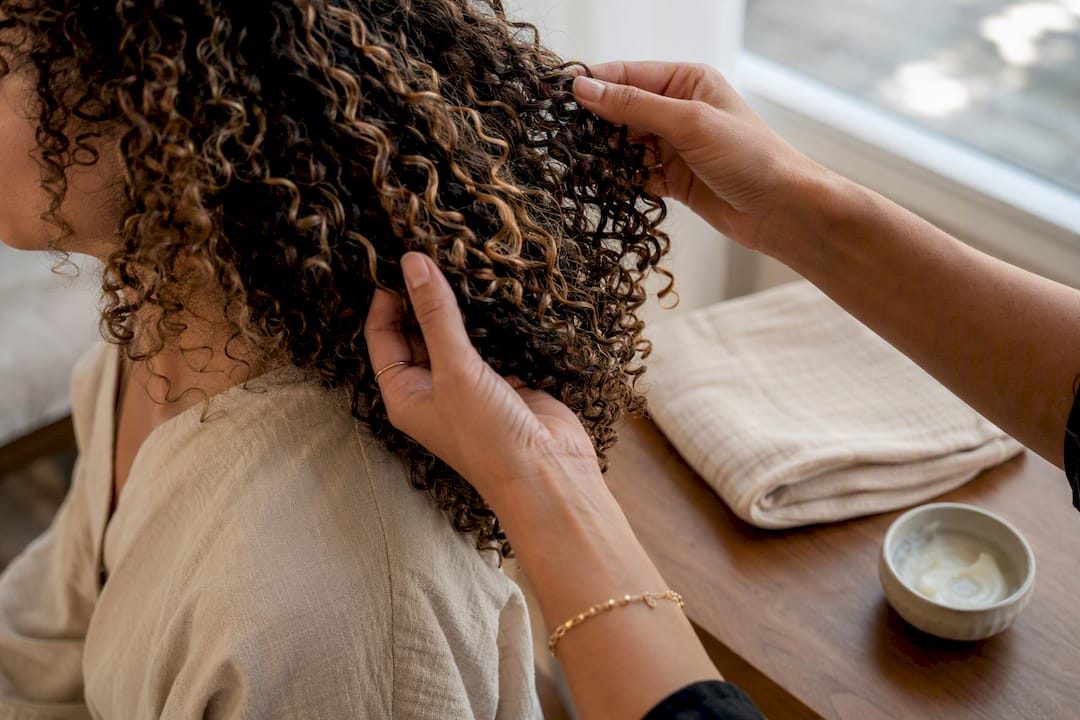
- Style with lightweight products only. Favour a light curl creme, a dry mousse or a small amount of light oil. Skip heavy gels and glycerin-dense products. Heavy gel casts and oil-dense products can reflect studio light unpredictably, creating shiny hotspots or flattening volume exactly when you want it to look full.
- Stick with a style you already trust. Styling for a familiar "good hair day" tends to photograph better than a new, untested look, because forced styles that haven't been road-tested often fall apart under studio lights and the stress of a shoot.
- Pack a small hair emergency kit. Bobby pins, a couple of butterfly clips, a spare hair elastic, and a travel spray bottle with water and leave-in conditioner to refresh curls 15 to 30 minutes before photos start.
Pro Tip: Test your styling product on a small section the night before and snap a quick phone photo under a lamp. If it looks shiny or flat in that photo, it will look worse under studio lighting. Swap it out before shoot day, not during it.
Knowing your curl type also helps here. Curl patterns are broadly grouped into Type 2 (wavy), Type 3 (curly) and Type 4 (coily), and each responds differently to product weight, humidity and light. A Type 4 coil holds shape differently to a Type 2 wave, so the products and framing that work for one won't necessarily suit the other, and a photographer who asks about your curl type before the shoot is already thinking ahead.
Posing and framing so your curls actually read on camera
The pose and the crop matter as much as the lighting. A curl that photographs beautifully can still get lost if the framing works against it.
- Leave generous space around the head in headshots. Tight crops that touch the top of the frame cut off volume and make curls look smaller than they are.
- Try an asymmetric part or a slight head tilt. Curls rarely sit perfectly symmetrical, and working with that asymmetry usually creates a more interesting silhouette than fighting it.
- Choose necklines and clothing colours that contrast gently with your hair rather than compete with it. A busy pattern near a full curl silhouette pulls the eye away from your face.
- For branding or lifestyle shots, a light head turn or a gentle hand run through the hair can add movement, giving the curls a natural bounce rather than a static, posed look.
- A half-up style that frames the face works well for expression-driven portraits, since it keeps volume in the shot while leaving your features clearly visible.
If you're preparing specifically for a headshot session, it's worth reviewing broader posing and camera-presence guidance alongside these curl-specific points, since confidence in front of the lens often affects how relaxed your curls look on camera too. For general presence and wardrobe choices, these tips for looking your best on camera pair well with the framing advice above.
How do photographers and stylists work together on set?
Before you book, it's worth asking a few direct questions: does the stylist have experience with textured hair, how long is the session, how many looks are included, and what's the retouching and delivery timeline? Photographers commonly work with a stylist or keep a kit covering multiple hair textures, so confirming that upfront avoids surprises on the day.
On set, the rhythm usually runs: prep, a few test frames to check how the curls sit under the lighting, small tweaks, then move through your planned looks in sequence. Good stylists build in short breaks to spritz and refresh curls between setups rather than styling once and hoping it holds for hours.
- Red flag: no visible styling kit and no plan for how textured hair will be handled once the shoot starts.
- Trust signal: a portfolio that actually shows textured-hair clients, and a pre-shoot checklist sent to you in advance.
- Stylists deliberately avoid locking a style in too early, keeping curls loose enough to reshape quickly between looks without extra heat or product damage.
A photographer's note on shooting curly hair
I ask clients to arrive styled the way they'd wear their hair on a genuinely good day, not a version they've never tried before. Curls have their own logic. Push them into an unfamiliar shape for the camera and that effort shows in the final images, usually as tension in the pose rather than ease.
The approach is built around getting people comfortable enough to forget the camera is there. That matters more for curly hair than people expect, because tension in the shoulders and face reads just as clearly as tension in a hairstyle. A relaxed client with soft, well-lit curls almost always photographs better than a stiff one with a "perfect" style. We'd rather work with what your curls actually do than fight them into something else for an hour.
— Rowan Freeman
Book a curly-hair photoshoot with Life in Style Photography
This service is an option for clients who want a photographer who plans for texture from the first phone call, not just on the day. Whether you're after a professional headshot, a personal branding session, or couples and wedding portraits, the brief starts the same way: what does your hair do on a good day, and how do we frame around it?
If you're after a polished headshot for LinkedIn or a work profile, the headshot photography services page covers what's included and how sessions run. Weighing up whether curls have been handled well in past shoots? The headshot portfolio has real client examples worth a look before you commit. For branding work, the personal branding portfolio shows how texture and personality come through in commercial-style images. Couples booking engagement or wedding portraits can view examples on the couples portfolio.
On the day, expect a short chat about your hair before the camera comes out, and enough time built into the schedule for a quick spritz-and-refresh between looks. Get in touch to check dates and lock in a session that works around your curls, not against them.
Sources
- How to photograph textured hair — Associated Hair Professionals
- How to photograph textured hair — American Salon
- 3 CURLē tips for photo-ready hair — CurleBeauty
- All you need to know about hiring a hairstylist for your photo shoot — DIY Photography
FAQ
How far in advance should I wash my hair before a shoot?
Wash two days before rather than the morning of, since curls tend to settle into a truer, more defined shape by day two.
What products should I avoid before a curly-hair photoshoot?
Skip heavy gels, glycerin-dense products and anything with a strong gel cast, since these can reflect studio light and create shiny hotspots or flatten volume.
Does Life in Style Photography provide a stylist for curly hair?
The photographer plans framing and lighting around your natural texture, and you can confirm stylist availability and textured-hair experience directly when booking your session.
What should I bring to a curly-hair photoshoot?
Pack a small kit with bobby pins, butterfly clips, a spare hair elastic and a travel spray bottle with water and leave-in conditioner to refresh curls between looks.
Will frizz ruin my photos?
A few natural flyaways generally read as authentic texture, and stylists shape rather than remove them. It's unmanaged, dry frizz that tends to distract, not the odd loose curl.