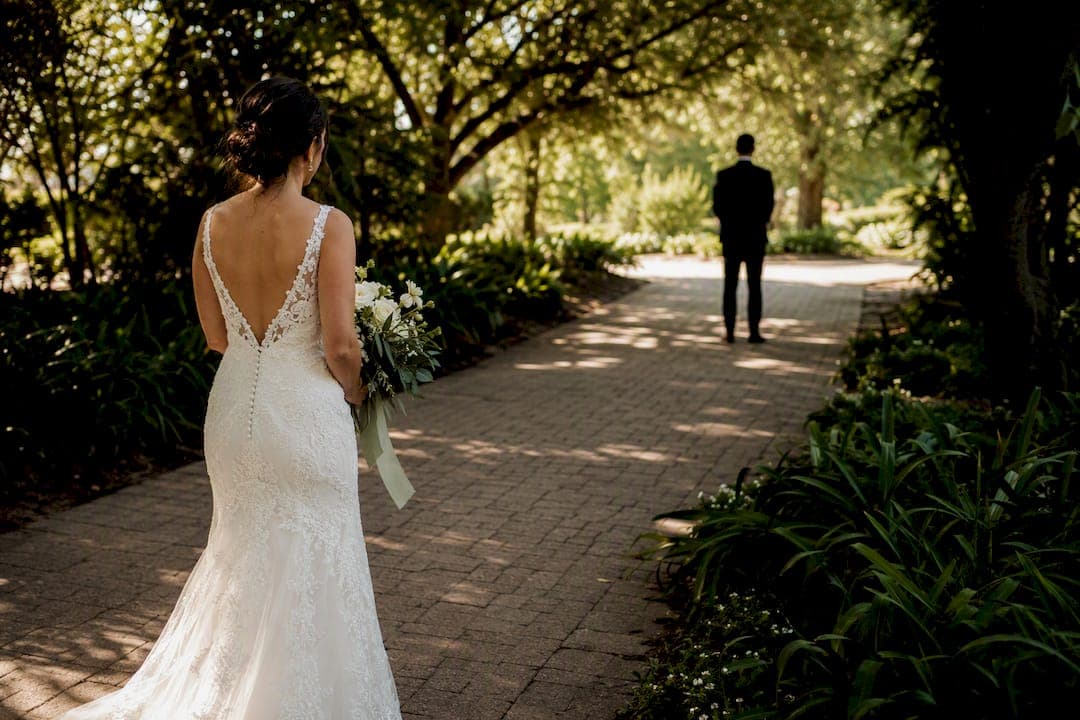
A first look is worth doing if you want a calm, private moment together and a wedding day that runs on your terms, not the clock's. It gives you the strongest control over timing, better light for portraits, and time to actually enjoy cocktail hour. Traditional aisle reveals and first touch moments are equally valid choices. What follows are the real numbers, schedules, and checklist items that make the decision easy.
TL;DR:
- A first look provides private, authentic reactions and gives couples more control over timing, lighting, and the opportunity for private vows before the ceremony.
- Planning a first look typically requires 15 to 30 minutes for the reveal and 60 to 90 minutes for portraits and related photos, depending on the schedule and season.
- Early starts are often necessary in winter to secure natural light, with timelines needing precise coordination among vendors to avoid delays and last-minute adjustments.
- Weather contingencies should be arranged beforehand, with indoor or shaded outdoor options available, and notifications to the venue about backup locations.
- Proper communication with photographers and videographers about positioning, sound, and timing ensures smooth integration and captures emotional reactions effectively.
Table of Contents
- What is a first look in wedding photography?
- First look pros and cons: what you gain and what you give up
- How long do first look photos take?
- Planning checklist: what to confirm before the day
- First look variations and etiquette
- Questions to ask your photographer before booking
- Handling weather contingencies during first look photos
- Coordinating with videographers during the first look
- How Life in Style Photography approaches your first look
- Ready to book your first look?
- Sources
- FAQ
What is a first look in wedding photography?
A first look is a planned, private moment before the ceremony where you and your partner see each other for the first time that day, with your photographer nearby to capture it. Nobody else is watching. This isn't a chance encounter in a hallway. It's staged deliberately: one partner waits with their back turned or tucked around a corner, the other approaches, and the photographer works from a distance with a longer lens so the moment feels unobserved rather than performed.
Couples choose it for a few consistent reasons, according to MyWeddingMag:
- Genuine, unguarded emotion without an audience
- Full control over how the wedding day timeline unfolds
- Access to better natural light for portraits, often outside the tight ceremony window
- The chance to exchange private vows or words before the formal ceremony
The privacy matters more than most couples expect going in. Photographers consistently find that fewer onlookers during the reveal produce more authentic reactions, and a longer lens preserves that intimacy while still capturing every flicker of expression.
First look pros and cons: what you gain and what you give up
The decision usually comes down to what you value more: a big, witnessed aisle moment, or a private one that frees up your afternoon.
On the plus side, a first look gives you private emotion without a crowd, tighter control over your schedule, and access to softer light for portraits since you're not squeezed into the twenty minutes between ceremony and speeches. Photographers report couples who do a first look often capture a noticeably higher volume of portraits and locations, according to Anthony Niccoli, simply because there's more usable time before the pressure of the ceremony kicks in. It also means you're far more likely to actually attend your own cocktail hour instead of disappearing for photos while your guests eat canapés without you.
The trade offs are real too. Some guests genuinely love the drama of the aisle reveal, and skipping it removes that. Hair and makeup often needs to finish earlier than a traditional timeline would demand. And an earlier start can mean a longer photography day, which may affect coverage hours depending on your package.
| Consideration | Favours a first look | Favours the traditional reveal |
|---|---|---|
| Priority | Calm, private moment | Big public surprise at the aisle |
| Timeline | Want cocktail hour with guests | Happy to miss part of cocktail hour |
| Light | Ceremony is midday or harsh light | Ceremony itself is at golden hour |
| Nerves | Want nerves settled before vows | Enjoy the adrenaline of the reveal |
If timeline control and being present at your own reception matter more to you than the aisle gasp, a first look almost always wins.
How long do first look photos take?
Budget 15 to 30 minutes for the reveal itself. That's the emotional core: the walk up, the reaction, the first few minutes together, according to Paperlust. The full pre-ceremony portrait block, including couple portraits and often family or bridal party shots, typically runs 60 to 90 minutes once you factor in the reveal, wardrobe adjustments, and moving between spots.
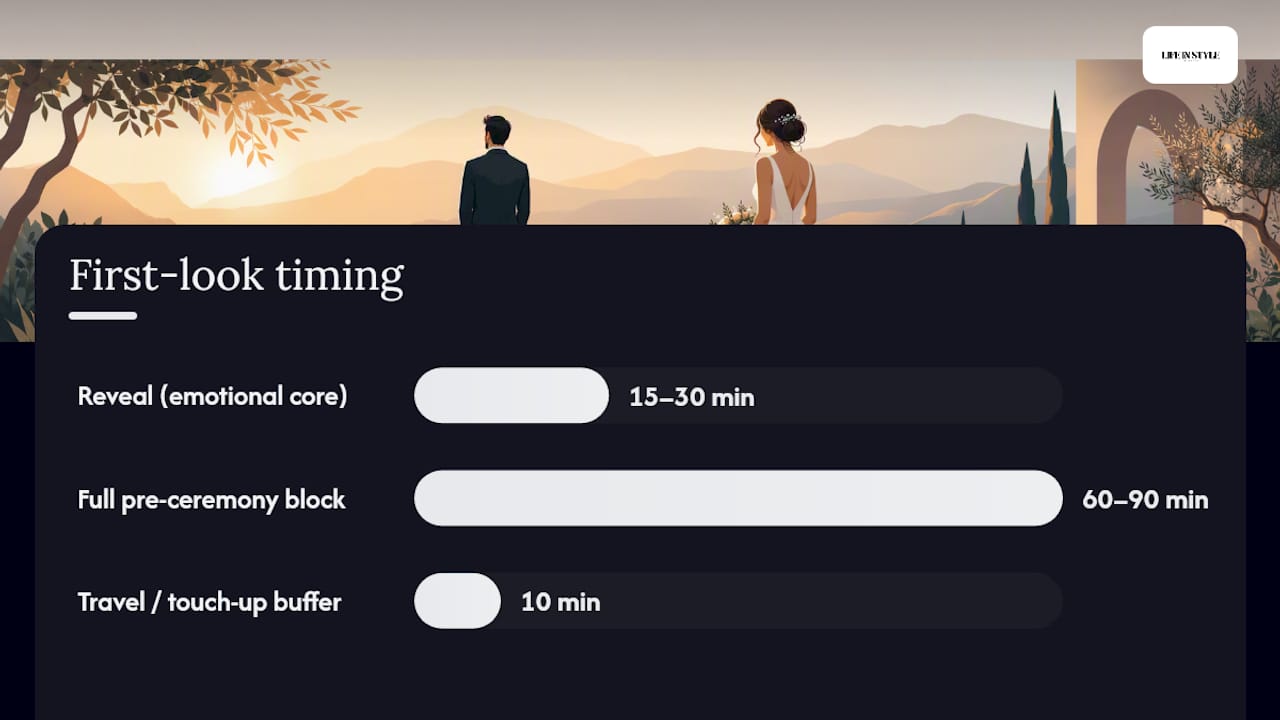
Seasonal light changes the maths. Winter ceremonies lose usable daylight fast in the late afternoon, so photographers often push the first look earlier in the day to secure the light rather than treat it as flexible, according to OurVows. Summer weddings have more room to move but still benefit from avoiding the harshest midday hour.
Two sample timelines show how this plays out:
- Mid-afternoon ceremony (2:00pm start): hair and makeup finish by 11:30am, first look at 12:15pm, portraits until 1:15pm, ten-minute travel buffer, ceremony at 2:00pm.
- Golden-hour ceremony (5:30pm start): hair and makeup finish by 2:30pm, first look at 3:15pm, portraits until 4:15pm, buffer and touch-ups, ceremony at 5:30pm.
| Ceremony time | Hair/makeup done by | First look starts | Portraits finish |
|---|---|---|---|
| 2:00pm | 11:30am | 12:15pm | 1:15pm |
| 5:30pm | 2:30pm | 3:15pm | 4:15pm |
Build in a ten-minute travel buffer between every location change, even if the ceremony and first look are at the same venue. Bouquets need fastening, dresses need adjusting, and corridors take longer to navigate than anyone expects. A full wedding photo timeline template makes it much easier to slot these windows in without second-guessing the maths yourself.
Planning checklist: what to confirm before the day
Once you've decided on a first look, the timeline only works if every vendor is working off the same numbers. Bring these questions to your photographer, hair and makeup team, and venue coordinator.
- Confirm your photographer's arrival time and how long they need to set up before the reveal
- Ask your stylist to finish hair and makeup 30 to 60 minutes earlier than a traditional timeline would require
- Choose a private, weatherproof location for the first look, plus a rain backup indoors
- Have your bouquet, accessories, and any props ready before the reveal begins, not during it
- Set expectations with guests and bridal party about phone use, so nobody films the moment before your photographer does
- Log the ten-minute travel buffer into your schedule between every location change
Pro Tip: Tell your hair and makeup team about the first look when you book them, not the week of. Shifting the finish time earlier is a small ask months out and a stressful scramble the day before.
Assign a single person, usually your planner or a trusted bridal party member, to own the timeline on the day. Someone needs to be watching the clock so you don't have to.
First look variations and etiquette
The classic couple reveal isn't the only version worth considering. A first touch keeps a closed door or curtain between you, so you hold hands and talk without seeing each other until the ceremony. A parent first look lets a father, mother, or other family member see you in your dress or suit privately, which tends to produce some of the most emotional images of the day. A bridal party reveal does the same for your closest friends.
Allow 10 to 20 minutes for these mini-reveals, and if you want more than one captured, ask your photographer about second-shooter coverage so nothing gets missed while attention is split.
Etiquette here is simpler than people assume:
- Keep the group small. Watching eyes change how people react, even when they mean well.
- Yes, you can kiss during a first look, according to NZ Wedding Films. It's your private moment. Kiss, hug, exchange vows, or simply talk. There's no rule against physical contact.
- Tell your photographer your preference ahead of time so they know whether to expect a kiss or keep a respectful distance.
Whichever version you choose, privacy is what makes the reaction real. Family and wedding party watching from the sidelines almost always changes the moment into something more performed than felt.
Questions to ask your photographer before booking
A good consultation should cover the mechanics, not just the vibe. Ask your photographer these questions directly:
- What time do you need to arrive, and how does that affect coverage hours on my package?
- Do you offer a second shooter, and does that change the price for an earlier start?
- Where would you recommend for the reveal, given our venue and the time of year?
- What's the backup plan if it rains or the light isn't working?
- When will I see proofs, and what's included in retouching?
Ask for specific shot directions too. Long-lens candid frames from a distance capture the reaction without anyone feeling watched. Close-ups right after the reveal catch tears and laughter. Wide environmental portraits, taken once the initial emotion settles, use the same location to place you both in the setting rather than isolating just your faces.
Pro Tip: An earlier start for a first look sometimes means an earlier call time overall, which can add coverage hours to your package. Ask about this cost during the consult, not after you've signed.
Handling weather contingencies during first look photos
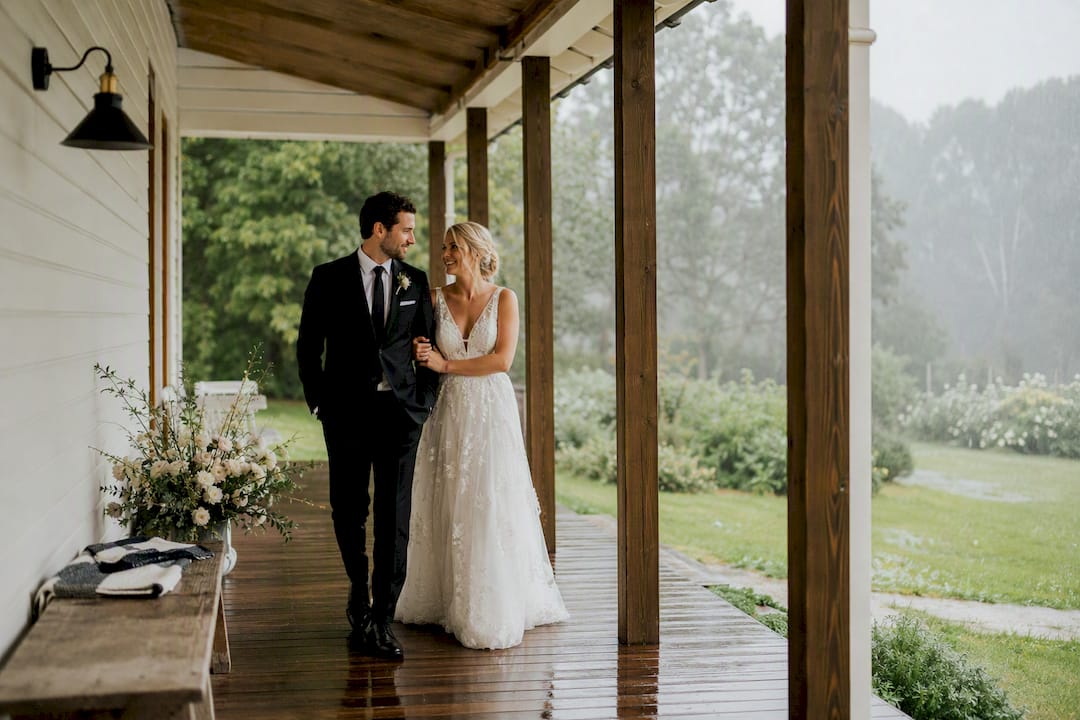
Rain, wind, and harsh sun all change the plan, so decide the backup before the week of the wedding, not during it. A private, windowed indoor space, a hotel suite, a church vestibule, or a covered veranda, works as a genuine substitute for an outdoor reveal and still gives your photographer the soft, directional light that makes portraits work.
If you're set on an outdoor first look, shaded spots handle unpredictable weather better than open lawns. Tree cover, a verandah, or the shadowed side of a building diffuses harsh sun and still holds up if a light shower passes through. Ask your venue about covered areas during your site visit, well before the wedding, so you're not scrambling to find one on the day.
Wind deserves its own mention. Veils, loose hair, and long dresses all react to it, and a few gusty minutes can either ruin a shot or, handled well, add real movement and energy to a photo. Tell your photographer if you're anxious about wind so they can plan around it rather than fight it.
Build flexibility into your timeline rather than a fixed rain date for the first look itself. Because the reveal only takes 15 to 30 minutes, most photographers can simply move it indoors or under cover without losing the emotional impact or blowing out the schedule. The bigger risk is treating the weather plan as an afterthought. Confirm the backup location with your venue coordinator during your final walkthrough, not the morning of.
Coordinating with videographers during the first look
If you've booked a videographer alongside your photographer, the first look needs a shared plan between both teams before the day starts. Positioning matters most: your photographer usually works from one angle with a longer lens, while your videographer needs a slightly different vantage point to capture movement and sound without stepping into the photographer's frame.
Audio is worth discussing specifically. Many videographers use lapel microphones on one or both partners during a first look to capture private words or vows clearly, which means you'll want to mention in advance if you're planning to say something personal. That's useful information for your photographer too, since it affects how close they can stand without picking up microphone noise or appearing in the video's frame.
Talk to both vendors together, ideally in the same call or email thread, about who moves where during the reveal. A simple rule that works well: the photographer stays slightly closer for detail shots, the videographer stays slightly wider for the full scene, and neither crosses into the other's shot without a quick signal. Ask whether your videographer wants a moment to reposition after the initial reaction before you move into portraits, since some of the best video footage comes from the quieter minutes right after the big moment, not just the reveal itself.
If you're using a second shooter for photography as well, a three-way conversation about positioning avoids a crowded, awkward-looking reveal where everyone is jostling for the same angle.
How Life in Style Photography approaches your first look
We keep first looks relaxed and low pressure, which tends to matter most for camera-shy couples who worry about feeling stiff in front of a lens. Privacy, flattering light, and genuinely candid frames are the priorities on the day, not a rigid list of poses. You can see the kind of natural, unscripted connection this produces in our couples portfolio.
— Rowan Freeman
Ready to book your first look?
Some wedding photography packages include a dedicated first-look block, built around the same 15 to 90 minute windows covered above, to allow for the private reveal, couple portraits, and buffer time to enjoy the reception. Couples typically receive a full gallery covering the reveal, portraits, ceremony, and reception.
Booking starts with an enquiry, followed by a short consult to talk through ceremony time, venue, and preferred shots, then confirming the date with a deposit. It's a straightforward process, and it means your timeline gets built around your day rather than a generic template. If you're weighing up your options, our wedding shot list is a useful companion to bring to that consult, alongside this creative portrait planning checklist if you want extra shot inspiration beforehand.
Head to our wedding photography page to check availability for your date and start your enquiry.
Sources
- Pros and cons of a first look | MyWeddingMag
- The pros and cons of the first look | NZ Wedding Films
- Wedding first look timeline and practical benefits | Paperlust
- First look wedding timeline and schedule examples | OurVows
FAQ
What is a first look photo?
It's a planned, private moment before the ceremony where you and your partner see each other for the first time that day, captured by your photographer with no other onlookers present.
Are first look photos worth it?
For most couples, yes. They give you better timeline control, more usable light for portraits, and a real chance to attend your own cocktail hour, though a traditional aisle reveal still suits couples who want that public surprise moment.
How long do you need for first look photos?
Plan on 15 to 30 minutes for the reveal itself, and 60 to 90 minutes total once you include couple portraits and any bridal party or family shots straight after.
Can you kiss during the first look?
Yes. It's a private moment, so you can kiss, hug, or exchange private vows exactly as you'd like, just let your photographer know your preference beforehand so they can capture it the way you want.