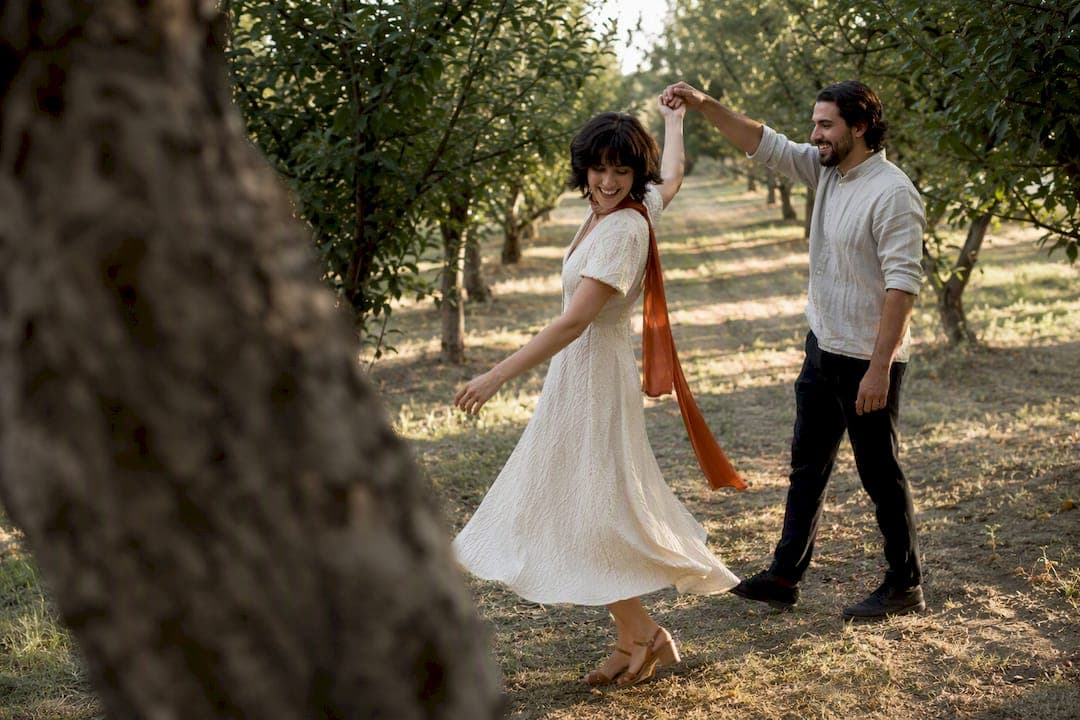
Movement makes candid photos work. When couples walk, whisper, or chase each other instead of holding a pose, the camera catches real expression instead of a performance. Some photographers build entire sessions around this idea, using activity and genuine interaction to draw out the moments couples actually want framed on their wall. What follows are the prompts and photographer techniques that make it happen.
TL;DR:
- Moving naturally through prompts like walking, whispering, or chasing encourages genuine expressions and reduces stiffness during sessions.
- Timing is crucial, with the strongest candid shots typically captured after 10 to 15 minutes when couples have relaxed and stopped overthinking.
- Optimal results depend on choosing comfortable clothing, quiet locations, and soft lighting conditions like golden hour or open shade.
- Building rapport through conversation and giving subtle task-based prompts helps couples feel at ease and facilitates authentic interactions.
- Editing should preserve natural textures and subtle color tones to maintain the authenticity of the candid moments.
Table of Contents
- Candid couples photos: prompts you can try today
- Directing candid moments: movement, transitions and timing
- Wardrobe, location and lighting for natural-looking candids
- What to expect during a candid couples session
- Photographer perspective: helping couples relax on camera
- Editing candid photos without losing the naturalness
- Common mistakes that ruin candid couple shots
- Building rapport so couples relax in front of the camera
- Why movement beats posing, and what most guides get wrong
- Book a candid couples session with Life in Style Photography
- Sources
Candid couples photos: prompts you can try today
You don't need a photographer standing behind you to start practising. Most of these prompts work whether you're setting up a phone tripod at home or briefing a professional for an engagement session. The idea is to give yourselves something to do, not something to perform.
- Walk and talk. Stroll side by side and just chat. It sounds too simple to work, but walking together distracts couples from performing for the camera, which is exactly why it's the most reliable prompt on this list. Shoot it wide to capture the setting.
- The whisper. One partner leans in to share a secret or a joke. Shoot medium to catch the lean and the reaction.
- The spin. One partner spins the other, or you spin together. Great for movement blur and genuine laughter, tight framing on faces works best.
- The chase. A short, playful chase across grass or sand. Wide framing captures the energy without needing perfect focus on every frame.
- The almost-kiss. Lean in but pause. The anticipation photographs better than the kiss itself, most of the time.
- Piggyback or fireman carry. Guaranteed laughter, useful for breaking tension early in a session. Wide or medium framing.
- Make each other laugh. Ask one partner to tell an embarrassing story about the other. Tight framing catches the unguarded grin.
- Fix each other up. Straightening a collar, tucking a strand of hair. Small, domestic, and honest. Medium framing.
- Look away, then back. One partner looks off camera, the other watches them. Captures affection without eye contact with the lens.
If one of you is camera-shy, start with the walk-and-talk or the whisper. Both ask for almost nothing physically demanding, and they warm you up for bigger movements later.
Pro Tip: If you're doing anything with lifting, spinning, or carrying, check your footing first. Grass, sand, and wet pavers all shift the safest version of the same shot.
Directing candid moments: movement, transitions and timing
Static posing asks a couple to hold an expression, and holding anything for more than a few seconds turns it wooden. Activity-based direction skips that problem entirely, because movement and activity prompts produce more natural expressions than static poses simply by giving people something to focus on other than the lens.
Photographers who get consistently candid results tend to follow a rough sequence:
- Warm-up. Start with a simple walk or a real conversation. Ask about weekend plans, not "look natural."
- Movement prompts. Layer in the spin, the chase, or a piggyback once the couple has relaxed into the first few minutes.
- Private moments. Close with quieter prompts, the forehead touch, a whispered joke, letting the couple almost forget they're being photographed.
Hands and faces matter more than most couples expect. A hand resting flat on a chest reads as stiff; a hand gripping fabric or hair reads as real. Micro-actions, like a half-smile before a full laugh, or a glance down before looking back up, are the frames worth chasing rather than the big obvious poses.
Timing matters just as much as sequencing. The strongest frames usually arrive after 10 to 15 minutes, once the couple has stopped thinking about the camera altogether. If a session feels stiff in the first five minutes, that's normal, not a failure.
Wardrobe, location and lighting for natural-looking candids
What you wear and where you stand does a surprising amount of the work before the camera even comes up.
- Wardrobe: choose comfort over polish. Fitted but not restrictive, textured fabrics over flat cotton, and avoid visible logos or busy patterns that fight with the background. Layers give you options if the weather shifts mid-session.
- Location: walkways, quiet cafés, your own kitchen, a local park, or a beach at low tide all work because they give you something to do. A blank studio backdrop gives you nothing to interact with, which pushes couples straight back into posing.
- Lighting: golden hour (the hour after sunrise or before sunset) gives soft, warm light without harsh shadows. Open shade, standing under a tree or awning during the middle of the day, is the easiest fix for harsh midday sun.
- Low light: if you're shooting indoors or at dusk, face a window or open doorway rather than shooting with your back to the only light source.
None of this needs to be expensive or elaborate. A local footpath at 6pm often beats a booked studio at midday.
What to expect during a candid couples session
A well-run session usually runs 45 minutes to an hour and moves through a deliberate mix of shots. Expect a spread across wide, medium and tight framing, because combining all three creates a fuller story: wide shots set the scene, medium shots show the connection between you, and tight shots pick up expression and detail.
- Arrival and warm-up (10 to 15 minutes). Light conversation, first walk-and-talk prompts, settling nerves.
- Core shooting (25 to 35 minutes). Movement prompts, transitions, and the quieter private moments.
- Wind-down (5 to 10 minutes). A few requested poses or shots either of you specifically wanted.
Most couples receive somewhere between 30 and 80 finished gallery images from a session this length, enough for a proper story without wading through hundreds of near-duplicates.
Before booking, brief your photographer on your favourite prompts from the list above, any comfort limits (heights, water, physical contact in public), and any must-have shots, a specific location, a pet, a grandparent's ring. A simple prep checklist helps too: comfortable shoes you can walk in, a light snack if the session runs through a meal, a small touch-up kit, and permission to be a little imperfect. The moments that feel slightly messy in the moment are usually the ones you'll love most later.
Photographer perspective: helping couples relax on camera
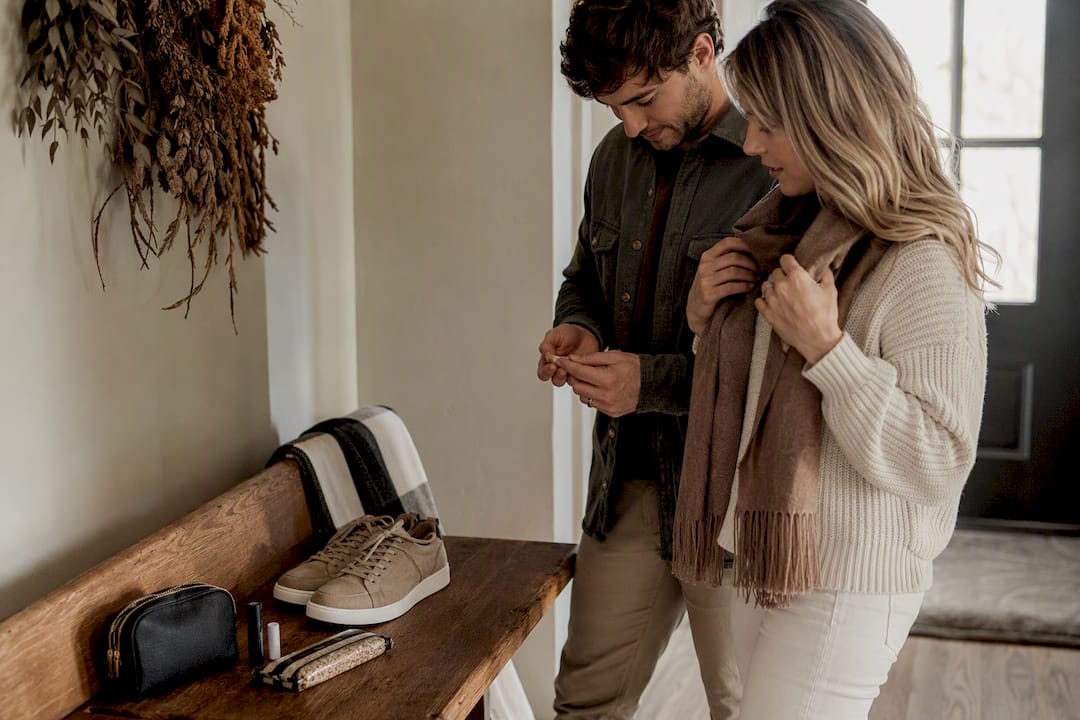
This approach leans on relaxed, conversational direction rather than rigid posing lists. Couples are walked through movement prompts, a stroll, a shared joke, a slow spin, while the photographer works around them rather than stopping to arrange limbs. The couples portfolio reflects sessions built this way: genuine laughter, unguarded glances, and the kind of small physical closeness that's hard to fake on request. Clients who arrive nervous about being photographed often report that a relaxed pace, rather than technical direction, is what helps them forget the camera was there at all.
Editing candid photos without losing the naturalness
Editing should support what already happened in front of the camera, not rebuild it. The goal with candid images is different from a heavily styled studio portrait: you're preserving a real moment, not manufacturing one.
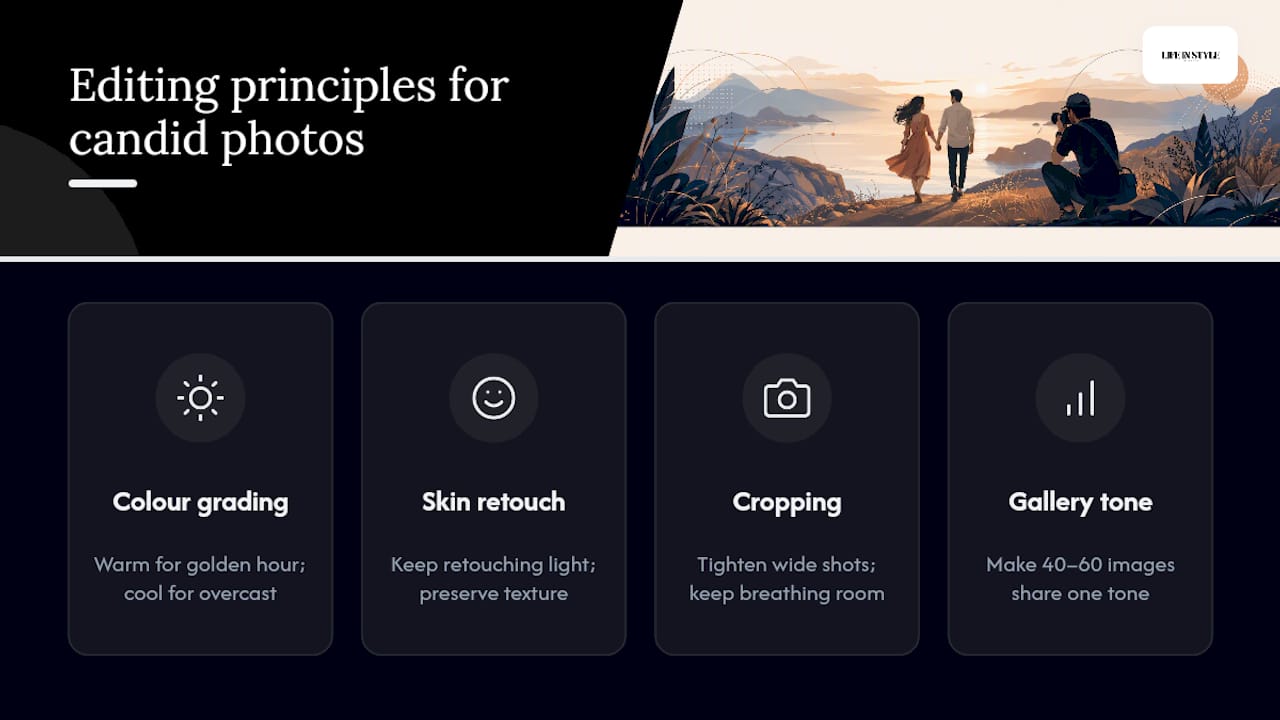
Keep colour grading subtle. A warm, slightly lifted tone suits golden hour walks; a cooler, slightly desaturated look suits overcast days. Push either too far and skin tones start looking artificial, which undercuts the entire point of shooting candidly in the first place.
Skin retouching should stay light. Candid galleries read as authentic partly because they show texture, a laugh line, windblown hair, a slightly flushed cheek from running. Smoothing all of that out flattens the same energy the movement prompts were designed to capture.
Crop with intention. Wide shots often benefit from tighter crops in post if the background pulls focus away from the couple, but resist cropping every tight shot even tighter. Some breathing room around a forehead touch or a whispered joke lets the moment sit rather than feel forced into a frame.
Consistency across a gallery matters more than any single dramatic edit. A set of 40 to 60 images with one coherent tone reads as a cohesive story. A gallery where every third image has a wildly different colour treatment reads as scattered, even if each individual photo looks fine on its own.
Common mistakes that ruin candid couple shots
The most common mistake is asking couples to "act natural." It's a paradox that produces the opposite result, stiff shoulders, forced smiles, eyes darting to the lens. Direction that gives couples an actual task, walk here, whisper this, tell that story, works because it removes the instruction to perform.
Shooting too fast is another common trap. Firing off a handful of frames the instant a prompt starts often catches the setup, not the reaction. The real moment, the laugh after the joke lands, the exhale after the spin, usually happens a beat or two later.
Over-directing hands is a frequent misstep too. Telling someone exactly where to put every finger reintroduces the stiffness that movement prompts are meant to remove. Better to give a physical task, like holding hands while walking, and let the rest fall into place.
Ignoring the background costs more shots than couples expect. A distracting sign, a stranger mid-frame, or harsh light bouncing off a white wall can undo an otherwise perfect candid moment. A quick scan of the frame before a prompt starts saves a reshoot later.
Finally, rushing the warm-up undermines everything that follows. Skipping straight to movement prompts before a couple has settled produces the same stiffness static posing does, just with more motion blur.
Building rapport so couples relax in front of the camera
Genuine candid moments depend far more on comfort than on camera settings. A couple that feels awkward will look awkward, no matched prompt list fixes that on its own.
Conversation before the camera comes out matters. Asking about how the couple met, or what they're looking forward to that week, does more to settle nerves than any technical direction ever could. It also gives the photographer real material for prompts later, a shared memory, an inside joke, a nickname.
Framing prompts as suggestions rather than instructions helps too. "Want to try walking toward that tree while you talk?" invites participation. "Stand there and walk toward the tree" invites compliance, which reads differently on camera.
Small acknowledgements throughout the session, a quick "that was gorgeous," a laugh at something genuinely funny, keep the energy collaborative rather than clinical. Couples pick up quickly on whether a photographer is enjoying the process, and that energy transfers straight into how relaxed they look in front of the lens.
Why movement beats posing, and what most guides get wrong
Most photography advice still treats posing as the foundation and candid shots as a bonus category tacked on at the end of a session. That gets the order backwards. Movement and real interaction should be the default approach, with any formal posed shots treated as the optional extra, not the other way round.
The advice to "just relax" is where most guidance falls short. Relaxation isn't something you can instruct a couple into. It's something you build through sequencing, warm-up conversation before movement, movement before quiet moments, and through giving people an actual task rather than a mood to fake.
If there's one thing to prioritise above everything else in this article, it's timing patience. The five to ten minutes that feel awkward at the start of a session aren't wasted time, they're the setup for the frames that actually matter. Couples and photographers who rush past that stage lose the very thing candid photography is meant to capture.
— Rowan Freeman
Book a candid couples session with Life in Style Photography
If the idea of posing stiffly for a camera makes your stomach drop, you're exactly who this approach was built for. Some photographers run couples sessions around movement and real conversation rather than rigid instruction, which means camera-shy partners and couples who want their actual story told, not a stock-photo version of it, tend to get the most out of a booking.
Booking means relaxed, activity-led direction on the day, a gallery drawn from the full mix of wide, medium and tight shots discussed above, and package options to suit different budgets and session lengths, all detailed on the couples photography services page. Before your session, a few small things help: turn up already feeling settled rather than rushed, pack a light layer in case the weather shifts, and send through two or three favourite prompts from this list so the photographer can build the session around what you'll actually enjoy. Browse the couples portfolio for a feel of the style, then get in touch to check availability for your date.
Sources
- How to Feel Natural in Front of the Camera: A Guide for Couples — Dylan van Druten Photography
- Couple Photo Poses: Natural & Authentic Posing Guide