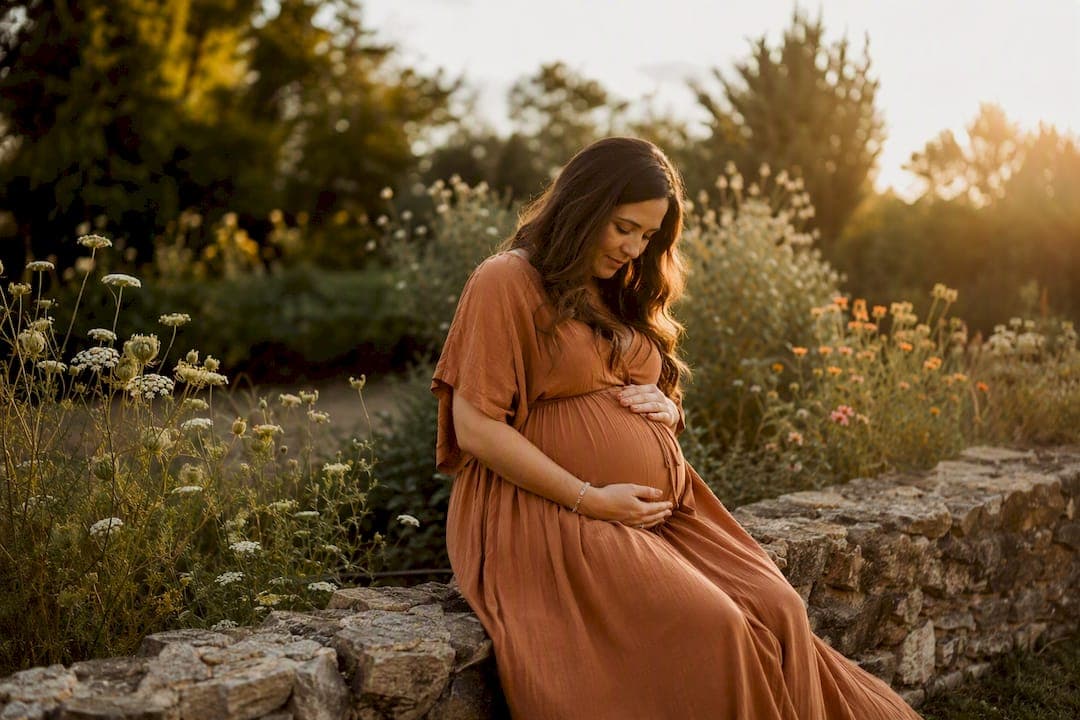
The best maternity photo ideas fall into four camps: bump-focused solo portraits, partner and couple frames, relaxed at-home lifestyle shots, and flowy gown or silhouette looks for studio or outdoor settings. These four cover almost every request we get at Life in style Photography, because they work across body types, family situations, and budgets.
Start your shortlist here:
- Solo profile shot with hands cradling the bump
- Partner forehead-to-belly pose
- Siblings kissing or whispering to the bump
- Flowing gown silhouette against window light or open sky
- At-home lifestyle scene in the nursery
- Detail shot of baby shoes or a scan photo resting on the bump
Most photographers recommend booking between weeks 16 and 24, with shoots happening in weeks 28 to 36, and the sweet spot usually sits around weeks 30 to 34, when the bump is well rounded but you're still comfortable standing for a session.
Key Takeaways
Flattering, memorable maternity photos come from pairing the right pose mechanics with well-timed scheduling, considered wardrobe choices, and genuine, unscripted emotional moments.
| Point | Details |
|---|---|
| Shoot in the sweet spot | Book weeks 16 to 24, shoot between weeks 28 and 34 for the most photogenic, comfortable results. |
| Use pose mechanics, not luck | Three-quarter turns, back-foot weight shifts, and lengthened necks flatter almost any body shape. |
| Wear colours that photograph well | Soft neutrals, muted pastels, and select jewel tones outperform dark solids or busy prints. |
| Prompt for tasks, not smiles | Genuine expressions come from conversation and small actions, not posed instructions. |
| Get professional guidance when it counts | Life in style Photography's maternity packages combine styling help, planned shot sequences, and a relaxed on-set approach for Auckland clients. |
Table of Contents
- Maternity photo ideas grouped by shoot type, with prompts you can use today
- Which poses actually flatter a pregnant body?
- What to wear for maternity photos that photograph well
- How to run a DIY maternity shoot at home
- When is the best time to book and shoot maternity photos?
- Preparation checklist and a shot list you can bring to your session
- Tips for partners who'd rather stay in the background
- How do you capture real emotion instead of a stiff pose?
- A photographer's perspective: getting camera-shy clients to relax
- How Life in style Photography can help with your maternity session
- Sources
Maternity photo ideas grouped by shoot type, with prompts you can use today
Solid maternity photo ideas earn their place because they're repeatable, not because they're clever once. Here's a working catalogue, grouped by shoot type, with the photographer prompts we actually give clients on the day.
Solo, bump-focused:
- Hands forming a heart over the belly. Prompt: "Rest your fingertips lightly, don't press." Works beautifully backlit near a window.
- Profile shot, chin lifted slightly. Prompt: "Turn your shoulders away from camera, just your face back to me." Elongates the neck and defines the bump line.
- Seated on a stool, one hand on the bump, one trailing on your thigh. Good for anyone who tires standing.
- Belly-only close-up with a sheer fabric draped over. Soft window light does the work here; no flash needed.
Couple frames:
- Partner kneeling, forehead resting against the belly. Prompt: "Close your eyes and just breathe for a second." This produces the most genuine expressions we capture all year.
- Standing embrace from behind, partner's hands over yours on the bump. Shoot from a slight low angle for a flattering, elongated line.
- Foreheads together, laughing at something the photographer just said. We often crack a bad joke here on purpose.
Family, siblings, and pets:
- Older sibling kissing the bump. Prompt: "Tell the baby a secret." Kids respond to a task, not a pose; planning your shoot when toddlers are rested, as explained in a guide to establishing a pre-nap routine, can help keep little ones cooperative.
- Family group lying on a picnic blanket, looking up at camera. Great for outdoor sessions with soft grass or a rug indoors.
- Pet resting its head on the bump. Works if the animal is calm; keep sessions short for restless dogs.
Studio, editorial, and silhouette:
- Flowing chiffon gown backlit against a black or neutral backdrop. This is the classic silhouette shot, and it photographs especially well in a controlled studio where the light is consistent.
- Fitted jersey dress, three-quarter turn, hand skimming the hip. Shows the shape clearly without needing props.
- Black dress against white cyclorama, arms raised slightly to define the waist. Dramatic, but simple to direct.
Outdoor and nature:
- Walking hand-in-hand along a path, caught mid-stride. Candid movement almost always beats a static pose.
- Standing under low tree branches or long grass at golden hour. The light does most of the flattering here.
At-home lifestyle:
- Sitting on the nursery floor folding tiny clothes. Prompt: "Just do what you'd normally do, ignore me for a minute."
- Making tea in the kitchen, bump visible in profile. Everyday tasks photograph as genuinely as posed ones, sometimes more so.
Pro Tip: Sequence your shots from simple to dramatic. Start with easy standing poses to warm the subject up, then move to gowns, silhouettes, or emotional partner frames once everyone's relaxed and the awkwardness has worn off.
Which poses actually flatter a pregnant body?
A handful of mechanics make almost any maternity pose work. Turning to a three-quarter angle rather than facing the camera square-on slims the frame and shows the bump's true shape. Shifting weight onto the back foot straightens the front leg and stops the pose looking stiff. Lengthening the neck, chin slightly forward and down, avoids a double-chin shadow. Hand placement matters too: cupping rather than pressing frames the belly without flattening it.
- Seated poses reduce strain on the lower back during longer sessions.
- Reclining shots (on a chaise or bed) suit later pregnancy or anyone who tires quickly standing.
- Standing profile with one hand high, one low, creates depth and a sense of scale.
These work because of light and space: a three-quarter turn lets light wrap around the curve of the belly instead of flattening it into silhouette.
Pro Tip: For twins or a second pregnancy, the bump often sits differently and earlier, so lean on seated and reclining poses sooner in the session rather than waiting for standing shots to feel comfortable.
What to wear for maternity photos that photograph well
Colour does a lot of the heavy lifting. Soft neutrals like cream and taupe, muted pastels, and select jewel tones such as burgundy or forest green photograph consistently well, especially against natural backdrops or a clean studio setup.
- Choose flowing chiffon or lace for outdoor and studio silhouette shots; the fabric moves with you and catches light beautifully.
- Pick fitted jersey or a bodysuit for studio shots where you want the bump's shape clearly defined.
- Empire waists and fitted dresses work in almost any setting because they define the bump without clinging uncomfortably.
- Dress partners and kids in complementary, not matching, colours from the same palette.
- Wear supportive, comfortable undergarments. You'll be standing and adjusting poses for longer than you expect.
Pro Tip: Avoid very dark solid colours and busy prints. They tend to flatten the bump's shape or pull the eye away from the subject entirely.
How to run a DIY maternity shoot at home
- Pick a time near a large window, mid-morning or late afternoon, when light is soft rather than harsh and direct.
- Choose two or three outfits and lay them out in shooting order beforehand.
- Set up a simple backdrop, a plain wall or hung sheet, and keep props minimal: one or two items per scene.
- Use portrait mode on a smartphone or a wide aperture (around f/2.8 to f/4) on a camera to keep the background soft.
- Bounce light back onto the face with a white sheet or reflector opposite the window if shadows look harsh.
- Shoot family frames first, then partner poses, and finish with solo bump shots once everyone's relaxed.
Pro Tip: In low light or near golden hour, raise your ISO slightly rather than using flash. It keeps the mood soft instead of blowing out the highlights on skin.
When is the best time to book and shoot maternity photos?
The ideal window sits between weeks 28 and 34, with many photographers favouring weeks 30 to 32 as the most photogenic and comfortable stretch.
- Contact a photographer around weeks 16 to 24 to lock in your date, particularly for weekend slots.
- Finalise outfits and props roughly a month out, then confirm again a few days before.
- Reschedules for weather or how you're feeling on the day are common and usually straightforward to arrange.
- For twins or later pregnancies, shoot earlier, often between weeks 26 and 30, since the bump grows faster and comfort can decline sooner.
Preparation checklist and a shot list you can bring to your session
Pack your outfits with backups, plus props, water, snacks, and contact details for anyone joining you. Get a manicure if hands feature in close-up shots, and steam or iron garments the night before. A good rhythm is deciding outfits and props around weeks 24 to 28, then doing a final try-on a few days out.
- Outfits and backups
- Props (fabric, flowers, letterboard, baby shoes)
- Water and snacks
- Partner and children's schedules confirmed
- Session bag packed the night before
A simple 10 to 12 frame shot list to bring along:
- Full family group
- Siblings with the bump
- Partner and bump, forehead pose
- Couple embrace from behind
- Solo standing profile
- Solo seated, hands on bump
- Gown silhouette shot
- Detail shot (shoes, scan photo)
- Candid laughing moment
- Walking or movement shot
- Close-up hands only
- Wide shot of the location or nursery
Sequence kids first, partner next, and solo shots last so energy stays high early and winds down naturally. If you're booking a professional, ask about edit turnaround up front; most studios quote a few weeks.
Tips for partners who'd rather stay in the background
Not every partner wants to be front and centre, and that's completely fine. The trick is giving them a supporting role rather than asking them to perform.
Frame your partner from behind or side-on, hands resting on the bump, rather than facing the camera directly. This keeps them present in the shot without requiring the same level of eye contact or expression that feels exposing to camera-shy people. A hand on the shoulder, an arm around the waist, or a simple embrace from behind all read as intimate without demanding a "posed" look.
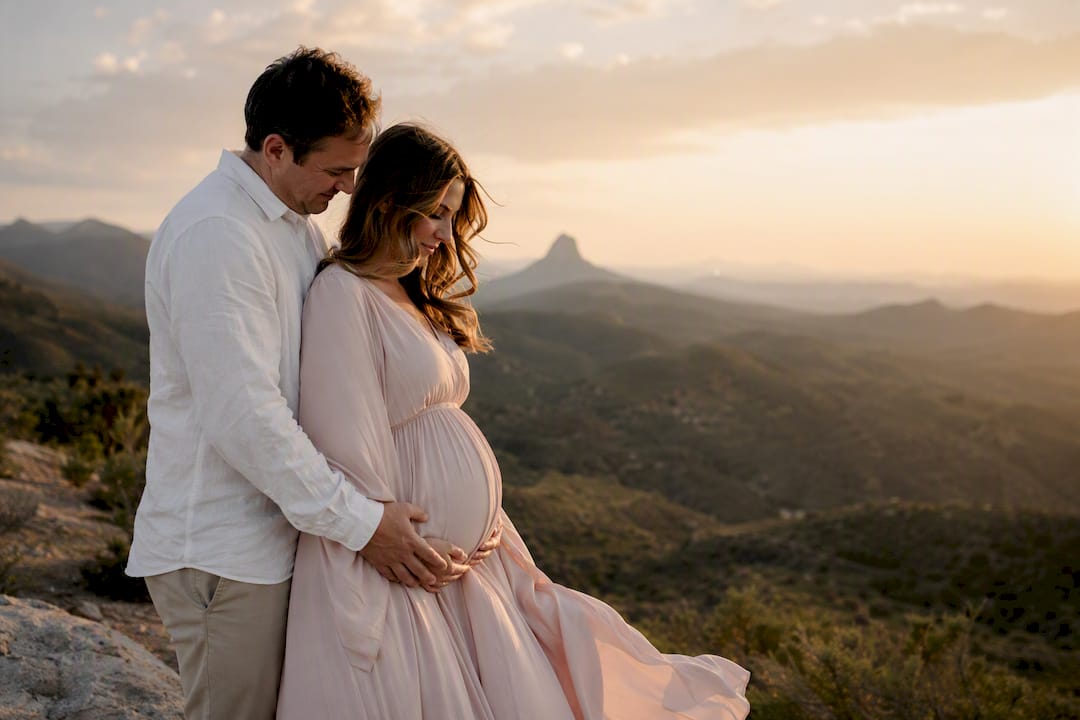
Give them a task instead of a pose. Asking a partner to "hug from behind" or "whisper something to the bump" distracts from self-consciousness because there's something to do rather than something to perform. We find this works far better than "look natural," which almost never produces natural results.
Keep partner-focused frames shorter. Three or four setups is usually enough. Save the longer, more emotive sequences for the mum-and-bump shots, and let your partner ease in gradually rather than opening the session with their most exposed pose.
If your partner is genuinely reluctant, detail shots work well as a compromise: hands overlapping on the bump, or a wedding ring resting against the belly, still tell the story without needing a full-face portrait.
How do you capture real emotion instead of a stiff pose?
Genuine expressions come from conversation, not instruction. Asking someone to "smile naturally" almost always produces the opposite. Asking them a real question, about the baby's name, a favourite memory, what they're nervous about, gets an honest reaction on their face before they've had time to perform for the camera.
Give partners and kids something to do rather than something to look like. "Tell the baby a secret" gets a softer, more private expression from an older sibling than "look at mum and smile" ever will. The same goes for couples: a shared joke or a genuine tender moment, like resting foreheads together, produces expressions no direction could fake.
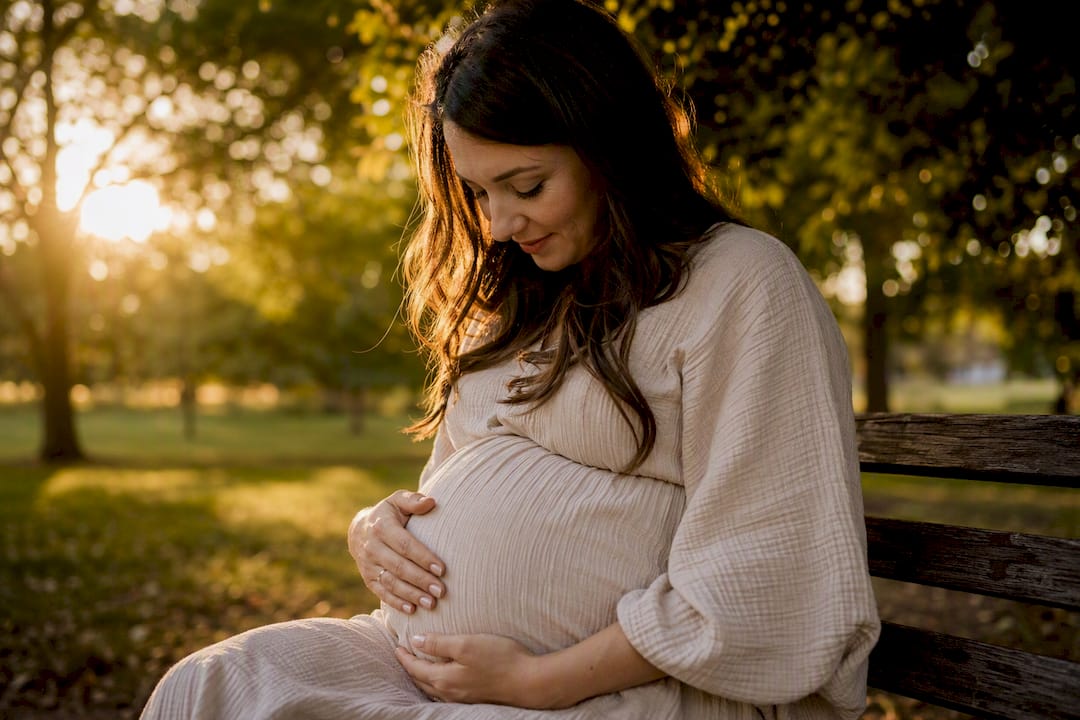
Shoot in bursts around these prompts rather than a single frame. The best expression often comes a second after the "posed" moment, once everyone relaxes and forgets the camera is there. Candid movement, walking together, adjusting an outfit, laughing at something unplanned, tends to outperform anything staged.
Comfort matters as much as prompting. A relaxed subject gives you range: quiet, tender, playful, all in the same session. A tense one gives you one expression, repeated. Warming up with easy, low-pressure poses before asking for anything emotionally exposed makes a real difference to what you capture in the final gallery.
A photographer's perspective: getting camera-shy clients to relax
Most of the discomfort in front of a camera isn't about posing. It's about being watched. We spend the first few minutes of every session just talking, not shooting, so clients forget the camera's even there before we ask for anything vulnerable. That shift shows up in the final gallery every time. You can see the difference in our maternity and baby portfolio.
How Life in style Photography can help with your maternity session
There's a real difference between piecing a DIY shoot together on your own timeline and having someone guide the whole session for you, especially when you're tired, or unsure which poses will actually flatter you at 32 weeks. Life in style Photography's maternity sessions are built around exactly that gap: studio, on-location, or hybrid packages that include styling guidance, a planned shot sequence, and a relaxed, conversational approach that puts even the most camera-shy clients at ease.
Studio sessions typically run shorter and give you controlled lighting for silhouette and gown shots, while on-location sessions lean into golden hour and natural backdrops around Auckland. Hybrid bookings combine both, so you're not choosing between the two looks featured throughout this article. Every package includes a set number of edited images and guidance on outfit choices ahead of time, so you're not guessing what to pack.
If you're on bed rest or would prefer a home session instead of studio or outdoor, get in touch and we'll talk through what's possible. Browse the full maternity photography portfolio, check package details, and send an enquiry to lock in your preferred weeks before the popular 30 to 34 week slots fill up.
Sources
- Maternity Photo Session Timeline (When to Book in 2026) - Tov Studio Photo
- Best Time for Maternity Photoshoot in Singapore (2026 Guide)
- What to Wear for Maternity Photos: Outfit Ideas, Tips, and Where to Shop | Elisabeth McKnight
- What to Wear for a Maternity Photoshoot: Outfit Ideas from a Baltimore Photographer | Ana Koska Photography
Recommended
- Auckland Maternity and baby photography - Auckland Portrait, Branding & Wedding Photographer | Life in Style Photography
- Auckland Maternity and baby photography - Auckland Portrait, Branding & Wedding Photographer | Life in Style Photography
- Auckland Engagement photography - Auckland Portrait, Branding & Wedding Photographer | Life in Style Photography
- Wedding Photography Styles: A Complete Guide for Couples