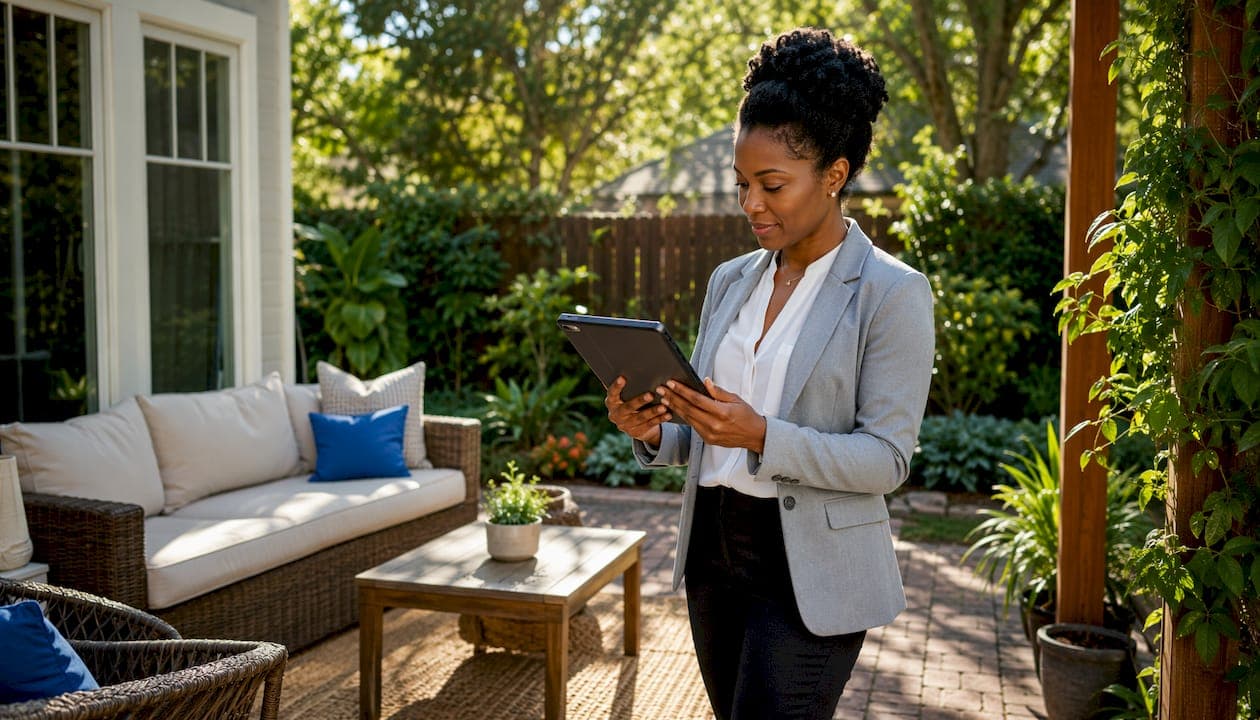
Every strong real estate marketing presence is built on the same core image types: a polished headshot, a full-body portrait, lifestyle shots in your work environment, on-the-job action images, team photos, listing-related scenes, neighborhood context shots, and process/detail close-ups.
-
Headshot: Tight crop from the shoulders up; used on Google Business Profile, LinkedIn, Zillow, and business cards.
-
Full-body portrait: Shows your full presence and wardrobe; ideal for website hero banners and listing presentations.
-
Lifestyle shots: You at a coffee shop, home office, or open house; communicates warmth and approachability for Instagram and email headers.
-
Action shots: Walking a neighborhood, reviewing a contract, or pointing out a feature; shows how you actually work.
-
Team photos: Builds credibility for group-based agents and brokerage pages.
-
Listing-related scenes: Staged interiors, sold signs, exterior curb shots; anchors you to real transactions.
-
Neighborhood/community images: You at a local landmark or street; signals local expertise to prospects on Realtor.com and your website.
-
Process/detail shots: Hands on keys, signing documents, reviewing a tablet; combat stock-photo sameness and explain how you work.
Table of Contents
-
What should your real estate branding photos actually include?
-
How do you plan a session, and what should it cost in the U.S.?
-
How does an experienced brand photographer create authentic images?
-
What agents get wrong about branding photos (and how to fix it)
What should your real estate branding photos actually include?
A single headshot no longer carries a full marketing presence. Variety across outfit changes and locations lets you build a content library that fuels months of social media, website updates, and print materials. Aim for a sizable image gallery organized by use.
Profile and headshots (a handful of images)
-
Classic tight crop (shoulders up), clean background, neutral or brand-aligned color
-
Slight angle variation (straight-on and three-quarter turn) for LinkedIn vs. GMB
Full-body and hero portraits (several images)
-
Standing, seated, and leaning poses in 2–3 outfit changes
-
Horizontal crop variation for website banners and listing presentation headers
Lifestyle shots (a set of images)
-
Coffee shop, home office, open house lobby, or outdoor seating
-
Mix candid (reading, writing) and directed (looking up, smiling at camera)
On-the-job action shots (a set of images)
-
Walking toward camera on a neighborhood street
-
Reviewing a tablet or laptop with a client (or implied client off-frame)
-
Pointing out a feature at a listing exterior
Listing-related scenes (several images)
-
Staged room with you in the foreground
-
Sold sign moment (celebratory, genuine expression)
-
Exterior curb shot with you in frame
Neighborhood and community (several images)
-
Recognizable local landmark, main street, or park
-
You interacting with a local business owner or community space
Team and collaboration (several images, if applicable)
-
Group shot with even spacing and consistent wardrobe palette
-
Candid collaboration: reviewing a document together, laughing
Detail and process shots (a set of images)
-
Close-up of hands on keys, pen on contract, or phone screen
-
Branded materials: notebook, folder, mug with subtle logo
Why does each shot type matter for your marketing?
Consistent imagery across platforms builds trust before a first in-person meeting, and each shot type earns its place by serving a specific channel.
Headshots do the heavy lifting in small crops. Your Google Business Profile thumbnail, LinkedIn circle, and yard sign all pull from this image. A tight, well-lit headshot with a clean background reads clearly at 40 pixels wide, which is where most people first encounter you.
Lifestyle shots sell the experience of working with you. Where a headshot says “professional,” a lifestyle image at a local café says “approachable, community-connected, and easy to talk to.” These perform well in Instagram Stories, email headers, and your website About page.
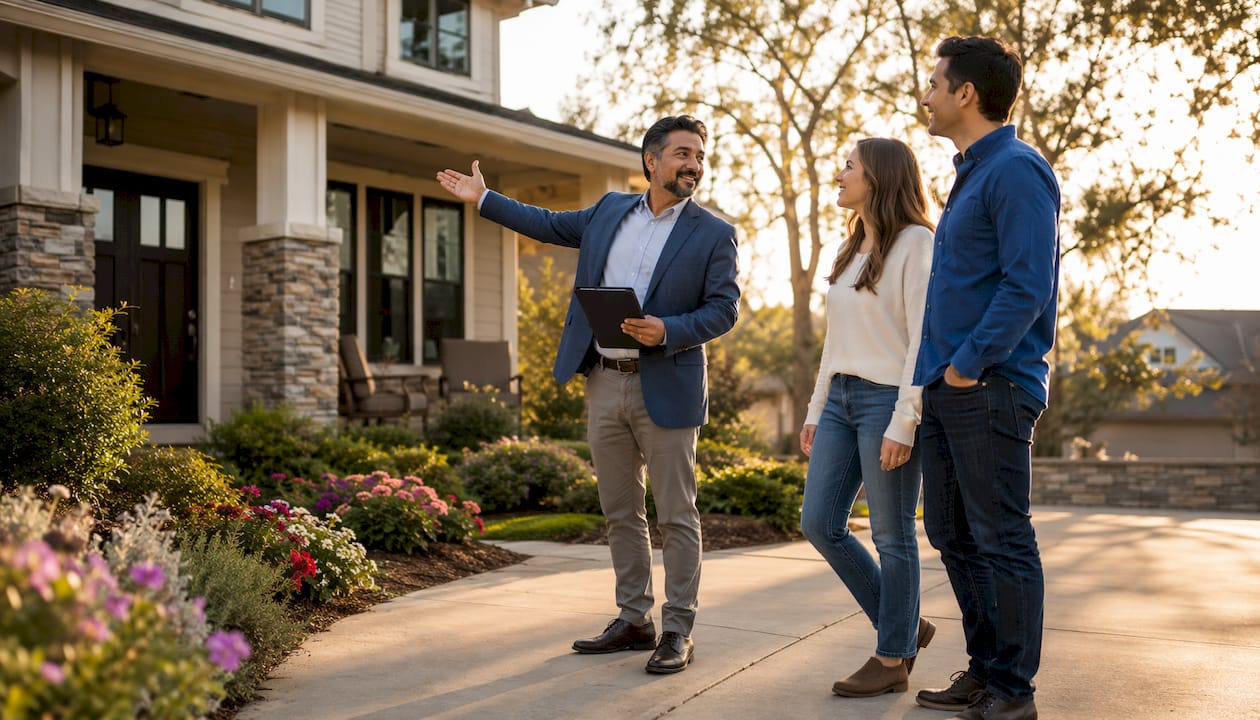
Action and process shots address a specific trust gap. Storytelling-driven branding differentiates top-producing agents by communicating energy and warmth in a way that a posed portrait simply cannot. Use these in blog posts, listing presentation decks, and Instagram carousel posts.
Neighborhood images position you as a local expert immediately. Showing an agent in a neighborhood or local business builds recognition among local prospects faster than any bio paragraph. These work well on your website’s area pages and in geo-targeted social ads.
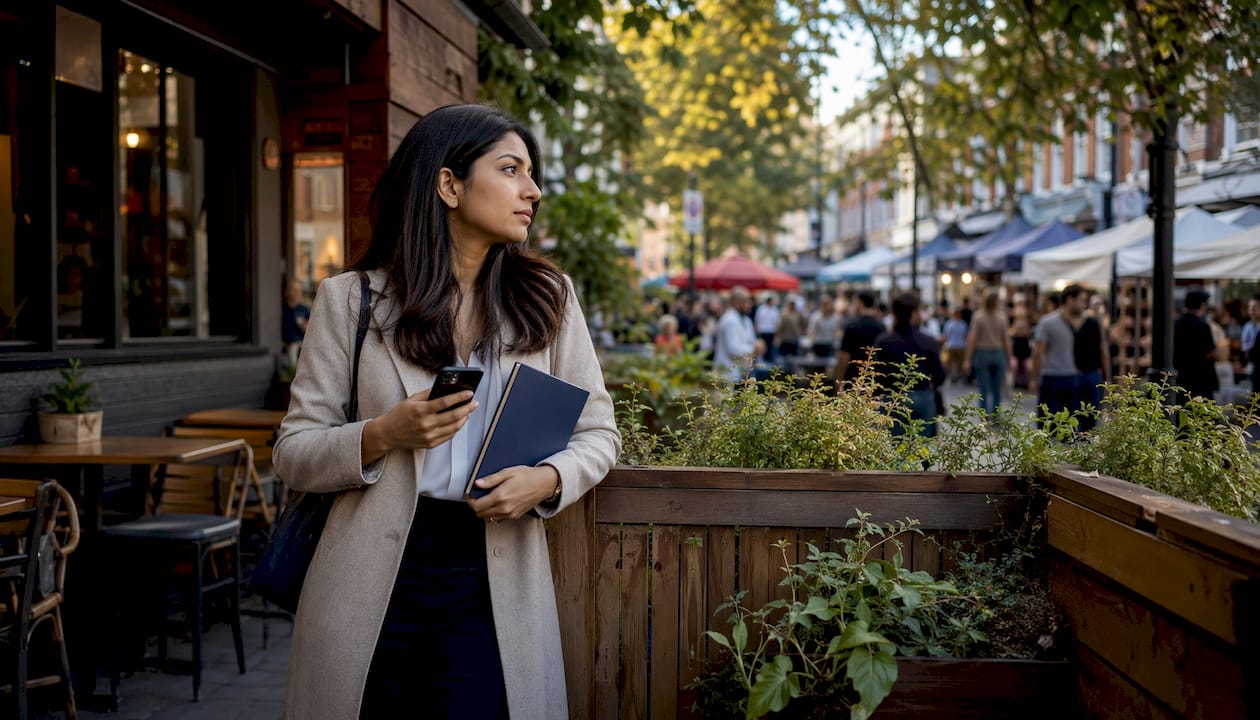
Variety also supports a consistent content cadence. With a substantial number of images from one session, you can post regularly for several months without repeating an image.
How should you style outfits and props for your shoot?
Your wardrobe either reinforces your brand or fights it. Solid colors and subtle patterns photograph best; bring 2–3 outfit changes to add variety across your image library.
Outfit dos and don’ts:
-
Do choose solids, jewel tones, or neutrals that align with your brand palette
-
Do coordinate each outfit with the planned background (light wall = darker outfit; outdoor greenery = warmer tones)
-
Avoid busy patterns, large logos, or anything that competes with your face in a tight crop
-
Avoid outfits you would not actually wear to a client meeting
Props that tell your story:
-
Keys and a sold sign: classic, immediately readable as real estate
-
Branded notebook or folder: subtle and professional
-
Tablet or laptop: signals tech-forward, modern practice
-
Coffee mug: adds warmth to lifestyle shots without feeling forced
Props give hands something to do and create narrative context. A luxury agent might use champagne glasses at a closing scene; a new-build specialist might hold a hardhat. Keep props aligned with your niche and use them sparingly so they support the story rather than distract from it.
Pro Tip: Lay all three outfits flat next to your brand color palette before the shoot. If any piece clashes or pulls focus, swap it. This five-minute check prevents a full outfit change mid-session.
Which locations tell your market story best?
Location is the fastest way to communicate your niche without saying a word. Storytelling backdrops reinforce your market positioning in a way that a studio background never can.
-
Staged listing or model home: Signals luxury or move-up market; refined interiors photograph beautifully with window light.
-
Local coffee shop or café: Community-focused and approachable; works for neighborhood specialists and first-time buyer agents.
-
Home office: Conveys organization and accessibility; great for lifestyle shots and detail close-ups.
-
Neighborhood street or landmark: Anchors you geographically; use a recognizable block, park, or main street your clients already know.
-
City skyline or downtown backdrop: Urban condo specialists and commercial agents benefit from this context.
-
Brokerage office or conference room: Professional and credibility-building; useful for team shots and action scenes.
Plan 1–3 locations per session depending on your package. Scout each spot at least a week in advance to check for construction, parking, and permit requirements.
Pro Tip: Shoot outdoor locations during golden hour (the hour after sunrise or before sunset) for warm, flattering light with minimal harsh shadows. If weather forces a change, have one indoor backup location confirmed before shoot day.
How do you pose naturally and look confident on camera?
Natural movement beats a stiff pose every time. The goal is to look like yourself on your best day, not like you are waiting for a bus.
-
Walking toward the camera: Gives energy and movement; works for full-body and three-quarter shots.
-
Reviewing a tablet or document: Candid and purposeful; great for action and lifestyle categories.
-
Celebrating with a sold sign: Genuine expression of success; use a real reaction, not a forced grin.
-
Leaning against a wall or doorframe: Relaxed and approachable; avoid crossing arms unless it feels completely natural.
-
Seated at a desk or café table: Grounds the image in a work context; keep posture upright and shoulders relaxed.
For facial expression, a relaxed, closed-mouth smile reads as confident and calm. A genuine open smile works well for lifestyle and action shots. Avoid the frozen “say cheese” expression by having your photographer give you something to react to rather than just counting down.
For photographers: direct the agent through movement first, then capture the moment they settle. Candid images often come from the transition between poses, not the pose itself. For crops, shoot wider than you think you need so the agent has options for both a tight headshot and a full-body frame from the same moment.
How do you plan a session, and what should it cost?
Good sessions are built in the two weeks before the shoot, not on the day itself. Pre-shoot questionnaires and strategy sessions align wardrobe, locations, and deliverables with your brand goals before a single frame is captured.
Pre-shoot checklist:
-
Complete the photographer’s brand questionnaire (brand colors, target client, niche, platforms you use)
-
Finalize shot list and confirm locations 1–2 weeks out
-
Secure any location permits needed for private properties or commercial spaces
-
Prep and steam 2–3 outfits; pack props and branded materials
-
Confirm deliverables in writing: image count, file types (JPEG and PNG minimum), retouching scope, turnaround time, and usage rights
Deliverables to request:
-
Full gallery of 30–75+ selects, plus 3–10 fully retouched hero images
-
Multiple crops per key image (square, horizontal, vertical)
-
High-resolution files for print and web-optimized versions for digital use
-
Commercial usage rights for all marketing channels
pricing context: Real estate agent photoshoot packages typically range from around $849 for a 1.5-hour starter session (30+ gallery images) to $1,499 or more for a half-day session with multiple locations and 75+ gallery images. Retouching fees, travel outside a local radius, and additional usage licenses are usually priced separately. Refresh your photos quarterly if possible; twice yearly is the minimum to keep imagery seasonally relevant.
How should you use each photo across platforms?
Images need multiple crops and file types to avoid awkward in-app cropping and maintain consistency across every touchpoint.
| Platform | Best shot type | Aspect ratio | Notes |
|---|---|---|---|
| Google Business Profile | Headshot | 1:1 (square) | — |
| LinkedIn profile | Headshot | 1:1 | — |
| LinkedIn banner | Full-body or lifestyle | — | — |
| Website hero/header | Full-body or lifestyle | — | Horizontal; leave negative space for copy |
| Instagram feed | Lifestyle or action | — | — |
| Instagram Stories | Lifestyle or neighborhood | — | — |
| Email header | Headshot or lifestyle | 3:1 | — |
| Printed postcard | Full-body or neighborhood | — | — |
| Business card | Headshot | 1:1 or 2:3 | — |
| Yard sign | Headshot | 1:1 | High contrast; face must read at 20 feet |
Ask your photographer to deliver both full-resolution and web-optimized exports for every key image so you are not compressing print files for web use or uploading low-resolution images to print vendors.
How does an experienced brand photographer create authentic images?
A well-structured session process is what separates a usable marketing library from a folder of nice-but-unusable photos. Here is how a thoughtful brand photographer approaches a real estate agent photoshoot:
-
Pre-shoot questionnaire: Covers brand colors, target client, niche, preferred platforms, and any images you already love or want to avoid.
-
Location scouting: Confirms light quality, background options, and logistics at each planned spot before shoot day.
-
Directed lifestyle capture: Guides you through natural movements and scenarios rather than static poses, producing images that feel genuine.
-
Candid capture windows: Builds in unscripted moments between directed shots where authentic expressions emerge.
-
Editing workflow: Consistent color grading across the full gallery so every image feels like it belongs to the same brand.
-
Delivery and usage coaching: Provides crop guides and platform recommendations alongside the finished gallery.
Viewing a photographer’s personal branding portfolio before booking gives you the clearest sense of whether their editing style, lighting approach, and ability to capture genuine expressions align with the brand you are building.
High-quality brand imagery signals that you take your business seriously and helps you stand out from stock or outdated photos, supporting both lead generation and referral trust.
DIY vs. hiring a pro: which is right for you?
DIY makes sense when you have an immediate need, a very tight budget, and a friend with a decent camera and good natural light. It does not make sense when you need a consistent, professional image library to fuel six months of marketing.
When DIY works:
-
You need a quick social post or a temporary profile update
-
You have access to a well-lit space and someone who can follow basic framing guidance
-
Budget is genuinely the barrier, not preference
When hiring a pro is worth it:
-
You are investing in a website refresh, a listing presentation upgrade, or a new market push
-
You need 30–75+ images across multiple looks and locations
-
You want consistent color grading and retouching across the full gallery
Questions to ask a photographer before booking:
-
Do you have experience with real estate or personal branding sessions?
-
What does your pre-shoot process look like?
-
How many fully retouched images are included, and what is the turnaround time?
-
Do I receive commercial usage rights for all marketing channels?
| Factor | DIY shoot | Professional branding session |
|---|---|---|
| Cost | Low (equipment and time) | $849–$1,499+ depending on package for a gallery of at least 30–75+ images |
| Image quality | Variable; depends on equipment and skill | Consistent, professionally lit and edited |
| Time investment | High (planning, shooting, editing) | Low for agent; photographer manages process |
| Reproducibility | Difficult to replicate look and feel | Consistent style across full gallery |
| Deliverables | Unedited files; no crop guidance | Retouched gallery, multiple crops, usage rights |
Key Takeaways
A complete real estate branding photo library requires at least eight shot categories, 2–3 outfit changes, and platform-specific crops to perform consistently across Google Business Profile, LinkedIn, Instagram, and print; aim for a gallery of 30–75+ images from your session.
| Point | Details |
|---|---|
| Build a 30–75+ image library | Cover all eight shot categories so you have content for every platform and months of posts. |
| Refresh on a regular cadence | Quarterly is ideal; twice yearly is the minimum to keep imagery seasonally current. |
| Request multiple crops | Ask for square, horizontal, and vertical exports so each image fits its platform without awkward cropping. |
| Prep 2–3 outfits in brand colors | Solid colors and coordinated palettes photograph cleanly and keep your gallery visually cohesive. |
| Book with Lifeinstyle | Lifeinstyle’s personal branding sessions are built around a relaxed, directed process that produces genuine, usable images. |
What agents get wrong about branding photos (and how to fix it)
The most common mistake I see agents make is treating a single headshot as a complete brand presence. One polished portrait covers your LinkedIn profile and not much else. The agents who consistently win listings have a visual library, not a single image.
The second mistake is waiting too long between shoots. Stale photos from three or four years ago undermine trust the moment a prospect notices the disconnect between your photo and the person who shows up. You do not need a full reshoot to stay current. A two-hour refresh session with one or two new locations and a wardrobe update produces enough new images to rotate through for another six months.
The third mistake is over-editing. Authenticity outperforms perfection: images that look like you on your best day build longer-term client relationships than heavily retouched corporate portraits. Clients are going to meet the real you anyway. A photo that feels genuine does more for trust than a flawless but unrecognizable version of yourself.
One practical fix: take your single best hero image and export it in three crops (square for profile, horizontal for email header, vertical for Stories). That one image, properly cropped, covers five platforms without any additional shooting.
Ready to build your real estate brand with Lifeinstyle?
If you are ready to move beyond a single headshot and build a photo library that actually feeds your marketing, Lifeinstyle offers personal branding photography sessions designed around a relaxed, directed process that produces genuine, usable images. Whether you need a focused headshot refresh or a half-day session covering multiple locations and outfit changes, the approach stays the same: a pre-shoot consultation to align on your brand, directed lifestyle and action capture, and a fully edited gallery delivered with platform-specific guidance.
Every session includes a pre-shoot questionnaire, location planning, and a delivered gallery with retouched hero images and multiple crop options. Browse the branding portfolio to see how the process translates to finished images, then reach out to discuss your session and check availability.